
17, February 2017
Militants in Central African Republic executed 32 civilians in December 1
Human Rights Watch (HRW) has revealed details of the execution of at least 32 civilians by an armed group in the lawless heart of the Central African Republic late last year. The HRW said in a report on Thursday that militants from the Union for Peace in the Central African Republic (UPC), a splinter group from a rebel force in neighboring Chad, had killed 32 civilians and captured fighters in the town of Bakala in December 2016.
The New York-based rights group said 25 people had been killed after they were called to a school for an alleged meeting, while seven other men were executed as they were returning from a nearby gold mine. “Accounts of the incidents were provided by a survivor and eight witnesses, including five men who were forced to help dispose of the bodies,” said the HRW in a statement.
A representative of the rights group in the Africa region also denounced the killing as “brazen war crimes by UPC fighters who feel free to kill at will.” In January, the UPC denied that its militants had been involved in any form of killing in Bakala region. “Soldiers in the UPC cannot execute civilians or prisoners … What you have heard about the UPC are lies,” said Ali Darassa, UPC’s commander since the formation of the group in September 2014.
Experts from the United Nations had earlier warned that armed groups were using the lawlessness in tracts of the CAR to maintain their interests, ranging from control of gold and other mines, cattle rustling and highway robbery. “They have taken the place of the judicial apparatus and [they] terrify the population,” Marie-Therese Keita-Bocoum, an independent UN expert on human rights in the CAR said, adding that “armed groups reign as masters over more than 60 percent of the territory, benefiting from total impunity.”
France and the UN’s mission in the CAR, known as MINUSCA, have intervened militarily in the African country to end large-scale massacres and restore relative order to the capital, Bangui. However, insecurity continues to grip swaths of the territory.
Presstv






18, February 2017
Southern Cameroons Uprising: Resistance rather than collaboration is the only way 1
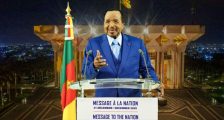
Ever since the Southern Cameroons revolution started in 2016, the term “resistance” has been everywhere-thanks to the Cameroon Anglophone Civil Society Consortium. The people of the Buea and Bamenda provinces of West Cameroon are now reading from the same script-thanks to the Cameroon Anglophone Civil Society Consortium. We now know that the Biya Francophone Beti Ewondo regime is not as powerful as we earlier thought and that it has cabinet ministers who do not think properly. The interim leaders have made it very clear that the policies of La Republique du Cameroun must be disrupted and a new, stronger Southern Cameroons must coalesce.
When an oppressive military such as that of La Republique takes over a peaceful nation, the opposition gravitates towards two ends of a continuum. On one side are those for resistance and on the other, collaboration. Attempts by Barrister Bobga Harmony and some Southern Cameroons activists in the US aimed at creating a Consortium in the Diaspora correctly points out that some individuals want to collaborate with Biya, despite the existential threat to the struggle.
But it’s not just Barrister Bobga Harmony and his friends in the US who are willing to sway towards Biya and his Francophone regime. The Anglophone Diaspora is also guilty. Francophone troops invaded your home land, raped and killed your children, arrested hundreds including the leaders of the trade unions representing the interest of the future generations, humiliated prominent elites from your constituency, disconnected internet services, militarized your country and their leader turns around and signs a decree that Francophone should start speaking English to appease you and many of you are now saying that it is business as usual!!!! This is not resistance, not even close.
When the Germans invaded France in 1940, every French citizen had a choice to make. Many rejected the Nazi occupation. They banded together to undermine enemy control, through intelligence gathering, noncooperation, and sabotage. The French Resistance was integral to Allied victory and the end of the Nazi state. This is what the Cameroon Anglophone Civil Society Consortium is asking from Southern Cameroonians.
Like some of the French who decided to seek peace and coexist with the occupation, Musonge, Atanga Nji and the many CPDM political elites who are willing to work with a Head of State that history knows is irredeemable can establish a puppet regime of Anglophones at Bonaberi in Douala just like some of the French did by creating the Vichy government.
Given how much progressive work and resources has gone into this struggle, it is disturbing to see that we do not have a radio station operating from areas such as Calabar and Ikom in Nigeria. To have a “wait and see” approach is a privilege many Francophone including Biya do not have. Women, children, the old and the unemployed are under attack now in West Cameroon. Accepting any form of dialogue with the regime as legitimate is to sanction their oppression.
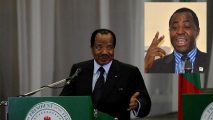
Total resistance is the only way forward. But the frontlines need dedicated people. Barrister Bobga was told not to meet with Baba Danpullo, he did!! By escaping to the US, he is no longer a front liner so he too should simply follow the instructions of the interim leaders of the Cameroon Anglophone Civil Society Consortium. This struggle is not about UNESCO and the resumption of schools in West Cameroon, it is about the dignity of the English speaking Cameroonian.
Schools should remain closed, ghost towns should be intensified and Anglophone businesses should not trade with La Republique. If you want peace, you should be prepared for war. The economic and political structures that hold the 84 year old Biya and his ideology up should be under threat. If the SCNC, SCAPO and the numerous Southern Cameroons Diaspora groups are unwilling to resist Biya and his Francophone Beti Ewondo regime, then it is on the Cameroon Anglophone Civil Society Consortium to organize us and proceed with action.
By Soter Tarh Agbaw-Ebai