8, December 2023
Moscow: Putin announces presidential candidacy in 2024 elections 0
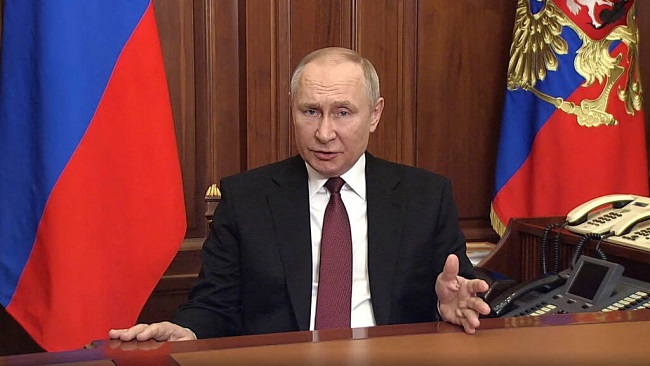
Vladimir Putin on Friday moved to prolong his grip on Russia for at least another six years, announcing his candidacy in the presidential election next March that he is all but certain to win.
Putin still commands wide support after nearly a quarter-century in power, despite starting an immensely costly war in Ukraine that has taken thousands of his countrymen’s lives, provoked repeated attacks inside Russia – including one on the Kremlin itself – and corroded its aura of invincibility.
A short-lived rebellion in June by mercenary leader Yevgeny Prigozhin raised widespread speculation that Putin could be losing his grip, but he emerged with no permanent scars.
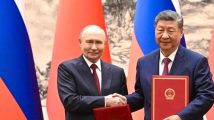
Putin announced his decision to run in the March 17 presidential election after a Kremlin award ceremony, when war veterans and others pleaded with him to seek re-election.
“I won’t hide it from you – I had various thoughts about it over time, but now, you’re right, it’s necessary to make a decision,” Putin said in a video released by the Kremlin after the event. “I will run for president of the Russian Federation.”
Tatiana Stanovaya of the Carnegie Russia Eurasia Center noted that the announcement was made in a low-key way instead of a live televised speech, probably reflecting the Kremlin’s spin effort to emphasize Putin’s modesty and his perceived focus on doing his job as opposed to loud campaigning.
“It’s not about prosperity, it’s about survival,” Stanovaya observed. “The stakes have been raised to the maximum.”
About 80% of the populace approves of Putin’s performance, according to the independent pollster Levada Center. That support might come from the heart or it might reflect submission to a leader whose crackdown on any opposition has made even relatively mild criticism perilous.
Whether due to real or coerced support, Putin is expected to face only token opposition on the ballot.
Putin, 71, has twice used his leverage to amend the constitution so he could theoretically stay in power until he’s in his mid-80s. He is already the longest-serving Kremlin leader since Soviet dictator Josef Stalin, who died in 1953.
In 2008, he stepped aside to become prime minister due to term limits but continued calling the shots. Presidential terms were then extended to six years from four, while another package of amendments he pushed through three years ago reset the count for two consecutive terms to begin in 2024.
“He is afraid to give up power,” Dmitry Oreshkin, a political analyst and professor at Free University of Riga, Latvia, told The Associated Press this year.
At the time of the amendments that allowed him two more terms, Putin’s concern about losing power may have been elevated: Levada polling showed his approval rating significantly lower, hovering around 60%.
In the view of some analysts, that dip in popularity could have been a main driver of the war that Putin launched in Ukraine in February 2022.
“This conflict with Ukraine was necessary as a glue. He needed to consolidate his power,” said commentator Abbas Gallyamov, a former Putin speechwriter now living in Israel.
Brookings Institution scholar Fiona Hill, a former U.S. National Security Council expert on Russian affairs, agrees that Putin thought “a lovely small, victorious war” would consolidate support for his reelection.
“Ukraine would capitulate,” she told AP this year. “He’d install a new president in Ukraine. He would declare himself the president of a new union of Belarus, Ukraine and Russia over the course of the time leading up to the 2024 election. He’d be the supreme leader.”
The war didn’t turn out that way. It devolved into a grueling slog in which neither side makes significant headway, posing severe challenges to the rising prosperity integral to Putin’s popularity and Russians’ propensity to set aside concerns about corrupt politics and shrinking tolerance of dissent.
Putin’s rule has spanned five U.S. presidencies, from Bill Clinton to Joe Biden. He became acting president on New Year’s Eve in 1999, when Boris Yeltsin unexpectedly resigned. He was elected to his first term in March 2000.
When he was forced to step down in 2008 by term limits, he shifted to the prime minister’s post while close ally Dmitry Medvedev served as a placeholder president.
When Putin announced he would run for a new term in 2012 and Medvedev submissively agreed to become prime minister, public protests brought out crowds of 100,000 or more.
Although Putin has long abandoned the macho photo shoots of bear hunting and scuba diving that once amused and impressed the world, he shows little sign of slowing down. Photos from 2022 of him with a bloated face and a hunched posture led to speculation he was seriously ill, but he seems little changed in recent public appearances.
“He’s a wartime president, is mobilizing the population behind him,” Hill said. “And that will be the message around the 2024 election, depending on where things are in the battlefield.”
Source: AP
















8, December 2023
CPDM Crime Syndicate: Biya wants Camtel to remain a public entity 0
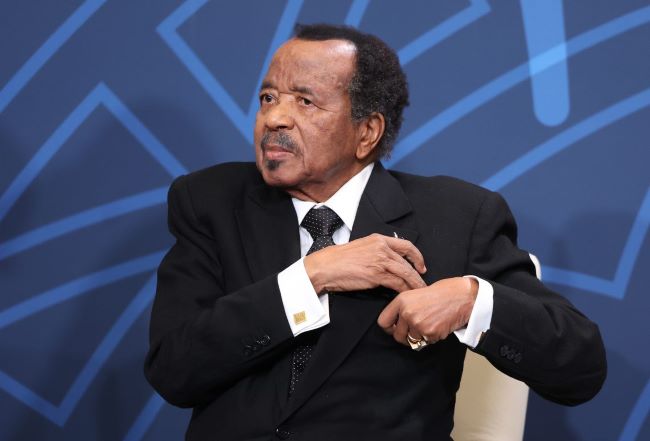
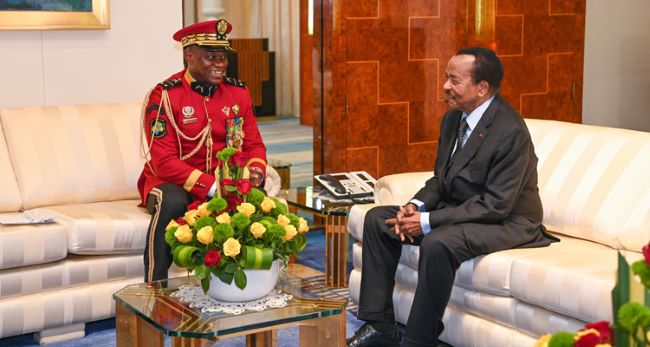
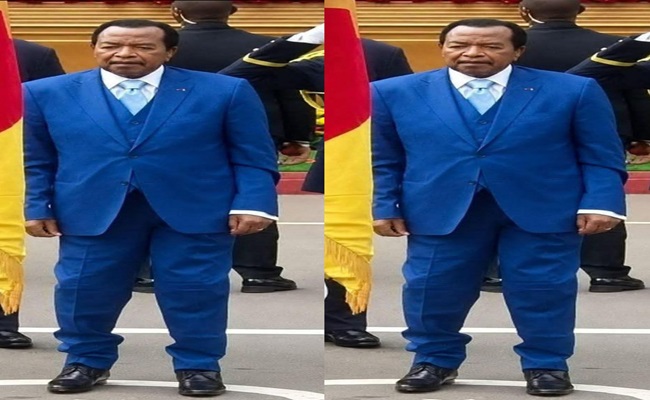
Cameroon’s President Paul Biya opposes the privatization of the country’s incumbent telecoms operator, Camtel. The decision was the subject of a letter addressed on December 4, 2023, by the Secretary-General of the Presidency (SGPR) to the Minister of Finance (Minfi).
Ferdinand Ngoh Ngoh instructs Minister Louis Paul Motazé, also the president of the Interministerial Committee for the Rehabilitation of Public and Parastatal Enterprises, to suspend any rehabilitation plan aiming at privatizing Camtel or any segment of its operations. The SGPR’s letter follows Minister Motazé’s appearance before the National Assembly’s Finance and Budget Committee on November 15, 2023, where he defended the 2022 budget settlement. Responding to questions about Camtel’s underwhelming performance compared to other telecom operators, the Finance Minister revealed the government’s intention to restructure the telecom giant into three entities, forming a holding.
“Referring to Camtel’s low level of competitiveness, given the dynamism observed in the telecommunications sector, the Finance Minister acknowledged that the company’s performance was not up to expectations. For this reason, an inter-ministerial committee has been set up to examine the restructuring of the company. The government is currently considering how to improve the company’s performance. It is envisaged that the company will be transformed into a holding company made up of three entities”, reads the report on the work of the National Assembly’s Finance and Budget Committee, on the defense of the 2022 Settlement Act by the Minister of Finance.
The report also mentions the plan to alleviate the significant burden on Camtel, including its 4,000 employees and a heavy debt of CFA600 billion. However, the minister did not explicitly mention privatization during his presentation to the deputies.
Furthermore, sources close to Camtel’s rehabilitation discussions disclosed that a ministerial-level meeting took place to address the alarming situation of Camtel. Representatives from the Ministry of Posts and Telecommunications (Minpostel), the Ministry of the Economy (Minepat), and Camtel’s Director-General were present alongside the Minister of Finance (Minfi) and a representative from the Presidency. Contrary to claims of privatization, major proposals focus on reinforcing the autonomy of business units (fixed, mobile, transport) under Camtel, reducing staff, and addressing the substantial debt.
Since 2020, Camtel has held three licenses, covering the operation of electronic communications transport networks, fixed communications networks, and mobile networks. The Finance Minister’s revelation of the transformation project into a holding with three subsidiaries corresponds to the specifics of these licenses.
In response to the President’s opposition to privatization, discussions arise about the suggested holding structure. A holding, or “mother company,” can have its assets predominantly or wholly owned by the state or its entities, maintaining the company in the public domain. However, assets in both the holding and its subsidiaries could also be majority or wholly owned by private operators, aligning with the concept of privatization.
This proposed option, which the President opposes according to the SGPR’s letter, appears more reassuring to many telecom operators in Cameroon. Critics argue that Camtel, operating as a wholesaler managing infrastructure leased by other actors, competes directly with retailers, such as mobile operators and internet service providers.
A 2017 report entitled “Cameroon Economic Memorandum” by the World Bank supports this perspective, suggesting the government ends the monopoly of companies like Camtel and Bolloré in sectors producing essential inputs for other activities. During a workshop in March 2017 in the Cameroonian capital on determining reforms for improving the competitiveness of the ICT sector in Cameroon, the World Bank recommended transforming Camtel into a holding with two entities: one controlled by the state, managing infrastructure and fixed telephony networks; and another dedicated to mobile services and the marketing of home fiber optics, open to private investors.
Source: Business in Cameroon