
6, June 2023
World Bank says global economy on precarious footing amid high interest rates 0
Global growth has slowed sharply and the risk of financial stress in emerging market and developing economies (EMDEs) is intensifying amid elevated global interest rates, according to the World Bank’s latest Global Economic Prospects report.
Global growth is projected to decelerate from 3.1% in 2022 to 2.1% in 2023. In EMDEs other than China, growth is set to slow to 2.9% this year from 4.1% last year. These forecasts reflect broad-based downgrades: growth projections for 70 percent of EMDEs and nearly all advanced economies have been downgraded.
“The surest way to reduce poverty and spread prosperity is through employment—and slower growth makes job creation a lot harder,” said World Bank Group President Ajay Banga. “It’s important to keep in mind that growth forecasts are not destiny. We have an opportunity to turn the tide but it will take us all working together.”
Most EMDEs have seen only limited harm from the recent banking stress in advanced economies so far, but they are now sailing in dangerous waters. With increasingly restrictive global credit conditions, one out of every four EMDEs has effectively lost access to international bond markets. The squeeze is especially acute for EMDEs with underlying vulnerabilities such as low creditworthiness. Growth projections for these economies for 2023 are less than half those from a year ago, making them highly vulnerable to additional shocks.
“The world economy is in a precarious position,” said Indermit Gill, the World Bank Group’s Chief Economist and Senior Vice President. “Outside of East and South Asia, it is a long way from the dynamism needed to eliminate poverty, counter climate change, and replenish human capital. In 2023, trade will grow at less than a third of its pace in the years before the pandemic. In emerging markets and developing economies, debt pressures are growing due to higher interest rates. Fiscal weaknesses have already tipped many low-income countries into debt distress. Meanwhile, the financing needs to achieve the sustainable development goals are far greater than even the most optimistic projections of private investment.”
The latest forecasts indicate that the overlapping shocks of the pandemic, the Russian invasion of Ukraine, and the sharp slowdown amid tight global financial conditions have dealt an enduring setback to development in EMDEs, one that will persist for the foreseeable future. By the end of 2024, economic activity in these economies is expected be about 5% below levels projected on the eve of the pandemic. In low-income countries—especially the poorest—the damage is stark: in more than one-third of these countries, per capita incomes in 2024 will still be below 2019 levels. This feeble pace of income growth will entrench extreme poverty in many low-income countries.
“Many developing economies are struggling to cope with weak growth, persistently high inflation, and record debt levels. Yet new hazards—such as the possibility of more widespread spillovers from renewed financial stress in advanced economies—could make matters even worse for them,” said Ayhan Kose, Deputy Chief Economist of the World Bank Group. “Policy makers in these economies should act promptly to prevent financial contagion and reduce near-term domestic vulnerabilities.”
In advanced economies, growth is set to decelerate from 2.6% in 2022 to 0.7% this year and remain weak in 2024, the report says. After growing 1.1% in 2023, the U.S. economy is set to decelerate to 0.8% in 2024, mainly because of the lingering impact of the sharp rise in interest rates over the past year and a half. In the euro area, growth is forecast to slow to 0.4% in 2023 from 3.5% in 2022, due to the lagged effect of monetary policy tightening and energy-price increases.
The report also offers an analysis of how increases in U.S. interest rates are affecting EMDEs. Most of the rise in two-year Treasury yields over the past year and a half has been driven by investor expectations of hawkish U.S. monetary policy to control inflation. According to the report, this particular type of interest rate increases is associated with adverse financial effects in EMDEs, including a higher probability of financial crisis. Moreover, these effects are more pronounced in countries with greater economic vulnerabilities. In particular, frontier markets—those with less developed financial markets and more limited access to international capital—tend to see outsized increases in borrowing costs; for instance, sovereign risk spreads in frontier markets tend to rise by more than three times as much as those in other EMDEs.
In addition, the report provides a comprehensive assessment of the fiscal policy challenges confronting low-income economies. These countries are in dire straits. Rising interest rates have compounded the deterioration in their fiscal positions over the past decade. Public debt now averages about 70% of GDP. Interest payments are eating up a rising share of limited government revenues. 14 low-income countries are already in, or at high risk of, debt distress. Spending pressures have risen in these economies. Adverse shocks such as extreme climate events and conflict are more likely to tip households into distress in low-income countries than anywhere else because of limited social safety nets. On average, these countries spend just 3% of GDP on their most vulnerable citizens—well below the 26% average for developing economies.















7, June 2023
Yaoundé: Journalists Say Suspensions Are Sign of Government Crackdown 0
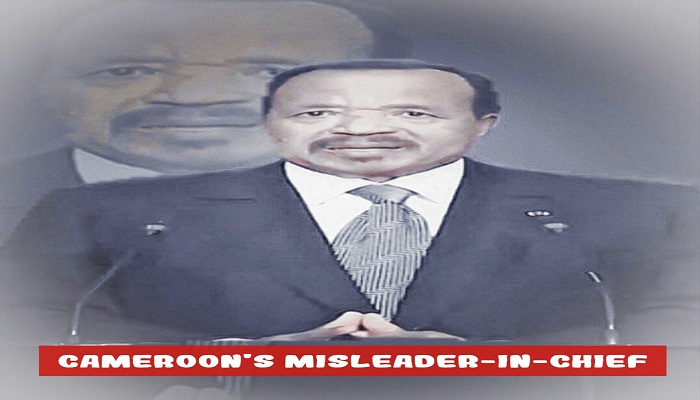
Journalists in Cameroon say the government’s indefinite shutdown of a radio station and suspension of four reporters is a sign of a growing crackdown on the country’s news media. The government says it is trying to stop the spread of hate speech, while journalists say officials want to retaliate against criticism of President Paul Biya.
Bruno Bidjang, host of the popular program on Vision 4 TV called “Club d’Elite” has said on his program that he will continue exercising his profession to the best of his ability without fear.
However, Cameroon’s National Communication Council, an organ created by the government to regulate the media, imposed a one-month suspension on Bidjang for hosting guests who the government says used hateful language on his program.
The NCC said Bidjang was warned several times, but he continued inviting such guests on the program.
The council this week also imposed suspensions on a radio station and three other media practitioners for broadcasting offensive or hateful content.
NCC President Joe Chebongkeng Kalabubse said these journalists and media outlets propagated hate speech and xenophobic language.
“We have noticed that we can nip the problem in the bud by encouraging journalists to be more professional,” Kalabubse said. “We want to encourage journalists to be as professional as possible. We will not hesitate to sanction them if they falter.”
Kalabubse said he has informed Cameroon’s minister of territorial administration, Paul Atanga Nji, to make sure that journalists who do not respect the order are punished, and media organizations that continue to broadcast are permanently closed.
Nji said he has instructed police and local government officials to force the journalists to respect the sanctions.
“The media men should know that they have the moral obligation to comply by respecting these decisions taken for the common good,” Nji said. “Because if we are in a state of law and we don’t respect the laws of the republic, then we are walking towards a jungle, and Cameroon is not a jungle. We should use liberty of expression to construct and not to destroy. So, I want to tell the media men that they have the obligation to comply. If they don’t comply, we will accompany them to comply by force.”
But journalists in Cameroon say they are victims of increasing oppression. They say the government clamps down on media that hold contrary opinions to state actions.
The Cameroon Journalists Trade Union said the NCC was set up by Biya to defend his interests and crack down on journalists who oppose his rule.
The trade union said senior state functionaries and military officials who are accused of corrupt practices ask the NCC to suspend reporters — a charge the NCC denies.
The government said hate speech propagated through the media has become rampant since the disputed 2018 presidential election.
In addition, some French-speaking host communities accuse English speakers displaced by the separatist conflict in the west of being separatist fighters or sympathizers.
Cameroon’s minister of territorial administration said local media that do not stop guests in debate programs from asking communities to rise against one another will be punished. Journalists who anchor such programs will also be punished, the government said, though it has not outlined any punishment.
Cameroon has more than 600 newspapers, about 200 radio stations and 60 TV networks, yet producing independent and critical reporting is still challenging, according to Reporters Without Borders.
In its 2023 World Press Freedom Index, the organization said Cameroon is one of Africa’s most dangerous countries for journalists, since they operate in a hostile and precarious environment.
Source: VOA