20, January 2023
Senatorial Elections: Chief Tabetando is not a saint but leave him alone! 0
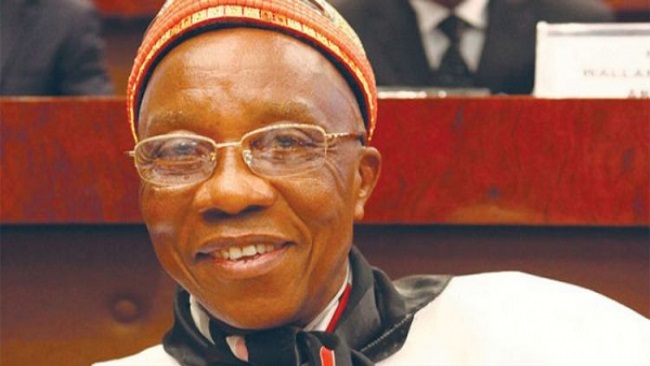
Since the country’s president, Paul Biya, announced senatorial elections in Cameroon, many reactionaries have jumped into higher gear with a view to destroying those they do not like. For years, we have not heard much that can validly destroy, Chief George Tabetando’s career, but since the elections were announced, an army of enemies has been at work, even accusing the brilliant lawyer of raping a housemaid.
It is hard to trust any human being when it comes to sex, but this allegation against Senator George Tabetando at a time when he wants to run again for the senate clearly points to the fact that some enemies have an ulterior motive, and the objective is clear – destroy a man who loves his people.
Though a CPDM senator, Chief Tabetando of Bachou Ntai has always worked for the development of his people. Chief Tabetando is not perfect and like many Manyu people, he also has an eye for beautiful women. But having an eye for the daughters of eve does not make him a bad person.
In the height of the Southern Cameroons crisis, Chief Tabetando travelled to Mamfe to plead with the young fighters for them to forgive the government and to come out of the bushes so that a peaceful solution to the conflict could be found. He was not ashamed to go on his knees to demonstrate that he was not superior to anybody. Not many top politicians in Cameroon can do that. Leave Tabetando alone!
Why is it that those allegations are only surfacing now? It is alleged that he raped the lady who braided his wife’s hair, and the act took place in the comfort of their home. How come the wife never heard the woman scream or resist the honorable and brilliant lawyer?
Chief Tabetando may be mad, but his madness surely has a method. He knows that he can take his madness away from his family and he is a man who always has his wits about him. Chief Tabetando is a barrister at law, and he understands that such an act could blow up his brilliant career and expose him to ridicule.
The Cameroon Concord News Group is not holding any brief for the honorable senator. It is just seeking to point out that Senator Tabetando’s enemies are at work. Unfortunately, they will not be succeeding this time around. The Cameroon Concord News Group will support any person elected to the senate, but it will not stand by and watch any dirty games designed to destroy a man who has always earned his keep.
Tabetando was a great lawyer, and his former clients can attest to that. As a senator, it is hard to cast him in the best possible light as he is a representative of a party which has failed to meet the glorious expectations of the nation. But as an individual, Tabetando, the chief of Bachou Ntai, deserves our respect. Seeking to sling mud at him will be one big mistake. It is time to walk away from nasty politics!
Dr. Joachim Arrey




















20, January 2023
Southern Cameroons Crisis: Canadian Minister of Foreign Affairs issues statement 0
The Honourable Mélanie Joly, Minister of Foreign Affairs, today issued the following statement on the announcement of a peace process aimed at resolving the ongoing crisis in the North-West and South-West regions of Cameroon:
“Civilians are bearing the brunt of the ongoing crisis in Cameroon, with more than 6,000 people having lost their lives since 2017. In addition, nearly 800,000 people have been displaced as a result of this crisis, and 600,000 children do not have full access to education.
“Canada welcomes the agreement by the parties to enter a process to reach a comprehensive, peaceful and political resolution of the conflict. The parties have also agreed to form technical committees to begin work on confidence-building measures.
“The agreement to enter a formal process is a critical first step toward peace and a safer, more inclusive and prosperous future for civilians affected by the conflict.
“We commend all parties for engaging in substantive dialogue. We encourage all stakeholders to support and work with the parties to advance and contribute to an inclusive process to reach a lasting and sustainable political settlement.
“Canada has accepted the mandate to facilitate this process, as part of our commitment to promote peace and security and advance support for democracy and human rights. Our role also reflects Canada’s engagement to work with our African partners to build a better future for everyone.
“The parties to this agreement are the Republic of Cameroon, the Ambazonia Governing Council and the Ambazonia Defence Force, the African People’s Liberation Movement and the Southern Cameroons Defence Force, the Interim Government, and the Ambazonia Coalition Team. The parties further express the hope that other groups will join the process.’’
Culled from Canada.ca