20, January 2022
Former pope Benedict under scrutiny in German child sex abuse investigation 0
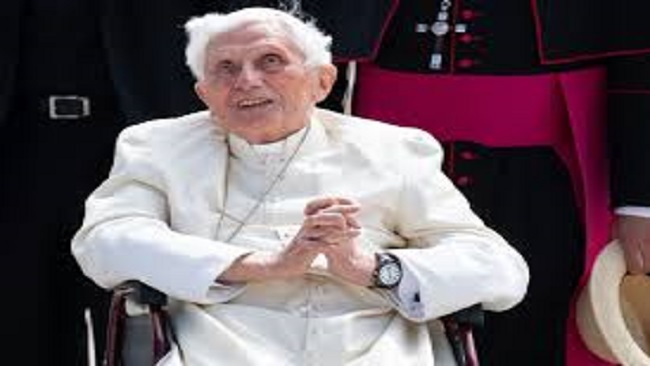
A potentially explosive report into the handling of child sex abuse in the Catholic Church will on Thursday be published in Germany, with former pope Benedict XVI among those in the spotlight.
The report by law firm Westpfahl Spilker Wastl (WSW) will analyse how abuse cases were dealt with in the archdiocese of Munich and Freising between 1945 and 2019.
The Munich archdiocese, which commissioned the report, said it will examine “whether those responsible complied with legal requirements… and acted appropriately in dealing with suspected cases and possible perpetrators”.
Ex-pope Benedict — whose civilian name is Josef Ratzinger — was the archbishop of Munich from 1977 to 1982.
During this time, a now notorious paedophile priest named Peter Hullermann was transferred to Munich from Essen in western Germany where he had been accused of abusing an 11-year-old boy.
Hullermann was reassigned to pastoral duties despite his history.
In 1986, by which time Ratzinger had been transferred to the Vatican, he was convicted of molesting more children and given a suspended prison sentence.
Even after the conviction, he continued to work with children for many years and his case is regarded as a pertinent example of the mishandling of abuse by the Church.
Benedict has denied knowing about the priest’s history.
82-page statement
The ex-pope has provided an 82-page statement in response to questions from WSW, according to German media reports.
The pope emeritus “takes the fates of the abuse victims very much to heart” and is fully “in favour of the publication of the Munich report”, his spokesman Georg Gaenswein told the Bild daily.
Benedict, 94, in 2013 became the first pope ever to step down from the role in 600 years and now lives a secluded life in a former convent inside the grounds of the Vatican.
The reformist Catholic group “Wir sind Kirche” (We are Church) called on the ex-pontiff to take responsibility for what happened while he was in charge of the Munich diocese.
“An admission by Ratzinger that through his actions or inactions, knowledge or ignorance, he was personally and professionally complicit in the suffering of many young people would be… an example for many other bishops and responsible persons,” it said in a statement.
Germany’s Catholic Church has been rocked by a string of reports in recent years that have exposed widespread abuse of children by clergymen.
A study commissioned by the German Bishops’ Conference in 2018 concluded that 1,670 clergymen in the country had committed some form of sexual attack against 3,677 minors between 1946 and 2014.
‘Systemic failure’
However, the real number of victims is thought to be much higher.
Another report published last year exposed the scope of abuse committed by priests in Germany’s top diocese of Cologne.
Cardinal Reinhard Marx, the current archbishop of Munich and Freising, last year offered Pope Francis his resignation over the church’s “institutional and systemic failure” in its handling of child sex abuse scandals.
However, Pope Francis rejected his offer, urging the cardinal known for his reforms to stay and help shape change in the Catholic Church.
As archbishop in Munich since 2007, Marx could also find himself under scrutiny in the WSW report.
Friedrich Wetter, who held the role from 1982 to 2007, is also still alive.
The abuse scandal has thwarted the Catholic Church’s efforts to spearhead broad reforms in Germany.
It counted 22.2 million members in 2020 and is still the largest religion in the country, but the number is 2.5 million fewer than in 2010 when the first major wave of paedophile abuse cases came to light.
Payouts for victims of abuse were increased in 2020 to up to 50,000 euros ($56,700), from around 5,000 euros previously, but campaigners say the sum is still inadequate.
Ahead of the publication of the Munich report, the Eckiger Tisch victims’ group called for “compensation instead of hollow words”.
“Far too many children and young people have fallen victim” to a system “shaped by abuse of power, intransparency and despotism”, said Matthias Katsch, a spokesman for the group.
Source: AFP













20, January 2022
Political Africa Cup of Nations holding in the middle of ongoing Amba conflict—and is still fighting for the world’s respect 0
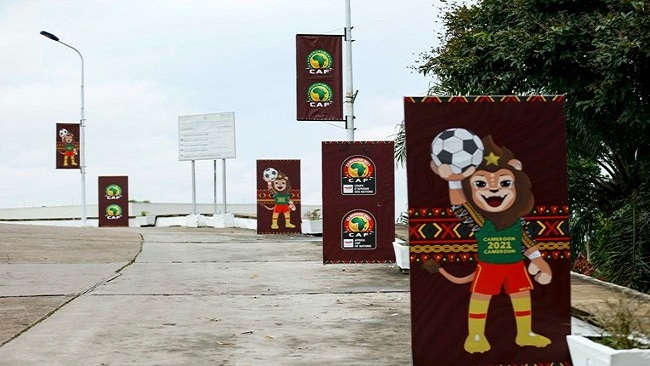
Two and a half years later than planned, Cameroon is hosting the Africa Cup of Nations (AFCON). The tournament was moved to Egypt in 2019 over concerns about Cameroon’s readiness in terms of infrastructure, and in 2021, it was delayed because of the COVID-19 pandemic. Cameroon’s hosting privilege has been controversial due to the country’s ongoing conflict, which began in 2016.
Anglophone Cameroonians constitute 20 percent of the population and feel marginalized by the Francophone majority. Cameroonian President Paul Biya speaks only French in public, and his government largely ignored the demands of lawyers and teachers who led peaceful protests against Francophone dominance in 2016. The conflict has since become increasingly violent, and many Anglophones now demand an independent state called Ambazonia.
Although rebels have launched attacks in the Cameroonian towns of Buea and Limbe, which are holding AFCON matches, Cameroon’s military says separatists have not been able to disrupt the games.
Authorities blamed separatists for the killing of a Cameroonian senator last week, and for a video shared on social media platforms in which armed men are seen ordering 15 children in school uniforms to strip naked. Separatist fighters vow to continue to carry out anti-AFCON operations. So far, fighting has deprived an estimated 700,000 students of their education, according to Human Rights Watch.
Some 6.2 million Cameroonians are in need of humanitarian aid, yet most media coverage has centered on the chaotic refereeing during the Tunisia-Mali game and AFCON’s potential disruption of the English Premier League.
On Dec. 10, 2021, the European Club Association wrote to the Confederation of African Football (CAF) threatening to withhold African players over the omicron variant, a decision that would have defied FIFA rules. Clubs also feared losing stars, such as Liverpool’s Mohamed Salah, who plays for Egypt, and Sadio Mané for Senegal as well as Manchester City’s Riyad Mahrez playing for Algeria.
Despite negotiations, Senegal and Nigeria have had to play without England-based stars Ismaïla Sarr and Emmanuel Dennis. It is rarely mentioned that the AFCON has a much longer lineage than the Premier League, which was founded in 1992. “Is there ever a tournament more disrespected than the Africa Cup of Nations?” former England and Arsenal striker Ian Wright said via social media.
As the world’s second-oldest continental tournament, AFCON has always been political. The first ever tournament took place in 1957, as countries began gaining independence from colonial rule under the rhetoric of a tournament for an independent Africa, which would showcase the continent’s ability to organize and maintain its own sporting institutions.
The founding nations were Egypt, Sudan, Ethiopia, and South Africa, though the latter was subsequently dropped for refusing to allow nonwhite players into the national team.
Soccer, argued Ghana’s first president, Kwame Nkrumah, could herald respect for Africa on a global platform. Ghana’s Black Stars went on to win AFCON in 1963—six years after independence. In 1996, host nation South Africa won its first championship with a multiracial post-apartheid team. CAF opposed FIFA World Cup’s allocation of one place shared between Africa and Asia well into the mid-1960s. It wasn’t until 1970, after Africans boycotted the 1966 games, that Africa and Asia were allocated separate places at the World Cup.
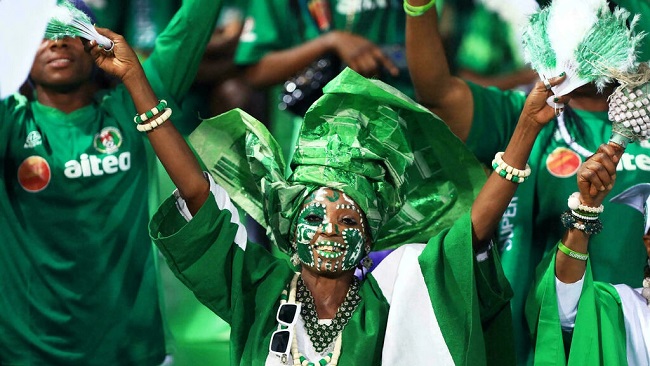
At least in some countries, competition seems to be bringing people together. When Nigeria scored a surprising win against Egypt early in this year’s tournament, “that one goal brought a nation of more than 250 ethnic groups … together,” British Nigerian journalist Aisha Rimi wrote in the Independent. At a time of growing insecurity in Nigeria, she argued, “AFCON serves as a reminder that there is something good that can come from the country.”
Culled from Foreign Policy