
13, October 2020
Southern Cameroons Crisis: Teachers reject military convoys to schools 0
At least 3,000 Cameroon teachers have refused offers by the central African state’s military to transport teaching staff to schools in the conflict-prone English-speaking regions.
The teachers, who fled separatists’ attacks, looting, burning and occupation of their schools in the English-speaking regions, say they are not sure of their safety as some separatist fighters are again threatening to kill teachers and students who go to school. The renewed separatist threats are casting doubts over all schools reopening after four years of closure due to separatist crisis.
Primary school teacher Fru Issac, 47, says he has refused an offer by the Cameroon military to take him to his school in the restive English-speaking region. However, Fru said Friday, six of his peers accepted the offer to be transported by the military from the town of Bamenda to Ndop in the English-speaking Northwest Region.
“The authorities are now taking the teachers who cannot access their stations in armored cars. But the question is, when you successfully take them there, how would the teachers cope in the absence of these armored cars,” he said.
Fru said he remained convinced that fighters were still hiding in the bush ready to commit atrocities on teachers and students when the military transports leave.
However, Handerson Quetong, the highest government official in the English-speaking northwestern Ngoketungia Division, where Ndop is located, says teachers who fail to return to school will be punished. Quetong says the military will also find and punish people he describes as agents sent by separatists to threaten parents if they send their children to school.
“Anybody, especially teachers who will continue to insist on boycott, should know that [we consider that] they have another agenda which is hidden, and woe betide anybody who will still continue to carry out campaign and sensitization for this doctrine of boycott,” he said.
Cameroon’s military said it has been on standby since October 5, when the country’s 2020-2021 school year began, to transport teachers, students and administrative staff to schools in English-speaking towns and villages.
The military said they acted to ensure that schools closed for the past four years as a result of the separatist crisis can reopen their doors so thousands of children can have access to education.
However, Cameroon’s ministries in charge of elementary and secondary education said more than 3,000 teachers did not show up last week.
Cameroon reported that 140 of close to 500 schools closed by fighters within the past four years had reopened, with about 30,000 anxious children in attendance.
Some Anglophone activists have asked for schools to be reopened, saying it was a human rights abuse to continue to deprive children of education.
The Teachers Association of Cameroon said at least 300 teachers responded to the calls and returned to schools in the English-speaking regions. The association said many of the teachers preferred to return on their own for fear of being identified with the military by fighters.
However, a group calling itself the Interim Governing Council of Ambazonia, the nation they are fighting to create, said it had banned all schools controlled by Cameroon central government in Yaoundé from operating in the English-speaking regions.
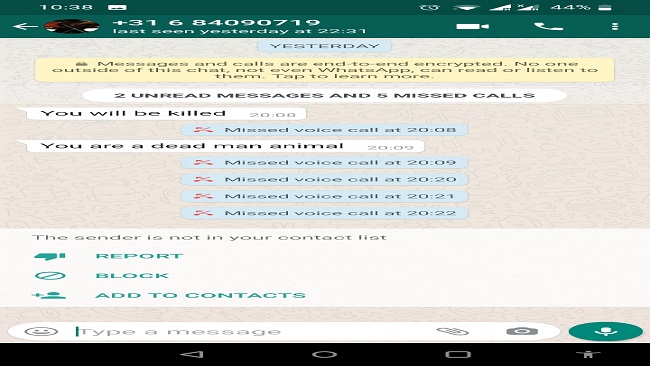
It said it had ordered its fighters to abduct teachers and students who dare go to school.
Colonel Leoue Fesso, in charge of road safety at Cameroon’s Defense Ministry says special troops have been deployed to assure the safety of the teachers and students in all English schools.
“Our forces made it possible to restore serenity in these areas affected by the crisis. We can therefore reassure the entire education community in these areas about the protective measures being taken by the defense and security forces for a smooth and successful 2020-2021 academic year,” he said.
Cameroon’s government is also encouraging the creation of militias around schools to inform the military of any strange movements and visitors.
The separatist conflict in Cameroon has left over 3,000 people dead and half a million displaced according to the United Nations. The crisis started in 2016, when teachers and lawyers took to the streets to complain about the overbearing influence of the French language in the bilingual country.
The military responded with a crackdown and separatists took up weapons, claiming that they were defending civilians. They asked for a school shutdown and vowed to make the English-speaking regions ungovernable.
Source: VOA




















13, October 2020
US: Protests grow over pending deportation of dozens of Southern Cameroonians 0
A national protest is widening over the pending deportations of dozens of Cameroon-born immigrants who lawyers and other advocates say were abused in U.S. detention centers and could face death if sent back to their homeland.
The immigrants, many of them asylum-seekers, were transferred in recent days to the civil detention center in Alvarado, about an hour southwest of Dallas. Four detained Camerooonians said in phone interviews from Prairieland Detention Center that they feared they would be tortured or killed if returned to their violence-plagued homeland.
The Southern Poverty Law Center and others have filed a civil rights complaint with the Department of Homeland Security over the alleged abuse of eight Cameroonians, when they were at a Natchez, Miss.-based detention center. The Southern Poverty Law Center alleges eight Cameroonians were abused, beaten and forced to sign their deportation papers at the Natchez detention center. All have since been moved to Prairieland, as have others from detention centers in Louisiana, Georgia and Ohio.
Officials from U.S. Immigration and Customs Enforcement, or ICE, which handles deportations, didn’t respond to questions about the civil rights complaint and the pending deportations.
Officials at the Embassy of Cameroon in Washington, D.C., didn’t respond to phone calls and emails about the validity of travel documents to take detainees from the U.S.
Amnesty International has asked that U.S. immigration officials halt deportations to Cameroon, a West African nation of 25 million where violence and armed conflict is peaking.
A U.S. State Department country report from last year warns of significant human rights abuses in Cameroon, including unlawful or arbitrary killings, disappearances by security forces, and torture and armed detention by nonstate armed groups. The report also cited human rights issues involving the Boko Haram extremist group and ISIS-West Africa. A State Department travel advisory from two weeks ago carries a no-travel warning to large portions of the country because of terrorism, kidnappings and armed conflict.
Amnesty International’s Adotei Akwei, the USA deputy director of advocacy and government relations, said that “given the current conditions in the country, it is extremely likely that anyone who is returned to Cameroon will face a high risk of being detained, beaten, disappeared, tortured or possibly even killed.”
A group gathered for a socially distanced car caravan protest outside the Prairieland Detention Center in Alvarado. The group said they wanted to show support for black migrants from Cameroon detained at the facility, on Oct. 12, 2020.
In phone interviews from Prairieland, four detainees detailed their fears of deportation and their treatment at other detention centers and arduous journeys from the jungles of Panama, through Central America and into Texas border towns where they asked for asylum.
“We ran from our countries to be protected here,” said Giscard Nkenglefac, a 34-year-old Cameroonian detainee who tried for political asylum. “Now, when they are deporting us, our lives will be at risk.”
Another Cameroonian detainee in Prairieland, Josephine Kinaka, said she fears returning to Cameroon. Kinaka came into the U.S. through Laredo a little more than a year ago. She was later detained at the Irwin County Detention Center in Georgia, before being moved to Prairieland.
“It is so scary to think what is waiting for me back in Cameroon,” Kinaka said by phone.
She said she continues to suffer physically and emotionally from a beating she received back in Cameroon.
Prairieland has had several detainees with COVID-19. It has nine active cases, and there have been a total of 94, according to ICE data. There have been nearly 6,500 cases of COVID-19 in the detention centers nationwide since the pandemic was declared, according to ICE data.
The Prairieland Detention Center opened in 2017 in Alvarado, about an hour southwest of Dallas. It has beds for about 700 detainees.
Another detainee and asylum-seeker, now at Prairieland, said he was infected with the coronavirus at another detention center and recovered.
“The stress is too much,” said Clouvis Chebegwen, who unsuccessfully sought asylum based on political persecution. “This is breaking me down,” he said in a phone call from Prairieland.
The complaint from the Southern Poverty Law Center, the advocacy group Freedom for Immigrants and others calls for an investigation into the allegations of excessive use of force at the Mississippi detention center and for copies of any videos and reports on the incidents there. The complaint details abuse in what the immigrants called the “Zulu” dorm at the Adams County Correctional Center.
Rebecca Cassler, a lawyer with the Southern Poverty Law Center, said Monday that she spoke in person with about 10 Cameroonian detainees at Prairieland this past weekend.
“We have screened several scheduled to be on those flights and they would rather stay indefinitely in detention, and they are uniformly terrified for their lives,” Cassler said.
Prairieland, which can hold more than 700 detainees, is now less than half-full at about 310 people. There have been 93 confirmed cases of COVID-19.
Source: Dallas News