1, April 2025
Niger’s junta withdraws from Lake Chad anti-Boko Haram force 0
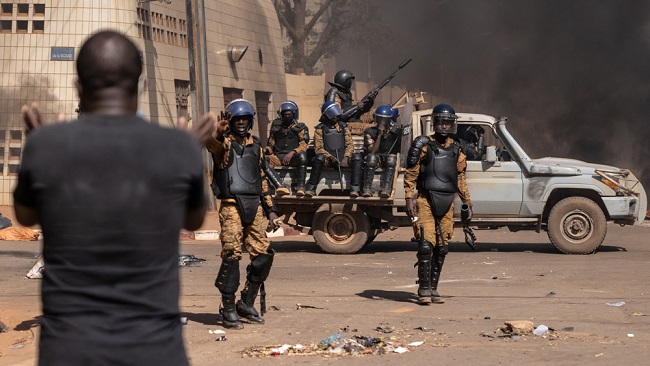
Niger’s ruling junta has quit a regional force fighting armed Islamist groups in west Africa’s Lake Chad area, cementing an acrimonious split from former allies in the region.
The decision to exit the Multinational Joint Task Force (MNJTF) was announced in a bulletin on state television over the weekend. The move “reflects a stated intent to reinforce security for oil sites”, the bulletin stated, without providing further details.
The MNJTF was formed in 2015 by Cameroon, Chad, Niger and Nigeria in the wake of increasing jihadist attacks across their territories. At its peak, it had an estimated 10,000 troops and fought many armed groups, especially Boko Haram and its offshoots. But any serious progress has been hampered or even undone by poor collaboration and equipping, analysts say.
“The force was never that effective, said Ulf Laessing, the Bamako-based director of the Sahel programme at Konrad Adenauer Foundation, a German thinktank. Its decline, he added, was “good news for jihadists and it is bad news for villagers on the lake side, fishers or farmers who just want to go about their business but who will now get less military support”.
Niger’s exit from MNJTF came days after the junta’s leader, Abdourahmane Tiani, was sworn in as president until 2030 under a new charter that suspended the constitution and dissolved all political parties.
Niger has also isolated itself from the Economic Community of West African State (Ecowas), after Ecowas imposed a range of sanctions following the coup that ousted the democratically elected president, Mohamed Bazoum, in July 2023.
Within two months of the coup, it had joined the splinter Alliance of Sahel States (AES) along with Burkina Faso and Mali, where there have also been military takeovers since 2020.
Since then, AES has introduced new biometric passports to replace the old regional passports and on Monday, it announced a 0.5% levy on imported goods from Ecowas states.
Ikemesit Effiong, managing partner at Nigerian geopolitical risk advisory SBM Intelligence, said the levy put an end to “a long history of free trade across the western Sahel” and could change the dynamics of Ecowas’s negotiations with AES.
“When squared with Ecowas’s statement commitment to keep open trade and borders with AES states, I think this [levy] will force Ecowas to drop its kid gloves strategy and be more forceful with the AES,” Effiong said.
It remains unclear what impact Niger’s withdrawal from the MNJTF will have on a security agreement signed with neighbouring Nigeria last August. The countries share a border that spans 1,000 miles but Nigeria-led Ecowas’s push for a rapid return to democratic governance has caused friction between both countries.
Effiong said recent moves in the capital, Niamey, which has been seeking new military and economic partners since expelling French troops in 2023, are unsurprising.
“Niger has been pulling out of all its main regional bilateral and multilateral commitments, much of which it sees as western influenced or inspired,” said Effiong, who noted that MTNJTF had received military and intelligence aid from western partners in the past.
Source: The Guardian















2, April 2025
President Putin begins biggest Russian military call-up in years 0
President Vladimir Putin has called up 160,000 men aged 18-30, Russia’s highest number of conscripts since 2011, as the country moves to expand the size of its military.
The spring call-up for a year’s military service came several months after Putin said Russia should increase the overall size of its military to almost 2.39 million and its number of active servicemen to 1.5 million.
That is a rise of 180,000 over the coming three years.
Vice Adm Vladimir Tsimlyansky said the new conscripts would not be sent to fight in Ukraine for what Russia calls its “special military operation”.
However, there have been reports of conscripts being killed in fighting in Russia’s border regions and they were sent to fight in Ukraine in the early months of the full-scale war.
The current draft, which takes place between April and July, comes despite US attempts to forge a ceasefire in the war.
There was no let-up in the violence on Tuesday, with Ukraine saying that a Russian attack on a power facility in the southern city of Kherson had left 45,000 people without electricity.
Although Russia has turned down a full US-brokered ceasefire with Ukraine, it says it did agree to stop attacking Ukraine’s energy facilities. In an apparent attempt to deny Moscow had broken the terms of that deal, Russian officials said they had told Putin that Ukrainian drones had carried out attacks with little sign of a break.
Russia calls up conscripts in the spring and autumn but the latest draft of 160,000 young men is 10,000 higher than the same period in 2024.
Since the start of last year, the pool of young men available for the draft has been increased by raising the maximum age from 27 to 30.
As well as call-up notices delivered by post, Russia’s young men will be receiving notifications on the state services website Gosuslugi.
In Moscow there were reports that call-ups had already been sent out on 1 April via the mos.ru city website.
Increasing numbers of Russians are trying to avoid the army by taking on “alternative civilian service”. But human rights lawyer Timofey Vaskin warned on independent Russian media that every new call-up since the start of the war had become a lottery: “Authorities are coming up with new forms of refilling the army.”
Quite apart from its twice-yearly draft, Russia has also called up large numbers of men as contract soldiers and recruited thousands of soldiers from North Korea.
Moscow has had to respond to extensive losses in Ukraine, with more than 100,000 verified by the BBC and Mediazona as soldiers killed in Ukraine.
The true number could be more than double.
Putin has scaled up the size of the military three times since he ordered troops to capture Ukraine in February 2022.
Russia’s defence ministry linked the December 2023 increase in the size of the military to “growing threats” from both the war in Ukraine and the “ongoing expansion of Nato”.
Nato has expanded to include Finland and Sweden, as a direct result of Russia’s invasion of Ukraine.
Finland has Nato’s longest border with Russia, at 1,343km (834 miles) and Prime Minister Petteri Orpo said on Tuesday that his country would join other states neighbouring Russia in pulling out of the Ottawa convention banning anti-personnel mines.
Poland and the Baltic states made similar decisions two weeks ago because of the military threat from Russia.
Orpo said the decision to resume using anti-personnel mines was based on military advice, and that the people of Finland had nothing to worry about.
The government in Helsinki also said defence spending would be increased to 3% of economic output (GDP), up from 2.4% last year.
Source: BBC