
18, September 2025
Paul Biya at 92: will defections weaken his grip on absolute power? 0
Cameroonians go to the polls in October 2025 in what some people hoped might be a break from the country’s troubled recent past. They thought that President Paul Biya (92) might stand aside to allow a transition.
Three years ago I was one of those who expressed optimism about the 2025 poll. But I was wrong.
Biya is set to run yet again for an 8th term. He is already one of Africa’s longest ruling presidents, behind only Equatorial Guinea’s Teodoro Nguema.
Biya is on the cusp of achieving lifetime presidency since taking office in 1982.
In July 2025, after months of speculation, he confirmed in a tweet that he would run again.
Having weathered coups, silenced dissent, defied death rumours, and outlasted generations of challengers, he reminded friend and foe alike that he remains at the centre of Cameroon’s political ecosystem.
I am a long time scholar of and commentator on African politics, regime transformation, democratic transition and broader governance. Given regional developments that have seen the military deposing long term leaders, one might expect Biya to superintend a managed transition. The intriguing question is: what is it about the situation in Cameroon that continues to defy logic?
There is evident restlessness and frustration among young Cameroonians as well as clear clamour for change. Yet, the incumbent remains the front-runner, supported by the ruling party, the Cameroon People’s Democratic Movement, and his near-total command of the state’s political machinery.
Simply, the system has been designed to serve Biya’s interests. With government control of the media, resources, and judicial and electoral institutions, it is unlikely that the opposition can bring about systemic change.
Some things have changed, however. Biya’s previous wins were landslides that left no room for debate. This time things could potentially be different on account of high-profile defections from his party. These men will be challenging him at the polls.
The field
The last electoral cycle, leading up to the 2018 poll, was characterised by subdued challenges and a co-opted or deeply divided opposition. This time Biya appears to face a relatively organised opposition.
Initially, 83 candidates signalled their interest. In July the electoral commission cleared 13 to run. The commission controversially disqualified Maurice Kamto, a renowned legal scholar who performed respectably in the 2018 electoral cycle with 14% of the vote.
Human Rights Watch warned that this would cast a shadow over the credibility of the electoral process.
Nevertheless, several credible figures across the political spectrum remain in the race and present alternatives.
Biya faces two other former allies turned political adversaries.
One is Issa Tchiroma Bakary, his minister of employment and vocational training. A longtime insider of the regime, he served in various ministerial roles and was long considered a loyalist. Yet in June 2025, he resigned from the government, delivering a searing critique of the system he once represented.
He then launched his campaign, running on the ticket of the Front for the National Salvation of Cameroon.
The minister of tourism and leisure, Bello Bouba Maigari, still formally holding office, declared his intention in July 2025 to run against his boss in the October elections.
This announcement was especially striking given the deep political history between the two men. Maigari is not just any cabinet member. He is a long-standing confidant of the president, having been appointed Biya’s prime minister in 1982 and hailing from the vote-rich northern region. The decision to enter the race marks a shift from loyal lieutenant to presidential challenger, revealing the growing fissures within the ruling elite.
Others in the race worth noting are:
Akere Muna, the son of a former speaker who swore in Biya in 1982 and a tireless advocate for transparency and accountability. He ran for the top job in 2018 (but withdrew at the last minute).
Cabral Libii, from the Cameroon Party for National Reconciliation, a young and dynamic leader who also ran for president in 2018 and garnered 6% of the total vote.
Joshua Osih, a seasoned politician with a strong track record.
The issues
The nation’s pressing issues remain the same as they have been for a long while.
These include:
Endemic corruption. Cameroon is ranked 140 out of 180 countries by Transparency International. The reasons are systemic decay of state institutions and maladministration.
Economic stasis, including stubborn unemployment forecast at 7.34% by Statista; 23% live below the international poverty line and 3.3 million are food insecure.
The ongoing anglophone regional crisis pitting the English speaking regions against the dominant francophone centre.
Biya’s ability to govern and the succession question, given his very advanced age and the potential vacuum or infighting if he couldn’t complete his term.
The external dimension
Western actors have been consistent critics of Biya’s regime in the recent past. However, some have adopted a more cautious tone, balancing criticism with strategic interests.
The US, for instance, suspended some military assistance to Cameroon in 2019 over human rights abuses. But it continues counter-terrorism cooperation against Boko Haram.
The European Union, while pressing for peaceful resolution of the anglophone conflict, remains an important trade and aid partner.
China has become Cameroon’s largest bilateral creditor and a top trading partner. According to a report by Business in Cameroon, in 2024 Cameroon owed about 64.8% of its external bilateral debt to China. This is primarily for infrastructure loans that have funded projects like the Kribi Deep Sea Port, the Yaoundé-Douala highway, and hydropower stations.
For regime survival, Biya has pursued a pragmatic foreign policy. Beijing’s diplomatic stance of non-interference and respect for sovereignty resonates with Cameroonian political elites wary of western scrutiny and criticism over democratic backsliding and the anglophone conflict.
But Biya has not severed ties with the west. For example, the government maintains partnerships with France for security training, with Germany for decentralisation support, and with the US for counterinsurgency.
This balancing is not simply geopolitical. It is also deeply embedded in domestic patronage networks. Foreign aid, loans and investments serve as resources to consolidate elite power, strengthen the patronage system and suppress dissent.
The October polls are sure to reaffirm the status quo.
Culled from The Conversation










18, September 2025
Yaoundé: Religious leaders urge peace as presidential election nears 0
Cameroon’s churches and mosques are intensifying efforts to promote calm and civic responsibility as the country prepares for its 12th October presidential election, amid fears that rising tensions could trigger violence.
The Central African nation has been rattled by years of unrest, including a separatist insurgency in its English-speaking regions and widespread allegations of corruption. Economic hardship and deepening mistrust in state institutions have heightened anxiety ahead of the polls, with analysts warning that online hate speech and political rivalries could inflame unrest before or after results are announced.
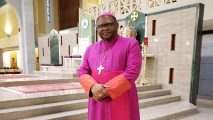
Catholic bishops have been among the most vocal religious voices calling for peace. In August, Bishop Barthélemy Yaouda Hourgo of the Diocese of Yagoua ordered all parishes to ring bells daily at 12:30pm for the Angelus prayer, calling on the faithful to pray for stability.
“As pastor of this diocese, I ordain that all the faithful recite the Angelus together each day to ask God for peace and entrust the elections to the Virgin Mary,” Hourgo said, adding that peace “is a gift from God but also the fruit of our daily commitment.”
Archbishop Samuel Kleda of Douala used his pastoral letter to denounce what he called “anti-Gospel acts,” including corruption and bad governance, which he said are fueling public discontent.
“Our country is thirsty for social justice expressed through respect for human rights,” he said. “Every Cameroonian must resolve to do his or her bit in the fight against the many ills that are destroying the country.”
During Bafoussam’s annual Peace Pilgrimage, Bishop Paul Lontsié-Keuné reminded Christians that their prayers must translate into action. “If we are sincere and really Christians, our prayer for peace must inspire our action – and our action must also be prayer,” he said.
The Council of Protestant Churches of Cameroon (CEPCA) has pledged to mobilise congregations against hate speech and promote peaceful participation in the vote. In late August, a 15-member delegation led by Rev Hamadina Salomon met with Minister of State Ferdinand Ngoh Ngoh at the Unity Palace. Ngoh Ngoh, representing President Paul Biya, praised the initiative and urged clergy to act as “apostles of peace” and “guardians of stability.”
Muslim leaders have also organised a national “peace and stability” conference and collective prayers for unity, encouraging worshippers to see peaceful participation in the election as a religious duty.
Pastor Emmanuel Ngang, a traveling preacher in Cameroon’s western region, has been holding services in both city churches and rural chapels to spread a simple message: unity is stronger than division.
Ngang said he keeps his message brief and practical so congregants can take it to heart. “I remind people that peace starts with each of us,” he said. “We must speak carefully, vote honestly and keep the country together.”
His visits often include meetings with youth groups, where he encourages young people to avoid spreading inflammatory posts online.
“Many of them fear what will happen if things turn violent,” he said. “I tell them fear can paralyse us, but faith can guide us.”
Observers say that religious leaders play an outsized role in Cameroon’s public life, often serving as moral voices in a country where political trust is low. But they also walk a fine line: some critics argue that their close contact with government officials risks undermining their independence.
Still, analysts agree that their combined influence could help shape the tone of the electoral period. Faith leaders say they are not endorsing candidates but trying to keep the peace.
“My task is not to tell people who to vote for,” Ngang said after a recent service. “It is to remind them that Cameroon will still be here the day after the election – and we will still need to live together.”
Source: sightmagazine