6, September 2025
Ambazonia Crisis: Fako Unity Warriors claim roadside attack that killed 7 soldiers 0
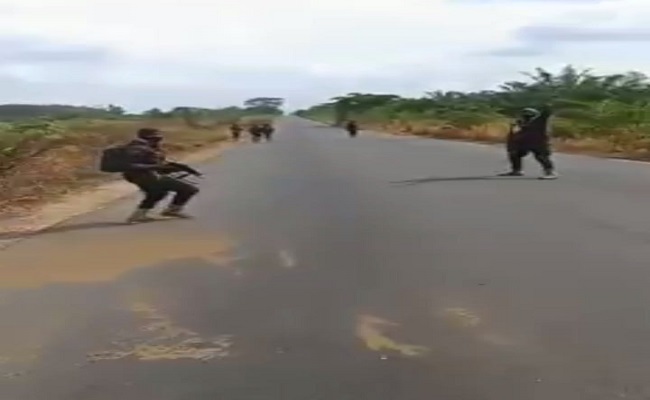
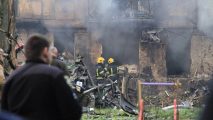
A separatist group has claimed responsibility for a roadside bomb attack that detonated in southwestern Cameroon, killing seven soldiers.
The attack happened Friday morning near the town of Malende, according to local media. The Fako Unity Warriors, an English-speaking separatist group, claimed responsibility for the attack late on Friday.
The Cameroon News Agency reported that seven soldiers were killed. Government forces had been on patrol in the area in recent weeks, searching for improvised explosive devices, the agency said.
The Cameroonian military has not officially commented on the attack and did not respond to a request for comment from The Associated Press.
Cameroon’s western regions have been plagued by fighting since English-speaking separatists launched a rebellion in 2017 with the stated goal of breaking away from the French-speaking majority. They aim to establish an independent English-speaking state in the west of the country.
The tensions, which began with peaceful protests organized by lawyers and teachers, turned deadly nearly a decade ago following a government crackdown.
The government has accused separatists of committing atrocities against English-speaking civilians. The conflict has killed more than 6,000 people and displaced over 600,000 others, according to the International Crisis Group.
Though the number of deadly attacks by separatists has decreased in recent years, the conflict shows no signs of resolution. Peace talks with international mediators have stalled, with both sides accusing each other of acting in bad faith.
Friday’s attack came on the same day that federal law enforcement officials in Minnesota indicted two separatist leaders, both naturalized U.S. citizens.
According to the indictment, the two commanders of the Ambazonia Defense Forces had financed and ordered fighters in Cameroon to carry out bombings, executions and kidnappings while living in the United States.
Source: AP










8, September 2025
The Roman Catholic Church is concerned about a new term for Paul Biya 0
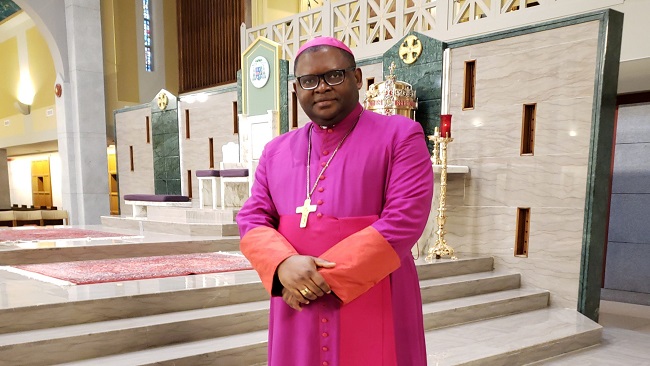
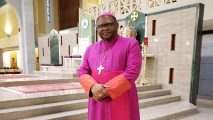
As an important presidential election is approaching in Cameroon, scheduled for October 2025, Archbishop Samuel Kleda of Douala has just published a sixteen-page pastoral letter in which he provides a damning assessment of the situation in his country. This situation has been exacerbated by the candidacy of the current head of state, Paul Biya, the ailing, 92-year-old candidate for re-election.
Samuel Kleda does not mince words: the archbishop regularly denounces the “moral depravity” in his country. In the letter, distributed and read in the parishes of his diocese on August 8, he speaks of “a society shaken by multiple ills that afflict all social strata.” He attributes the widespread malaise, which is fueling growing discontent in the run-up to elections, to “anti-evangelical acts” deeply rooted in the country’s governance.
These ills include governance marked by corruption, a perverted democracy, endemic poverty and unemployment, illegal immigration, a crumbling road network, difficult access to drinking water and electricity, opaque management of oil resources, injustices in the mining sector, and security crises in the English-speaking regions and the Far North. These scourges pervert the relationship between citizens and their leaders, leading to abuses of power and injustices.
The Archbishop also deplores a socially unbalanced economy, where the country’s wealth is diverted to finance the lavish lifestyles of an elite, while the majority of the population lives in poverty: “The country’s natural resources are plundered to enrich a minority, while the majority of citizens suffer from hunger,” he writes. This situation creates a gaping gap between the rich, who are increasingly prosperous, and the poor, who are increasingly deprived.
But the Archbishop of Douala also does not spare Cameroon’s democratic system, which he describes as “corrupt.” He denounces a political system marked by institutional violence, intimidation, and lies: “A democracy where political actors are despised, brutalized, and imprisoned is doomed to failure,” he asserts.
The exodus of young people is described as a “brain drain.” Bishop Kleda notes that, faced with the lack of hope for a better future, thousands of young people are leaving the country, sometimes risking their lives, in search of better employment, living, and educational conditions abroad. “This flight deprives Cameroon of its young talents, scientists, engineers, and health professionals, to the benefit of countries offering better opportunities,” he laments. This phenomenon, he believes, seriously compromises the nation’s future.
The Archbishop also highlights the security crises tearing the country apart. In the English-speaking regions, where a secessionist conflict that began in 2016 has already caused more than 6,500 deaths and displaced 800,000 people, he condemns both the atrocities committed by the separatists—assassinations, assaults, and kidnappings—and the brutality of the army, which “razes entire villages on mere suspicion.”
In the Far North, attacks by the terrorist group Boko Haram are sowing terror and devastation. Faced with these dramatic situations, Archbishop Kleda urges the government to redouble its efforts to restore peace in all regions affected by these crises.
As the presidential election approaches on October 12, 2025, Kleda appears to be suggesting that Cameroonians mobilize for a change in governance: “Choosing a president of the Republic is a civic duty that falls to each of us and will shape the future of our country,” he declared.
Kleda’s remarks sparked strong reactions, particularly from those close to President Paul Biya, who has been in power since 1982 and is running for an eighth consecutive term at the age of 92. Professor Owona Nguini, an ally of the president, accused the archbishop of meddling in politics: “The bishop has strayed from his priestly mission to engage in partisan politics,” he declared.
Despite the gravity of the situation, Archbishop Kleda concluded on a note of hope, inviting Cameroonians to unite in prayer: “On the eve of the presidential election, I invite you all to join me, your brother, so that together we may raise our voices to Almighty God, to implore peace for our country, a spirit of love and service in families and for each of us,” he wrote.
It is a peace and social cohesion that is at risk of being undermined as the October 2025 election draws closer.
Source: Crux