23, June 2020
Global coronavirus cases top 9 million 0
Global coronavirus infections topped 9 million as the World Health Organization blamed a “lack of global solidarity and leadership” for allowing the pandemic to spread and Saudi Arabia announced it would scale back the Hajj Islamic pilgrimage next month.
Many parts of the world, including Latin America and South Asia, are only beginning to feel the full force of the pandemic, while other regions that appeared to have vanquished the virus are being hit with second waves.
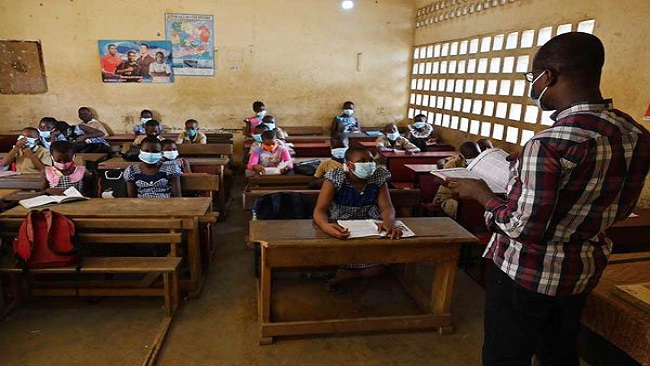
Europe has steadily eased its travel lockdowns in recent weeks, and France took its biggest step back to normality on Monday by allowing millions of children to return to school.
“The pandemic is still accelerating,” the WHO’s director general Tedros Adhanom Ghebreyesus told a virtual health forum organised in the United Arab Emirates later that day.
Tedros said the greatest threat was not the virus itself, which has now killed over 470,000 people, but “the lack of global solidarity and global leadership.”
“We cannot defeat this pandemic with a divided world,” he said. “The politicisation of the pandemic has exacerbated it.”
Brazilian President Jair Bolsonaro is one of the leaders to have repeatedly played down the threat, comparing the virus to a “little flu” and arguing the economic impact of shutdowns is worse than the virus itself.
More than 50,000 people have been confirmed to have died from the virus in Brazil, with the true number believed to be far higher.
Brazil’s official death toll is second only to the United States, which has recorded 120,000 fatalities, and President Donald Trump’s handling of the crisis has been widely criticised as erratic and chaotic.
Trump on Monday said the American toll could surpass 150,000, as two more members of his team that helped organise a controversial weekend rally for him in Oklahoma tested positive.
Mexico, Peru, Chile and Argentina are also coping with crises — Mexico City being forced to delay plans for a broad reopening of the economy as the country’s death toll raced past 20,000.
With a vaccine still far away, the WHO has called for a rapid increase in production of the steroid dexamethasone, which has been shown to have life-saving potential.
‘Very limited’ Hajj
Saudi Arabia said it would allow a “very limited” number of pilgrims to its annual Hajj ritual, which last year drew 2.5 million pilgrims from around the world.
The Hajj, a must for able-bodied Muslims at least once in their lifetime, represents a potentially major source of contagion.
Authorities said a hajj only involving pilgrims already in the kingdom would be permitted.
In Europe however, countries continued to ease their restrictions.
Thousands of French people danced and partied in the streets well into Monday for an annual music festival, in the first big blowout since the lockdown, leading to criticism of the authorities for being too lax.
“This is not what a gradual end to the lockdown looks like,” said Dr Gilbert Deray.
“I understand that the Festival of Music is something of a liberation, but did we really have to have it this year?”
In England authorities said cinemas, museums and galleries would reopen on July 4 in the next phase of easing lockdowns as infection rates there also slow.
But illustrating the persisting risks, Portugal Prime Minister Antonio Costa said restrictions on gatherings of more than 10 people would be reimposed and cafes and shops ordered to close at 8pm in Lisbon.
Australians were warned to avoid travelling to Melbourne as the country’s second-biggest city tightened restrictions over fears of an upsurge in cases.
China, Germany, South Korea and Japan are also battling new outbreaks, with some reintroducing containment measures.
Meanwhile, the sports world has been slowly re-emerging from the virus darkness, although for every step forward it seems to take one back.
Three of the world’s top male tennis players tested positive after taking part in a tournament in the Balkans featuring world number one Novak Djokovic, raising questions over the sport’s planned return in August.
(FRANCE 24 with AFP)






















24, June 2020
Germany reimposes local lockdowns after regional coronavirus outbreak 0
The governor of Germany’s most populous state on Tuesday put two municipalities back into lockdown until June 30 after a regional outbreak had seen a large increase in Covid-19 cases.
German authorities on Tuesday ordered new lockdowns for two districts in the state of North Rhine-Westphalia, the first since easing coronavirus restrictions and a major setback for hopes of a swift return to normality.
The move came after a coronavirus outbreak at a slaughterhouse that has infected more than 1,500 workers.
“For the first time in Germany, we will return an entire district to the measures that applied several weeks ago,” said Armin Laschet, state premier of North Rhine-Westphalia.
He said the lockdown would affect 360,000 people in the district of Gutersloh, and would stay in place until at least June 30.
A second neighbouring district was placed under lockdown just hours after restrictions were re-imposed for Gutersloh.
“In order to protect the population, we are now launching a further safety and security package to effectively combat the spread of the virus,” North Rhine-Westphalia health minister Karl-Josef Laumann said on Tuesday, ordering a lockdown for the district of Warendorf.
Biggest outbreak since early May
The new outbreak occurred at a slaughterhouse in the town of Rheda-Wiedenbrueck that employs nearly 7,000 people.
As of Sunday, 21 people were being treated in hospital, six of them in intensive care.
The outbreak in Germany’s most populous state is the biggest since the country began lifting the lockdown in early May.
Local authorities across Germany agreed then to pull an “emergency brake” and reimpose social curbs if the infection rate rises above 50 cases per 100,000 residents over a week in a particular district.
The rate in Gutersloh has soared well above that, sitting at 263 cases per 100,000 residents on Monday.
The new lockdown means a return to measures first introduced in March, with cinemas, museums, concert halls, bars, gyms, indoor swimming pools and saunas shut down, Laschet said.
Schools and kindergartens have also been closed ahead of school holidays which will start this weekend.
The move comes as Germany and the rest of the EU begin taking steps towards getting tourism up and running again, with many European borders reopening just last week.
Several planeloads of German tourists have flown to Spain’s Mallorca island to take part in a test of plans to reopen the popular destination as the country emerges from its coronavirus lockdown.
But the latest flareup in Gutersloh prompted authorities in the German island of Usedom to turn away a couple who had travelled from the affected district.
Under control
Several COVID-19 outbreaks at slaughterhouses, not just in Germany but also in France, have put a spotlight on the working and housing conditions facing the workers — many of whom come from Romania or Bulgaria.
The German government has responded by banning the use of subcontractors in the meat industry in a bid to curb the controversial practice of companies using middlemen to supply workers from abroad who are more vulnerable to abuses.
But Germany has also seen new coronavirus clusters in residential buildings in Lower Saxony and in Berlin, where 370 families living in high-rise flats were placed under quarantine in one neighbourhood last week.
Despite the new outbreaks, the Robert Koch Institute (RKI) disease control centre remained optimistic on Tuesday that the virus remains under control in Germany.
“If we are able to keep the number of cases low the whole time, then we will be able to contain and end outbreaks locally, and that will remain the case,” RKI head Lothar Wieler said.
With new infection rates sharply down from highs in March and a death toll significantly lower than those of its neighbours, Germany became the first major EU country to begin easing virus restrictions about seven weeks ago.
The government has noted that rules to maintain a minimum distance of 1.5 metres (five feet) as well as requirements to cover up noses and mouths in closed public spaces have helped in the fight against new transmissions.
It is now counting on contact tracing — both through human trackers as well as through a new app — to ensure that any new infections are isolated.
Chancellor Angela Merkel has repeatedly warned against complacency before a viable vaccine is found.
(FRANCE 24 with AFP)