Featured
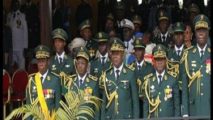
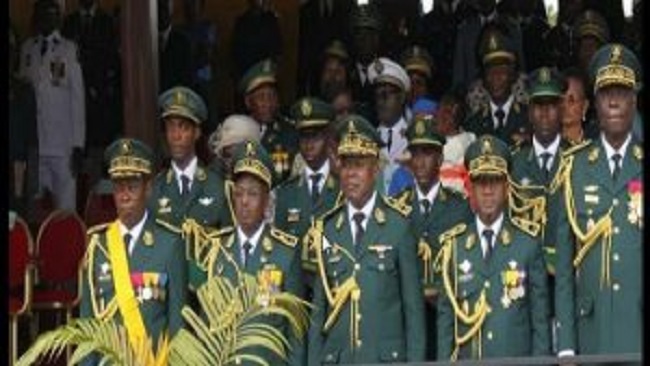 The Cameroonian army must put its conscience to the test
  Who really pushed for the return of the Vice President of the Republic?
  When politics fails a nation, football and the Church become the battleground
  Biya has had his era; Cameroon must now be allowed to enter its next one
  Biya’s hand: a source of glory and shame
Most Commented Posts
 4 Anglophone detainees killed in Yaounde
18 comments Chantal Biya says she will return to Cameroon if General Ivo Yenwo, Martin Belinga Eboutou and Ferdinand Ngoh Ngoh are sacked
13 comments The Anglophone Problem – When Facts don’t Lie
12 comments Anglophone Nationalism: Barrister Eyambe says “hidden plans are at work”
12 comments Largest wave of arrest by BIR in Bamenda
10 comments
Featured
-
Martinez Zogo Trial: questions over missing phone linked to Amougou Belinga
-

Revealed: Colonel Danwe admits ordering Martinez Zogo operation
-
Archbishop Nkea to battle decade of war with new peace Catechism
-

Southern Cameroons Crisis: 7 kidnapped by suspected Amba fighters in Bangourain
-
Southern Cameroons Crisis: 3 killed, 2 injured in bar shooting in Bamenda
-
US military nearing ‘breakdown’ amid sustained Iranian attacks
-
The Cameroonian army must put its conscience to the test
30, April 2026
Cameroonians in Washington celebrate Pope Leo’s visit to their homeland 0
by soter • Cameroon, Cameroon, Headline News, News, Religion
Walking into the Church of the Resurrection in Burtonsville, Maryland, on April 26, the pride and celebration hit you before you even found a seat. The Cameroonian Catholic Community of the Washington, D.C. area was gathering for their monthly Mass, but this wasn’t an ordinary Sunday Mass. Not only was the Catholic Women’s Organization of Cameroonian immigrants marking its 10th anniversary, but the community was also coming together to celebrate the recent historic visit of Pope Leo XIV to Cameroon.
Swaying down the center aisle, the Cameroonian women’s group led the opening procession for the Mass, followed by the concelebrating priests and the main celebrant, Bishop Jerome Feudjio of the Diocese of Saint Thomas in the U.S. Virgin Islands, who is from Cameroon and is the first African-born bishop serving a United States diocese. The joyful singing by the Cameroonian women filled the church before they veered off to the designated choir seats as the Mass began.
An altar server holds a candle before the opening procession for a Mass for Cameroonian Catholic Community of the Washington area held on April 26, 2026 at the Church of the Resurrection in Burtonsville, Maryland. (Catholic Standard photo by Andrew Biraj)
The concelebrating priests included Father John M. Barry, the pastor of Resurrection Parish; and seven priests from Cameroon. Also assisting at the Mass were three deacons from Cameroon, and seminarians from that country were in attendance.
The congregation filling the pews – including the Catholic Women’s Organization and other Cameroonian immigrants – wore colorful and vibrant traditional African church wear. Bishop Feudjio opened with a song, “This is the Day” and the congregation answered him in full voice. As the Mass went on, songs moved between Pidgin and English, the kind of worship that felt like home. When member of the Catholic Women’s Organization danced the lectionary to the altar and Bishop Feudjio lifted it, the congregation erupted in jubilation.
Members of the Catholic Women’s Organization drawn from Cameroonian immigrants in the Washington area participate in a lectionary procession during an April 26 Mass at the Church of the Resurrection in Burtonsville, Maryland. The lectionary was handed to the main celebrant, Bishop Jerome Feudjio of the Diocese of Saint Thomas in the U.S. Virgin Islands, who is from Cameroon and is the first African-born bishop serving a United States diocese. (Catholic Standard photos by Andrew Biraj)
In his homily, Bishop Feudjio congratulated the Catholic Women’s Organization for reaching the 10 year milestone before turning to challenge the entire community. He called on the community to commit more deeply to ministry, service, sacrifice, and witness. The bishop emphasized the importance of working together. stating, “A single hand can’t tie a bundle,” and he said the women’s group had been among the hands holding that community together for a decade.
Bishop Feudjio tied in Scripture, urging the congregation to listen for the voice of the Holy Spirit, and acknowledged the importance of women’s leadership as being fundamental to the Church. “The wisdom of women is the neck that turns the head,” he said. “A strong Catholic women’s organization becomes a protective gate for a parish, a neighborhood, a community, the diocese. They act as guardians of the domestic church, and no one feels alone.”
Bishop Jerome Feudjio gives the homily during an April 26 Mass at the Church of the Resurrection in Burtonsville, Maryland, for the Cameroonian Catholic Community of the Washington area. Bishop Feudjio of the Diocese of Saint Thomas in the U.S. Virgin Islands is from Cameroon, and he is the first African-born bishop serving a United States diocese. (Catholic Standard photo by Andrew Biraj)
When Pope Leo XIV landed in Yaoundé, the capital city of Cameroon on April 15, he became only the third pope in history to visit that country, following Pope St. John Paul II’s visits in 1985 and 1995, and Pope Benedict XVI’s visit in 2009.
Pope Leo XIV used his 11-day, four-nation African tour as a global platform to speak out against war and corruption, and to uphold the dignity of human life. Days before the papal visit to Cameroon, a three-day ceasefire was declared by the separatist alliance in English-speaking regions to allow civilians and visitors to move freely during the pope’s stay. The visit intersected with the ongoing Anglophone crisis, a separatist conflict that began in 2017 and has claimed more than 6,500 lives and displaced more than 500,000 people.
At a peace meeting in Bamenda, Cameroon, thousands lined the streets to receive Pope Leo. Local Catholic leaders expressed hope that the visit could bring about “tangible miracles” for peace. A blind woman at the airport stayed behind shouting “I have greeted the pope,” while a little girl in Bamenda broke through the crowd to embrace him, becoming a symbol for the entire nation.
People pray during an April 26 Mass at the Church of the Resurrection in Burtonsville, Maryland, for the Cameroonian Catholic Community of the Washington, D.C. area. (Catholic Standard photos by Andrew Biraj)
The Cameroonian Catholic Community of the Washington, D.C. area has been finding its footing in the DMV for more than two decades. In 2005, the D.C. area was home to one of the largest Cameroonian immigrant populations in the United States. That same year, a group of Cameroonians began searching for something familiar, a Mass that looked and felt like worship back home. A community-styled Mass was organized and first held at the Crypt Church in the Basilica of the National Shrine of the Immaculate Conception.
Lambert Mbom, an architect and Cameroonian Catholic Community coordinator, sought out a permanent parish location. With the help of Jude Ambe, Ita Ngang, and Lucia Chuo of Resurrection Parish, they asked Father Bob Keffer, who was then the pastor there, for permission to hold their monthly Mass, and in June 2006 the Church of the Resurrection became home to that community. A second group, the Catholic Women’s Organization, formed in 2016. The parish has had two Cameroonian priests in residence since 2019. The community is proud to mention that they have produced a priest, Father Bening Achi, who emerged from the Cameroonian choir there.
For Father Herbert Niba, the co-chaplain of the Cameroonian Catholic Community in the Washington area who is currently in residence at Resurrection Parish, the moment carried personal weight. Niba said the papal visit stirred memories of his own experience when Pope Benedict XVI visited Cameroon in 2009, and he was one of the choir members who sang after an intense two month preparation period in anticipation of that papal visit. Niba noted the timing of Pope Leo’s visit added a special impact for the local community, calling it a “divine coincidence.”
Women sing during an April 26 Mass at the Church of the Resurrection in Burtonsville, Maryland, for the Cameroonian Catholic Community of the Washington, D.C. area. (Catholic Standard photos by Andrew Biraj)
Last September, the CCC-WDC joined the Saint John Paul II National Shrine in Washington to mark the 40th anniversary of Pope St. John Paul II’s historic visit to Cameroon, which was the first papal visit to the country. Father Niba encouraged his community and country to use this time to “unveil the best of what these papal visits have given to us.” He also pointed to what he called the “reverse missionary train,” the growing presence of African priests ministering in the diaspora, as evidence of the lasting fruit of the papal outreach to the African church and community.
Pius Ambe, chairman emeritus of the CCC-WDC who led the community from 2016 to 2024, was a young elementary school student in Bafut, Cameroon for Pope St. John Paul II’s first visit in 1985. Watching Pope Leo return to the same villages decades later was nostalgic for him. Ambe noted, “Cameroon is in great need of healing, in great need of peace.” He said Pope Leo “brought with him a balm to heal the pain that people have gone through for so many years, feeling unseen and abandoned.”
Ambe acknowledged the frustration some Cameroonians felt toward the Church during the conflict, believing it had not spoken forcefully enough for justice. For him, Pope Leo’s presence in Bamenda addressed that directly. “There’s no peace without justice,” he said. “The pope coming and speaking very openly and candidly was refreshing. It has helped to heal and uplift people, renewing their hope and increasing their faith.”
During an April 26 Mass at the Church of the Resurrection in Burtonsville, Maryland, for the Cameroonian Catholic Community of the Washington area, Bishop Jerome Feudjio of the Diocese of Saint Thomas in the U.S. Virgin Islands gives Communion to a woman and blesses a girl. Bishop Feudjio, who is from Cameroon, is the first African-born bishop serving a United States diocese. (Catholic Standard photos by Andrew Biraj)
Ngang Ita, president of the Catholic Women’s Organization of Cameroonian immigrants, said the visit sent a message that extended beyond Cameroon’s borders. For Ita, Pope Leo’s presence on African soil signaled that the faith of the Church is rooted in Africa and the pope’s interest in the continent gives Cameroonians everywhere a deeper sense of belonging. Even from Maryland, she said, gatherings like the one at Resurrection Parish “serve as a reminder of home and a reaffirmation of their place in the universal Church.”
For Emmanuel Grangni Nyasa, current pastoral council chairperson of the Cameroonian Catholic Community in the Washington area, the visit came down to one thing: unity, both within the African church and among Cameroonians here in the diaspora. “The greatest man of our faith bringing his presence brought much needed peace,” Nyasa said. “The Holy Father’s presence unites the whole of Africa as a community to do what we are supposed to do as Catholics.”
At the Church of the Resurrection, Bishop Feudjio brought the Mass to a close as the Catholic Women’s Organization filled the church with song. Before the final blessing, that group offered a tribute to the Blessed Mother, their patron saint, and dedicated flowers in her honor.
Near the end of an April 26 Mass at the Church of the Resurrection in Burtonsville, Maryland, for the Cameroonian Catholic Community of the Washington area, members of the Catholic Women’s Organization of immigrants from that African nation honor the Blessed Mother with flowers. (Catholic Standard photo by Andrew Biraj)
Then the celebration spilled out of the pews to downstairs, where the congregation ate, drank, sang, and danced, marking not only a decade of the women’s group but a papal visit that reminded them, even from 5,000 miles away, that they had not been forgotten.
Culled from Catholic Standard