16, October 2022
African Union calls on Ethiopia rivals to ‘recommit’ to peace 0
The African Union on Sunday called on the warring parties in Ethiopia’s conflict to “recommit” to peace talks, as violence intensifies in the embattled Tigray region.
The city of Shire in northwest Tigray has been bombarded for several days in a joint offensive by Ethiopian and Eritrean troops, with civilian casualties reported in the push against rebels from the war-torn region.
The International Rescue Committee, an aid organisation delivering relief to stricken Tigray, announced on Saturday that one of its staff was among three civilians killed in an attack in Shire.
UN chief Antonio Guterres has joined the United States and other Western powers in expressing grave concern over the worsening violence and its impact on civilians, and called on both sides to negotiate peace.
Prime Minister Abiy Ahmed’s government, and the Tigrayan authorities, have accepted an AU invitation to talk, but negotiations scheduled to start last weekend in South Africa failed to take place.
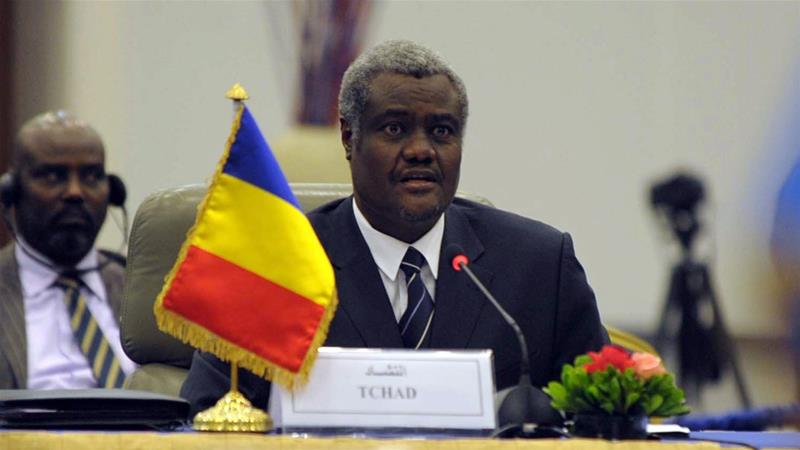
AU Commission chair Moussa Faki Mahamat said the escalating violence was of “grave concern”.
“The Chairperson urges the Parties to recommit to dialogue as per their agreement to direct talks to be convened in South Africa by a high-level team led by the AU High Representative for the Horn of Africa, and supported by the international community,” he said in a statement issued on Sunday, but dated Saturday.
Talks were to be mediated by the bloc’s Horn of Africa envoy Olusegun Obasanjo, South Africa’s former deputy president Phumzile Mlambo-Ngcuka and former Kenyan president Uhuru Kenyatta.
Diplomats suggested logistical issues were partly to blame for the much-anticipated meeting not going ahead.
The latest fighting came as US special envoy Mike Hammer arrived in Addis Ababa to push for an end to nearly two years of war between Ethiopia, its allies, and rebels led by the Tigray People’s Liberation Front (TPLF).
Fighting resumed in August after a five-month lull, dimming hopes of settling a conflict that has killed untold numbers of civilians, and been marked by atrocities by all sides.
The return to war also halted desperately-needed aid into Tigray, where the UN says millions of people have been forced from their homes, and hundreds of thousands are close to famine.
The conflict erupted in November 2020 when Abiy — a Nobel Peace Prize winner — sent troops to topple the TPLF, the ruling party in Tigray he accused of staging attacks on army camps.
The TPLF dominated Ethiopia’s ruling coalition for decades before Abiy came to power in 2018.
Source: AFP














31, October 2022
Chad: Kidnapped Franco-Australian conservationist released by captors 0
A French-Australian hostage kidnapped in eastern Chad has been released and is in “good health”, the Chadian Prime Minister announced in a tweet Sunday.
“The kidnapped Franco-Australian hostage… has just been found and taken to safety in good health,” said Prime Minister Saleh Kebzabo, congratulating “the defence and security forces for this quick and successful action”.
The individual had been kidnapped on Friday “in the afternoon of 28 October”, Chadian authorities said Saturday, adding they had “mobilised all security and human means to get hold of the kidnappers”.
“The hostage was released in the province of Tibesti (North), in an area bordering Niger and Libya by our defence and security forces,” Ayoub Abdelkerim Abdoulaye, governor of the eastern province of Wadi Fira where the abduction took place, told AFP.
Chadian authorities also reported they worked in Oryx Park on behalf of the Sahara Conservation Fund (SCF), a wildlife conservation NGO.
The park is located in the Ouadi Rime-Ouadi Achim wildlife reserve which extends over 77,950 square kilometres.
The French foreign ministry said Saturday it was “aware of the kidnapping of one of our citizens in Chad” and it was “in contact with their family, and also with the authorities in Chad, in order to secure their speedy release”.
Source: AFP