3, September 2018
We’re dying, Ambazonian refugees in Nigeria cry for help 0
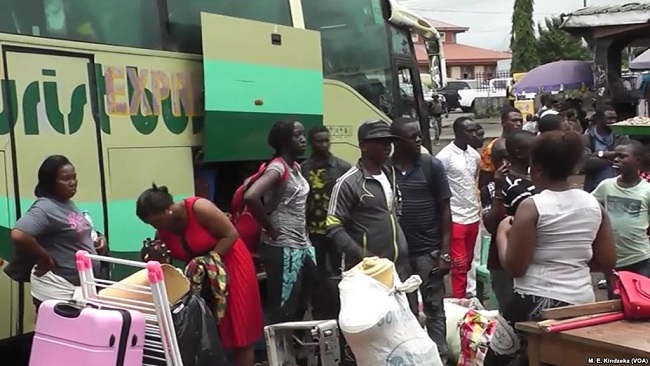
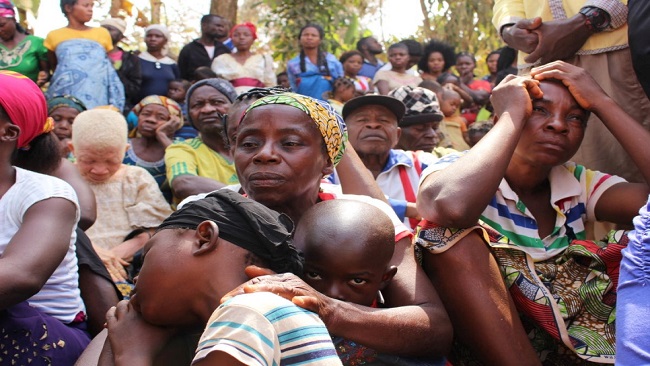
The agony of widows, infants and the vulnerable Cameroonian refugees cooling off in some Taraba communities seemed to be getting worse owing to their increasing number amidst meagre resources to cater for their well-being. At the last count, over 4000 refugees from Furawa sub-division, Baji, Nkan, Mashi, Lisan Lutu Cameroon among others have migrated to some communities in Ussa and Kurmi local government areas of Taraba state to escape the mayhem unleashed on agitators for the independence of Southern Cameroon.
For those plagued with one ailment or the other, help seemed far-fetched as many lamented difficulty in getting medical help, coupled with starvation which has made them frail and pitiable. When Vanguard visited Fikyu and Toso villages where some of them were being accommodated, the residents were weary and decried neglect by government and authorities responsible for refugees.
However, for people like Patience Andekun, what mattered was how to cater for the twins she gave birth to while fleeing her home country when the crises escalated to her village two months ago. Her husband who has been missing since the crisis started in her village seemed to be less of her worries right now. Other refugees also recounted how they escaped being consumed in the crisis and their present predicament.
“I gave birth to twins while running away—Patience Narrating her ordeal to Saturday Vanguard, Patience Andekun, the young mother of two said pandemonium broke out while she and her husband were asleep but had to run in different directions to escape being killed by the gun wielding attackers who stormed their village. She said, “I had to run because if I had stayed I would have been killed by now. I was pregnant but I never minded my condition to save my life like every other person that made it out of my village alive. “On the way, I started feeling pains and discovered that the babies were about coming. At this time I never even saw my husband because he also ran away when they started killing people in the village. “It was on our way to this village that I gave birth to the twins I am carrying now. I had to save their lives and mine by running. How I wish my husband was here to see our babies but I can’t tell if he is dead or alive. But since I came here, the church has been helping me and the children with food and accommodation.”
I hope to see my wife one day —Ezekiel——— Another refugee, Ezekiel Rimar who fled his village in Baji with his only daughter lamented how he missed his wife whom he left behind. According to him, “I only picked my daughter when the crisis escalated to my village while my wife ran in a different direction. I have been here for about two months and hope to see my wife someday because I miss her. “We ran here to live with some of our relatives who have been staying here for sometime and I really regret how everything turned out because we lost a lot of people. The way we have been living our life there even before the crisis was terrible. There was no payment of salaries and most projects were not sited in the south which was why our people raised a motion for its independence and that was how the crisis started.”
We’re suffering —Refugees Dominic Amah one of the refugees who ran into Toso village while outlining some of their challenges told Vanguard that they lacked basic amenities. He emphasized that children and nursing mothers have been plagued with various forms of ailment which has compounded their hardship and sought respite for their suffering. “It has not been easy since we came here especially concerning feeding and access to health facilities. Even to use the toilet is a very big challenge. Children have contracted water borne diseases and are suffering from diarrhea and malaria. Though the local government chairman and members of the community have been assisting us in different ways since we came, but we still need humanitarian gesture from the World Health Organisation, UNICEF and other Non Governmental Organisations”, he pleaded.
Another refugee from Furawa subdivision, Polycarp Andy in his submission commended their host community for the help so far but felt disturbed with their growing number weekly. He however allayed fears of putting much pressure on the community with their problems which he believed might degenerate into a humanitarian crisis, thus rendering both the refugees and the community helpless. He said “some of our brothers who went back to see how the situation was in our villages keep running back as the onslaught was still going on. As at last Saturday, over 15 of our people came into Kpambo-puri in Ussa and more people keep coming into Nigeria every week. “We have been suffering ever since but at the communities they have been assisting us with food and accommodation, otherwise, starvation would have killed some of us. But we want the government of Nigeria and the world at large to intervene because I am afraid that with our increasing number, the communities harbouring us might run out of resources to care for us and themselves.”
The Community leader of Fikyu village, Ezra Ukwe and chairman of Ussa local government area, Rimamsikwe Hassan told Vanguard that residents of the community were groaning because their humanitarian service had started to take its toll on them. They noted that some of the refugees were living with members of the community who have deployed their meagre resources to take care of the victims. Ukwe then pleaded with government at all levels to assist residents of the community in whatever form to reduce the burden on his subjects. “Our appeal to the government is to assist us by bringing some relief materials for our visitors to live normal lives like every other member in the community till they return to their country”, he said
The Chairman of Ussa local government area, Rimamsikwe Hassan told Vanguard that the Red Cross had earlier visited some villages to take statistics of the refugees with the promise to return with help which had not come. Hassan who said the burden was overwhelming disclosed that four communities in his local government were hosting some of the refugees with their number increasing every week. “The refugees are in Kpambo- piri, Jatau, Kanpiya and Fikyu village, with Fikyu having the least number of about 250 refugees including children as at last count. “When they (refugees) first moved in, the Nigerian Red Cross society visited some of the villages to take statistics and promised to come back, but ever since they have not returned. “We have equally written to the National Commission for Refugees, Migrants and Internally Displaced Persons, NCFRMI, but we are yet to get a reply from them. “We also wrote to the United Nations Refugee Commission and they have replied us but we are yet to see them here and we hope if our story is given publicity and they become aware of what these people are going through here, it will hasten their visit to us here. “However, the state government through SEMA brought relief materials for the victims, but we also want the Federal government to come in and liaise with the Camerounian authorities. “The state Commissioner for Health has been here but the refugees still need assistance in terms of medical needs, especially the children, the aged and nursing mothers”
www.vanguardngr.com


5, September 2018
Mfum: Where Nigeria, Cameroon border is knotted in marriages 0
Mfum is a town in Cross River State where it is not uncommon to find traders and articulated lorries crossing the lines that separate Nigeria and Cameroon. Items like foods, fruits and petrol are conveyed across the border. But these are not the only things that exchanged between the two countries as one could add marriage ties to the list.
“In this Mfum town, and even the next major town, Ajassor near Ikom in central Cross River State, there have been marriages between Nigerians and Cameroonians,” Miss Adam said. Shanty is a 37 year-old Cameroonian engaged to a Nigerian man for the last five years. According to her, she is one of many cross border couple as inter-marriages have been a thing in that community for long.
A native of Bamenda, Cameroon, Shanty came to Mfum for trade and some profit. She has found love instead. Many Cameroonian women, she said, are dying to marry Nigerian men. She said the interest in Nigerian men is not a recent phenomenon but one that has been entrenched in them. She said this is so because they see Nigerian men as not only very hard working, nice but creative and alert.
Keen to marry her fiancé of five years, Shanty does not see any cultural impediments to the wedding as the traditions across the borders are almost the same.
“The potential suitor or husband will have to approach the woman’s family and obtain a list of items required for the traditional marriage,” she said. “When the marriage has been sealed, the offspring from it will be Nigerian. It is the same thing if a Cameroonian man marries a Nigerian woman, the offspring will be called Cameroonians.”
One Nigerian man who thinks he knows the reason for the interest from Cameroonian women is Mr. Enagu Ojiang, Chairman of the task force committee of the Nigeria Vegetables Buyers Association at the Nigeria/Cameroon border. The association regulates imports of fruits and vegetables, especially tomatoes, from Cameroon.
“They think that there is good life, peace and vast opportunities in our country,” he said. “Therefore, their women mostly chase our men. Their men, too, do. Of course, you can trust, our men have also found love from Cameroon.”
Admitting that this was not a new trend, Ojiang said there are mutual benefits in such unions. “Anyhow, it is the Cameroonian woman that really benefits. They want to come to Nigeria,” he said. As for the benefits on the Nigerian side, he said, “Our boys would take advantage of it because they will use the Cameroonian women to import much needed goods like fruits and vegetables from Cameroon.”
He also thinks that the disturbances in Southern Cameroon, where there is a secessionist campaign might have helped push up the numbers of those interested in marrying into Nigeria. But Shanty insists that the interest predated the crisis.
In a roundabout way, Ojiang admitted this may be the case. “In Ajassor community near Ikom or this Mfum border community, if you can check, there are many Cameroonians who have integrated for a very long time,” he said.
Bishop Ndoma Nyambi, a structural engineer by profession and chairman of Nigerian Society of Engineers in Ikom LGA said that most Cameroonians have since settled in and become Nigerians.
He said many of them have been indigenized and obtained citizenship certificates with attendant benefits.
Nyambi who retired recently from the Cross River State ministry of works said that it can be very difficult to detect them because they, too, are linguistically related as they speak Ejagham, the common language in many border towns, fluently.
“They know the entire history and customs of their host communities and speak with fluency the local dialects. Many of them have since indigenized and are attuned to our system. The only way you can pick them out is when they begin to speak French otherwise it is difficult to distinguish them,” he said.
“I agree there have been many intermarriages between many boundary communities in Nigerian and Cameroon. I think it is to the advantage of both countries. There is yet no international law that prohibits such marriage. It is through these marriages that Cameroonians have inundated our towns. Ikom to Cameroon is only 27 kilometers by car. Such towns like Kalime (formerly called Lasmeto), Ajassor in Etung LGA benefit from these marriages,” he said.
He points at recent developments in the area such as the construction of an expansive international border market, construction of an international road, as facilitated by the World Bank, the avalanche of new housing estates by private individuals as some of the things that might have prompted the increased interest of Cameroonian women in finding love across the border.
This is aided by the increasing border trade in cocoa, plantain, banana, yam, cassava and palm fruits that have brought people across the border into close contact.
The volume of trade between the two countries is high. For instance, a truckload of tomatoes from Cameroon coming into Nigeria is worth over N3 million.
“During what is known as deep season, from June/July, over 40 trucks cross the border in a day. That is roughly N120 Million. As at 12 Noon today, only 8 truckloads of tomatoes have so far crossed the Cameroon border into Nigeria,” he said.
His union, he said, helps in checking smuggling and a similar outfit in Cameroon does its bit as well.
“The way our union operates, there is no way smugglers can succeed through this border or other routes. I can assure that only our union members are involved in this cross border trade. Even in Cameroon, they have similar union that regulates and ensures that only their registered members produce and supply tomatoes. They are licensed by Cameroonian authority to export tomatoes. We, too, have license to import Cameroonian tomatoes to Nigeria. We even have an MoU between the two unions.”
But how much is the current political tension over ongoing agitation for Ambazonia Republic in Cameroon affecting the cross border tomato trade?
“The Amazonian boys usually disturb us and do block the roads so that our trucks could not pass. We have usually negotiated and bribed them with money and baskets of tomatoes. Two weeks ago, for three days they blocked the roads, and that was the reason tomatoes were scarce in Nigeria. Now they have warned that they have declared Mondays as no movement day. And this will tremendously impact against supply of tomatoes in Nigeria,” he said.
While this is distressing news for trade, for lovers there is still optimism since love is not a commodity on the contraband list, chances of marital unions being forged across the border remain extremely high.
Culled from Daily Trust