24, July 2018
Yaounde trying to distance itself from extra-judicial killings by soldiers as election looms 0
Cameroon is grappling with the threat of escalating violence in different crisis locations across the country even as the authorities prepare for run-up to the presidential elections set for Oct. 7.
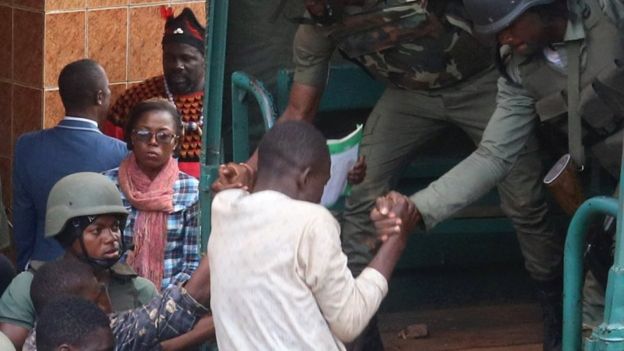
About a fortnight ago, a video emerged showing men in the military fatigues of the Cameroonian army executing two women and two children. The video is believed to have been taken in the north of the country where the military is taking on Boko Haram. The clip of the extra-judicial killing of the women and children, presumably linked to the Islamic terror group, went viral on social media and sparked outrage.
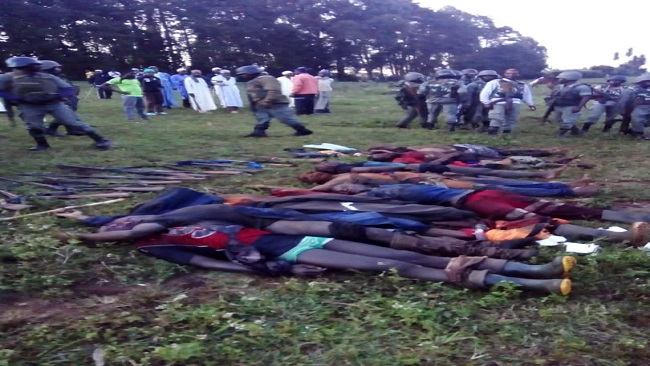
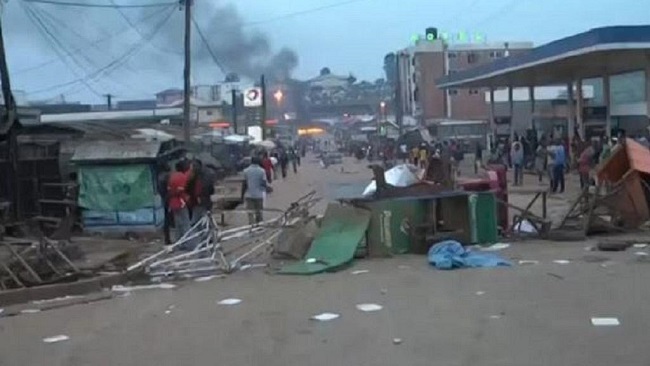
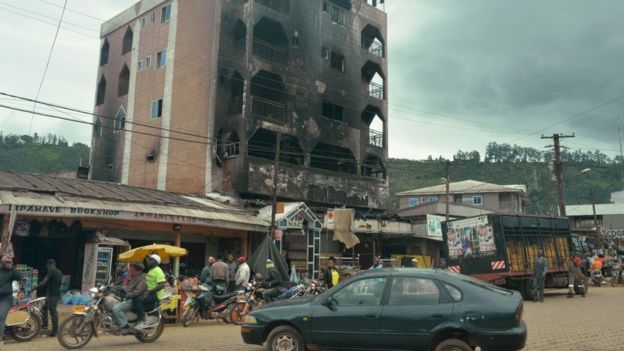
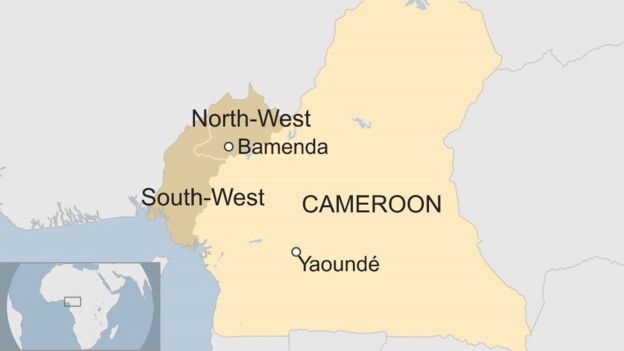
Activists in the ongoing Anglophone crisis used the footage to describe what they claim are ongoing indiscriminate and unjustified killings in the country’s English-speaking regions, over 800 miles away. Government troops had previously been accused of targeted killings in those North West and South West Regions.
Global rights group, Amnesty International says the men in the video were Cameroonian soldiers carrying out the executions. The organization’s experts matched extensive analysis of the weapons, dialogue and uniforms that feature in the video, with digital verification techniques and testimonies to arrive at the conclusion that the perpetrators are soldiers of the Cameroon army.
Nevertheless, Issa Tchiroma Bakary, Cameroon’s minister of communication, strongly rebutted the video, denying the Cameroon army’s involvement. Tchiroma has challenged previous Amnesty reports on crimes and human rights violations committed by the army. Yet, he said “owing to the gravity and intolerability of the facts contained therein, the Head of State [Paul Biya] has ordered the opening of a thorough investigation to shed light on this case.”
Samira Daoud, deputy director of Amnesty International’s West Africa office, raised concerns over the genuineness of the government probe. “The Cameroonian authorities’ initial claim that this shocking video is fake simply doesn’t stand up to scrutiny. These hasty and dismissive denials cast serious doubt over whether any investigation will be genuine.”
Though Reuters reported that four Cameroonian soldiers had been arrested in relation to the execution, Tchiroma tweeted on Saturday noting that no military officer had been detained.
In addition to the Boko Haram threats, Cameroon’s government has been gaining negative global media coverage over the last year as the troubles in its English-speaking regions have escalated. What started out as a modest industrial strike action by English-speaking lawyers and teachers over real and perceived marginalization by the Francophone-dominated central government has turned into a full-fleg.
The long-drawn out crisis has so far caused the internal displacement of no fewer than 160,000 people, according to the UN Office for the Coordination of Humanitarian Affairs. An additional 21,000 affected by the crisis have had to cross over to neighboring Nigeria as refugees. Even the Nigerian business community in some key towns in the restive area have returned home. Frequent gun battles between republican forces and armed separatists have led to hundred of deaths.
Like other concerned organizations and structures, Human Rights Watch is advocating an end to the killings. The rights group has recommended a mediated dialogue involving all the warring parties. But none has taken concrete actions which could breed such peace-restoration efforts.
Despite the volatile nature of the country’s two English-speaking regions, voters have been called to the poll on Oct. to elect a president. Current president Paul Biya, 85, has been in office since 1982 and has confirmed he will be running for his seventh term. Some 27 hopefuls have already manifested interest in challenging the incumbent. Biya’s grip on power has been shaken by the security threats of Boko Haram and more recently the Anglophone separatists but most watchers are not optimistic there will be change.
Even then, there are few indications the election will run smoothly in the restive Anglophone regions as some council branches of the elections management body, ELECAM, have remain closed.
Culled from Quartz


24, July 2018
Biya poised to win…and become president for life 0
Cameroon’s President Paul Biya is poised to win a seventh term of office come October 7, which will see him extend his 36 years rule and become a life president.
Like in 2011, the 85-year-old president said his decision to run again was a nod to overwhelming calls for him to do so. His supporters already see victory for the incumbent.
Higher Education minister and the communication secretary for the governing Cameroon Peoples Democratic Movement (CPDM), Prof Jacques Fame Ndongo, said the incumbent will “win the election in all transparency”. Prof Ndongo reckons that President Biya remains the best choice for Cameroon because he respects republican institutions.
Arrested and detained
To the CPDM members, many of who hold hold key government positions, President Biya is indispensable and his succession is considered a taboo topic within government and the political party circles.
In April 2016, some opposition party militants, including the 2011 presidential candidate, Ms Edith Kah Walla, were arrested and detained in Yaoundé for protesting against Biya’s long stay in power and persistent brutality against voices opposed to his attempt to be “president for life”.
Yet, there is seemingly no reason to think President Biya will not win again.
A group of 20 opposition political party leaders have thrown their weight behind the candidature of incumbent. The “Group of 20 or G20” among who are four who were in the race to unseat Biya in 2011, said they had decided to give their “total and unconditional support” to the veteran because he “possesses the qualities and wherewithal necessary for the maintenance of peace, stability, national unity, economic progress and the respect of Cameroon in the international community.”
The challenges
A member of the G20, Barrister Jean de Dieu Momo of the Democrat Patriots for the Development of Cameroon (PADDEC), who was eighth with a 0.49 per cent score in the 2011 poll, said the opposition cannot win a presidential election by presenting multiple candidates. To him, President Biya had “already won” the upcoming election with a 70 per cent score.
In his tweet that announced he would be in the run, the president said he was “aware of the challenges we must take up together to ensure a more united, stable & prosperous Cameroon”.
Tongues have been wagging that President Biya was too old to run, but the constitution does not make any provision for that. His supporters, on their part, are argue that at his age, and with his experience, he had exceptional mettle and values, which give him a considerable head-start vis-à-vis other contenders, to handle the challenges the Cameroon was facing.
Equatorial Guinea’s President Teodoro Obiang Nguema, Africa’s longest-serving leader, in power for more than 38 years. FILE | NATION MEDIA GROUP
Should he win another mandate, President Biya will be 92 by the time the tenure ends in 2025.
President Biya, who grudgingly accepted the introduction of multiparty politics in the early 1990s, repealed the term limits in 2008. He has ranked near the top in almost every list of the “World’s Worst Dictators” that has been published since 2005.
Political pundits say Cameroon had made more political losses than gains under the 36-year leadership of President Biya. The leader inherited a stable, united and prosperous Cameroon in 1982, but the country dropped from a middle income to a low income economy today.
Cameroon has a one-round presidential election system where a candidate only has to garner the most number of votes to be declared winner. No percentage threshold exists.
In most African countries that practice the one-round electoral system, incumbents have always emerged victorious. Such a systems, some Cameroonians claim, had contributed to President Biya’s over three decades stay at the helm.
Five million
Though President Biya has always been elected, critics say he was an illegitimate leader. Their arguments were a legion and one of them was that a president elected by less than five million people in a country with over 20 million inhabitants was not legitimate.
In 2011 for example, President Biya won the election with just 3,772,527 votes .
The 2018 presidential election comes at a time Cameroon was faced with several challenges including a separatist movement in its two English speaking Northwest and Southwest regions. Anglophone separatist activists who have been clamouring for secession and the creation of the Republic of Ambazonia, have warned that they would not allow any election organised by the Yaoundé regime to take place in “their country”.
But Mr Abdoul Karimou, the deputy Director General of Elections at the Cameroon poll agency, ELECAM said they would organise the vote in the regions “but ensuring security is the responsibility of the state”.
Regional bloc
A political scientist and member of the governing party, Prof Elvis Ngolle Ngolle, said the vote would take place in the strife-hit regions and Cameroonians who would not feel like going to vote “have the right not to vote”.
While awaiting the final list to be published by ELECAM, latest August 8, President Biya has to face 27 opposition parties which have submitted their candidacy files. Scores of them are new comers, considered as light weight without enough experience to challenge the 36 years old system.
President Biya is Africa’s second longest-serving head of state. Only Equatorial Guinea counterpart Teodoro Obiang’ Nguema Mbasogo is ahead of him, by three years. In Congo Brazzaville, another regional bloc CEMAC state, Denis Sassou Nguesso has now served 34 years in two different stints, from 1979 to 1992 and then again since 1997.
Source: The East African