11, May 2023
Southern Cameroons leader reiterates liberation of the Federal Republic of Ambazonia 0
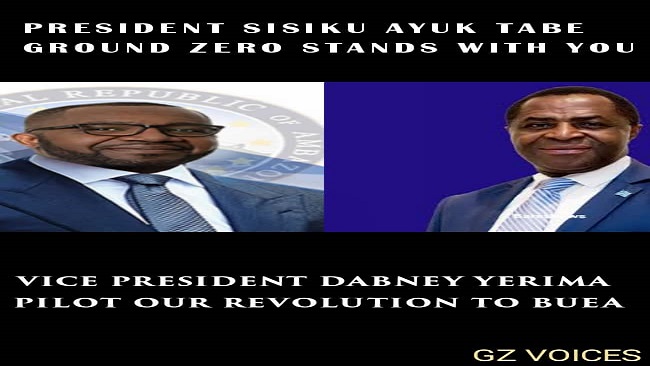
The Vice President of the Ambazonia Interim Government says October 1, 2023 will begin a new path of the struggle for liberation of the entire Southern Cameroons territories from the clutches of the vicious French Cameroun regime.
Speaking exclusively to Cameroon Intelligence Report on Tuesday about the situation of the Southern Cameroons resistance, Dabney Yerima stated that October 1 this year will be a new beginning for the Ambazonia revolution and actions will be staged by Amba fighters that will hasten the liberation of the entire British Southern Cameroons.
Yerima said that all Southern Cameroons restoration groups will be at the forefront of such a campaign, emphasizing that the actions will go beyond the Moungo.
Dabney Yerima highlighted that Southern Cameroons resistance groups are moving towards the formation of a central command system in Ground Zero that will end the French Cameroun occupation.
Elsewhere in his remarks, Yerima also condemned the recent killing of a Southern Cameroons journalist in Bemanda and he underscored the need for Amba fighters to protect the people of Southern Cameroons.
Dabney Yerima stated that the Ambazonia Interim Government under the stewardship of President Sisiku Ayuk Tabe has gloriously and proudly emerged triumphant over problems in the past years, describing the extent of internal crises that the Biya French Cameroun regime is currently facing in Yaoundé as unprecedented since the 1984 coup.
He went on to note that Southern Cameroonians in Ground Zero are at the forefront of defending the homeland, emphasizing that special emphasis must be laid on providing generous support to Amba fighters.
By Chi Prudence Asong









11, May 2023
Southern Cameroons Reconstruction: Islamic Development Bank steps in with CFA21bn 0
The Cameroonian government has secured new financial support as part of the reconstruction of the war-torn Anglophone regions of the Northwest and Southwest. Yesterday, the Minister of Economy, Alamine Ousmane Mey, signed a loan agreement of €32.250 million (about CFA21.1555 billion) with Muhmmad Al Jasser, Head of the Islamic Development Bank (IsDB).
This financing, the Cameroonian official said, “will support the government’s efforts to rebuild and rehabilitate essential infrastructure, strengthen social cohesion and revitalize the local economy in the targeted regions”. It is another helping hand in this reconstruction process, for which fund mobilization remains a headache.
Out of a requested CFA154 billion (about $258 million), Cameroon only raised CFA11.5 billion by mid-2022, representing a mobilization rate of 7.4%, official data showed. In detail, Paul Tasong, who coordinates the project, explained that 75% of this amount came from the State itself; the private sector contributed CFA1.2 billion; the United Nations Development Program (UNDP) CFA400 million; and Japan CFA1.5 billion. Last March, Japan approved an additional CFA1.3 billion, bringing its total contribution so far to CFA2.8 billion.
Source: Business in Cameroon