12, June 2022
Russia strikes arms depot west Ukraine as battle for Severodonetsk rages east 0
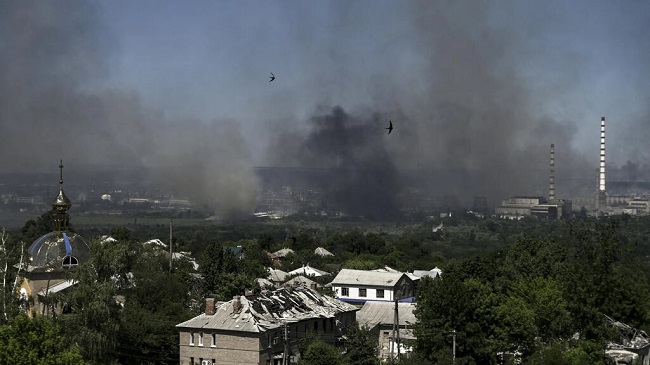
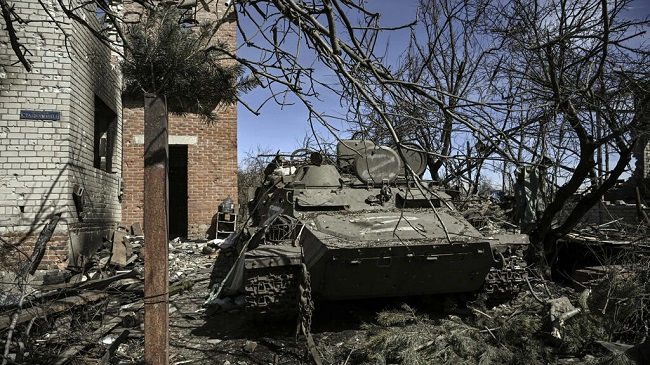
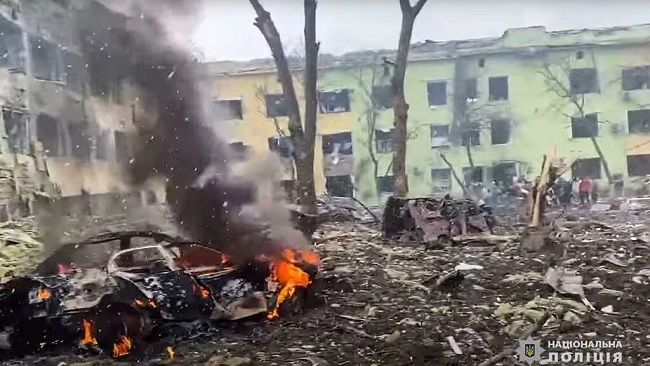
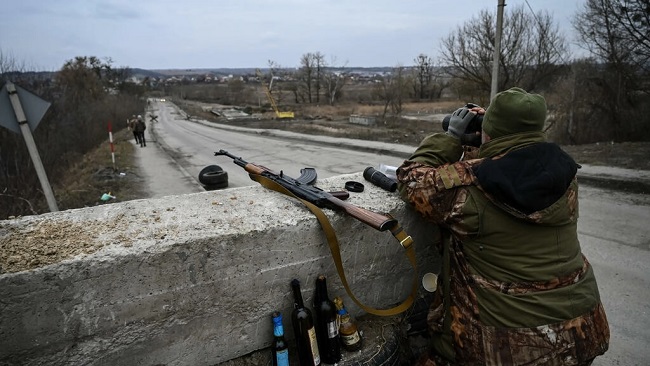
Russian forces said Sunday they had struck a site in western Ukraine storing large amounts of weapons supplied by the United States and European countries, as the battle intensified for the key eastern city of Severodonetsk.
The strike on the town of Chortkiv, a rare attack by Russia in the relatively calm west of Ukraine, left 22 people injured, the regional governor said. Meanwhile the situation in Severodonetsk was “extremely difficult”, after the Russian army destroyed a second bridge into the city and was heavily bombarding the last one, regional governor Sergiy Gaiday said.
Away from the battlefield, the head of the European Commission on Saturday promised it would provide a clear signal by the end of next week on Ukraine’s bid to become a candidate to join the European Union. “Ukraine has achieved a lot in the past ten years and much still needs to be done. Our opinion will reflect this carefully,” Ursula von der Leyen said after a surprise trip to the capital Kyiv.
Despite reservations among some member states, EU leaders are expected to approve the bid at a summit later his month, although with strict conditions attached. “The challenge will be to come out of the (EU) council with a united position, which reflects the enormity of these historic decisions,” von der Leyen said as she travelled back to Poland.
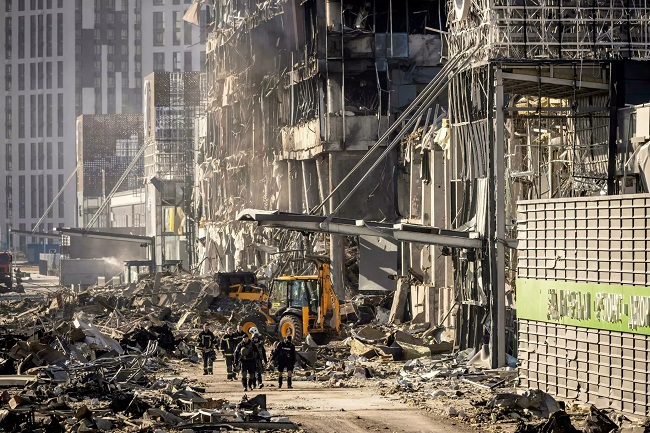
Ukraine’s geopolitical vulnerability has been laid bare by Russia’s February 24 invasion, which has killed thousands, sent millions fleeing and reduced swathes of the country to rubble. Ukrainian President Volodymyr Zelensky said Saturday that it was a “decisive time”.
“Russia wants to ruin European unity, wants to leave Europe divided and wants to leave it weak. The entirety of Europe is a target for Russia. Ukraine is only the first stage in this aggression,” he said.
Extremely difficult
The United States and EU have sent weapons and cash to help Ukraine fend off the Russian advance, alongside punishing Moscow with unprecedented economic sanctions. Russia’s defence ministry said the strike on Chortkiv destroyed a “large depot of anti-tank missile systems, portable air defence systems and shells provided to the Kyiv regime by the US and European countries”.
Regional governor Volodymyr Trush said that four missiles fired from the Black Sea had partially destroyed a military installation in the town, about 140 kilometres (85 miles) from the border with Romania, on Saturday evening. Residential buildings were also damaged and 22 people were hurt, all of them — including seven women and a 12-year-old — taken to hospital, he said in a Facebook post.
It was a rare attack in western Ukraine, with the east and south of the country having borne the brunt of Russian firepower. The cities of Severodonetsk and Lysychansk, which are separated by a river, have been targeted for weeks as the last areas still under Ukrainian control in the region of Lugansk.
“The situation in Severodonetsk is extremely difficult,” said Lugansk governor Gaiday on Sunday, adding that by attacking the bridges, Russian forces wanted to cut off the city completely. “Most likely, today or tomorrow, they will throw all reserves to capture the city and also possibly in other directions to cut and fully control the road” southwest to Bakhmut. He said the Azot chemical plant was being shelled, with fighting around the area.
About 800 civilians have taken refuge in the plant’s bunkers, according to the tycoon whose company owns the facility.
Crisis and famine
The war has caused a spike in the global prices of energy — Russia is a major producer of oil and gas — and basic food stuffs. Before the war, Russia and Ukraine produced 30 percent of the global wheat supply, but grain is stuck in Ukraine’s ports and Western sanctions have disrupted exports from Russia.
Addressing the Shangri-La Dialogue security summit in Singapore on Saturday, Zelensky warned of an acute food crisis, adding that the “shortage of foodstuffs will inexorably lead to political chaos”. Also Saturday, Gaiday cited reports of Russians loading trucks with Ukrainian wheat and taking it to Russian-controlled areas.
At the summit, Zelensky urged international pressure to end the blockade, speaking to delegates including Chinese Defence Minister Wei Fenghe, who on Sunday reiterated Beijing’s position on the crisis. “On the Ukrainian crisis, China has never provided any material support to Russia,” he said, adding that it supported peace negotiations and hoped “NATO will have talks with Russia”.
The sanctions against Moscow have hit the Russian economy, and also caused major Western brands to leave the country, with US fast-food chain McDonald’s selling its businesses there. Its iconic restaurant on Moscow’s Pushkin Square — where the very first McDonald’s opened its doors to long queues and great fanfare in January 1990 — was set to reopen Sunday under new ownership.
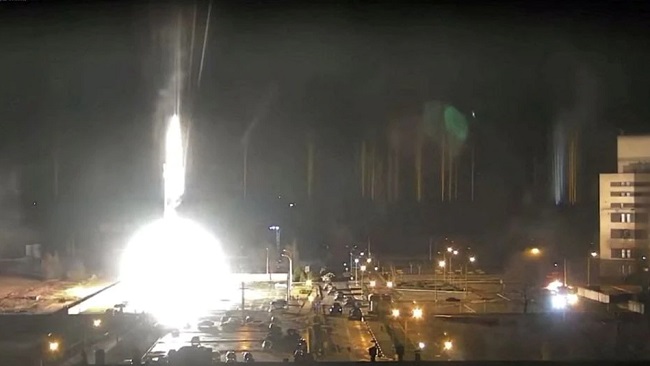
It was named “Vkusno i tochka” (“Delicious. Full Stop”), Oleg Paroyev, the boss of the new group, told a press conference. Separately, Ukrainian nuclear operator Energoatom announced that the connection between the Zaporizhzhia plant, now part of Russian-held territory in the south, and the UN’s nuclear watchdog had been restored after a month and a half.
The Russian shelling of the plant — the largest in Europe — had sparked international outrage and fears over Ukraine’s 15 operational reactors. Energoatom said the Russians had cut off the mobile phone operator at the site on May 30, but the connection with the UN’s International Atomic Energy Agency (IAEA) had finally been restored on Friday.
The IAEA said this week it was planning to visit the Zaporizhzhia plant to carry out essential safety work. However, Energoatom said that such a trip would legitimise Russia’s control of the site, and said a visit would only be possible once Ukraine regained control.
Source: AFP

















15, June 2022
UK forced to cancel deportation flight to Rwanda after European court ruling 0
A first flight carrying asylum seekers to Rwanda as part of a controversial UK policy was cancelled on Tuesday in an embarrassing blow to Prime Minister Boris Johnson’s government.
The number of those due to be put on the flight had dwindled from an original 130 to seven on Tuesday and finally none thanks to a last-minute ruling from the European Court of Human Rights (ECHR).
British Home Secretary Priti Patel said she was disappointed that “legal challenge and last-minute claims” meant the plane did not take off but vowed to pursue the heavily criticised policy.
“We will not be deterred,” she said in a statement.
“Our legal team are reviewing every decision made on this flight and preparation for the next flight begins now.”
The grounding was thanks to an ECHR ruling that at least one of the asylum seekers should stay in Britain as there were no guarantees for his legal future in Rwanda.
Patel called the ECHR intervention “very surprising” and vowed that “many of those removed from this flight will be placed on the next”.
The flight cancellation is an embarrassment for Johnson’s Conservative government, after Foreign Secretary Liz Truss insisted the Kigali-bound plane would leave, no matter how many people were on board.
“There will be people on the flights and if they’re not on this flight, they will be on the next flight,” Truss told Sky News earlier Tuesday.
The ECHR issued an urgent interim measure to prevent the deportation of an Iraqi man booked on the flight as he may have been tortured and his asylum application was not completed.
The Strasbourg-based court said the expulsion should wait until British courts have taken a final decision on the legality of the policy, set for July.
British newspapers from across the political spectrum expressed outrage at the eleventh-hour reversal and the government’s handling of the affair.
The conservative Daily Mail and Daily Express placed the blame in the hands of “meddling judges in Strasbourg”, expressing anger at what they called the “abuse of the legal system”.
The left-leaning Daily Mirror, meanwhile, slammed the government’s “cruel farce” and the “chaos” the policy had provoked.
‘All wrong’
Rights group Care4Calais tweeted that the same measure could be applied to the others set to be transported to Rwanda.
Truss said the policy, which the UN refugee agency has criticised as “all wrong”, was vital to break up human-trafficking gangs exploiting vulnerable migrants.
Record numbers of migrants have made the perilous Channel crossing from northern France, heaping pressure on the government in London to act after it promised to tighten borders after Brexit.
British media said some 260 people attempting the crossing in small boats were brought ashore at the Channel port of Dover by 1200 GMT on Tuesday.
More than 10,000 have crossed since the start of the year.
‘Shames Britain’
Legal challenges in recent days had failed to stop the deportation policy, which the two top clerics in the Church of England and 23 bishops described as “immoral” and “shames Britain”.
“They (migrants) are the vulnerable that the Old Testament calls us to value,” Archbishop of Canterbury Justin Welby and Archbishop of York Stephen Cottrell wrote in a letter to The Times.
“We cannot offer asylum to everyone, but we must not outsource our ethical responsibilities, or discard international law—which protects the right to claim asylum.”
It was reported last weekend that Queen Elizabeth II’s heir, Prince Charles, had privately described the government’s plan as “appalling”.
But Truss said: “The people who are immoral in this case are the people traffickers trading on human misery.”
In Kigali, government spokeswoman Yolande Makolo told reporters it was an “innovative programme” to tackle “a broken global asylum system”.
“We don’t think it is immoral to offer a home to people,” she told a news conference.
Johnson has told his senior ministers the policy was “the right thing to do”.
‘Value for money’
Truss said she could not put a figure on the cost of the charter flight, which has been estimated at upwards of £250,000 ($303,000).
But she insisted it was “value for money” to reduce the long-term cost of irregular migration, which the government says costs UK taxpayers £1.5 billion a year, including £5 million a day on accommodation.
In the Channel port of Calais, in northern France, migrants said the risk of deportation to Rwanda would not stop them trying to reach Britain.
Moussa, 21, from the Darfur region of Sudan, said “getting papers” was the attraction. “That’s why we want to go to England,” he said.
Deported asylum seekers who eventually make the 4,000-mile (6,500-kilometre) trip to Kigali will be put up in the Hope Hostel, which was built in 2014 to give refuge to orphans from the 1994 genocide of around 800,000 mainly ethnic Tutsis.
Hostel manager Ismael Bakina said up to 100 migrants can be accommodated at a rate of $65 per person a day and that “this is not a prison.”
The government in Kigali has rejected criticism that Rwanda is not a safe country and that serious human rights abuses were rife.
But Rwandan opposition parties have questioned whether the resettlement scheme will work given high youth unemployment rates.
Source: AFP