23, September 2020
EU set to propose plan on asylum seekers, but Austria warns against quotas 0
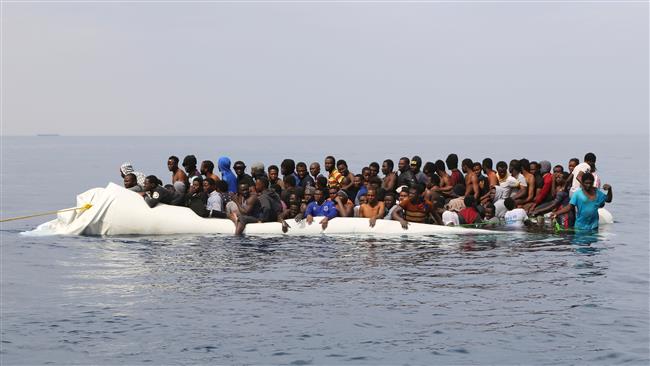
Five years after Europe’s migrant crisis, Brussels will propose on Wednesday that member states share the responsibility for asylum seekers under a “compulsory solidarity mechanism”. But it could spark outrage from countries such as Austria, whose Chancellor Sebastian Kurz warned against any attempts to force EU countries to take in migrants.
The New Pact on Migration and Asylum will be unveiled by European Commissioner for Home Affairs Ylva Johansson and Commission Vice-President Margaritis Schinas.
Johansson wants the 27 member states to commit to sharing the burden of handling asylum claims from migrants arriving on the bloc’s shores. “It’s obvious to everybody that ad hoc solidarity or voluntary solidarity is not enough. That has been proven for many years now,” she said. “It has to be mandatory.”
The plan will make showing solidarity with all EU countries on the front lines – often Greece, Italy or Malta – compulsory when they are “under pressure” from arrivals.
It may mean aid will no longer be limited to EU countries to where asylum seekers are relocated, but will be directed to other nations to return refused asylum seekers back to their country of origin.
Outcry expected
It is hoped that this measure will pacify EU countries like those of the Visegrad group – Poland, Hungary, Czech Republic and Slovakia – who have persistently failed to welcome asylum seekers.
Still, it may prove tough to pass. Speaking to AFP in an exclusive interview, Austrian Chancellor Sebastian Kurz has already warned the EU against forcing states to take in asylum seekers. “We find that the distribution in Europe (of asylum seekers) has failed and many states reject this. It won’t work like this,” the 34-year-old conservative leader said.
Austria and other smaller countries – some of them, such as Hungary, criticised by Brussels over their anti-immigration stance and on rule-of-law issues – have spoken out in the past against any mandatory asylum-seeker distribution.
European migration policy was again in the headlines earlier this month following a devastating fire at an overcrowded camp for migrants and asylum seekers on the Greek island of Lesbos which left thousands homeless.
European Commission chief Ursula von der Leyen said last week that the new proposals would include plans to strengthen border security and return failed asylum seekers, which Kurz and allies are in favour of, while also including “a new strong solidarity mechanism.”
Seeking alliances
Kurz said he welcomed that the European Commission was addressing the topic of asylum and migration.
“We can only solve this topic all together… Better protection of the (EU’s) outer borders, a joined fight against smugglers, but also joined aid where it is needed (in countries where refugees come from), that is the path that is needed,” he said.
Kurz, pushing to make his mark in European politics, has also sought allies on other topics, such as when he worked with the Netherlands, Sweden and Denmark – as the so-called “Frugal Four” – to oppose direct EU aid to coronavirus-hit countries as proposed by Germany and France.
“The European Union is more than just Germany and France… As a small or medium-sized state of course one has to always look for alliances, and in an EU with 27 member states one can only assert ideas if there are others that support them,” he told AFP in an office in the chancellery.
Coronavirus ‘challenge’
Kurz became the world’s youngest chancellor when his conservative People’s Party (OeVP) formed a coalition government with the far-right Freedom Party (FPOe) in 2017.
The coalition fell apart in 2019 after a corruption scandal engulfed the far-right FPOe leader, leading to fresh elections in which Kurz’s party again gathered the most votes.
Kurz then formed a new coalition with the Greens and has governed the Alpine country of nearly nine million people since January.
Kurz said fighting the coronavirus pandemic was “a very big challenge”.
“I am still relatively young, but I have been part of the Austrian government for many years and I thought I had already been through a lot politically… The corona crisis now exceeds all previous experiences of course,” he said.
The country has so far been spared the brunt of the crisis, reporting almost 40,000 cases with 771 deaths to date, but infections have surged again in recent weeks.
This has led to the government to extend mandatory mask wearing and re-instate some of the other restrictions imposed earlier this year to stem the spread of the virus.
Source: France 24 and AFP










9, November 2020
With Biden, EU must still ‘live without US global leadership’ 0
The EU will once again have a cooperative US partner when Joe Biden becomes president, but Europeans should harbour no illusions: Washington will be no globo-cop nor NATO’s big protector, leaders and analysts say.
“Great day for US and Europe, we look forward to working together with new administration to rebuild our partnership,” the EU’s top diplomat Josep Borrell said in a tweet congratulating Biden on his election victory over President Donald Trump.
But Jean-Claude Juncker, former European Commission president, earlier offered a typically blunt assessment: “Joe Biden isn’t going to change Washington’s approach to international issues overnight, because he can’t.”
And Sebastien Maillard, head of the Jacques Delors Institute named after an influential former EU chief, cautioned that “the Europeans need to learn to live without American global leadership.”
“For the foreseeable future, the US will be preoccupied with itself,” agreed German political scientist, Markus Kaim.
The comments spoke to an expectation that there was no going back to seeing America as the West’s sheriff, flexing military muscles across the world in the ways it did in the decades following the Cold War.
While the US still maintains aircraft carrier battle groups in different regions, and bases including in Europe, South Korea, Japan, Afghanistan and Bahrain, it has been withdrawing from conflict zones under a trend accelerated by Trump but started by his predecessor Barack Obama.
More notably, within the past two decades much of its military focus has moved to Asia, away from Europe.
Nathalie Tocci, head of the Italian think tank the Instituto Affari Internazionali, added: “We are witnessing the end of American imperialism with the United States no longer wanting to be the world’s policeman.”
So what can Europeans expect from the new US president?
“Things are going to get a lot easier, because Joe Biden understands Europe better than Donald Trump,” Juncker said.
Nevertheless, cautioned a diplomat posted to Brussels, “you shouldn’t expect radical change”.
Europeans will “once again have a partner, an ally, but they need to bolster their strategic autonomy in the economic arena and in terms of security, to be able to defend their interests,” he continued.
Jean-Dominique Giuliani, head of the Schuman Foundation, reinforced that point by saying EU leaders must “define what they want to do with America, and not simply wait for it to tell them”.
Trade and climate change
“With Biden as president, the EU could expect and welcome a much more predictable and constructive US-EU relationship on trade, NATO, Iran, the Middle East and above all on climate change, if the US re-enters the Paris climate agreement,” predicted Mujtaba Rahman, director of the Europe office of the Eurasia Group risk analysis firm.
Trade in particular is expected to flow with much less of the friction that marked the Trump years.
Under Trump, Washington flexed trade muscles by slapping higher tariffs on steel and aluminium, prompting Europe to prepare a riposte. A truce was reached on the promise of a mini trade deal, but that has still not been realised.
On climate change, Biden has already stated he wants to return the US to the Paris climate accord.
He has likewise signalled he wants to reverse pullouts Trump ordered for the World Health Organization and the Iran nuclear deal.
But there are some repairs Biden is not likely to carry out, among them the US show of force to China’s assertive policies and the desire to reduce American involvement in conflicts far from its soil.
Those stances are popular domestically, explained Nicole Koenig, a Berlin-based defence specialist for the Jacques Delors Institute.
What will change will be the style.
“Joe Biden will inform and coordinate with his allies,” she said.
‘Division of labour’
Trump’s unilateral decisions and antagonism towards some of leaders of NATO countries created tensions and divisions within the Alliance.
Its chief, Jen Stoltenberg, expended a lot of energy “to appease the beast,” one diplomat said.
NATO can hope for a normalisation with Biden, but analysts believe Washington will stay retrenched in looking out for US interests.
“That will be uncomfortable for the Europeans,” whose NATO members are split between a pro-Europe camp and an Atlanticist one, said Kaim.
“Illusions of European strategic autonomy must come to an end: Europeans will not be able to replace America’s crucial role as a security provider,” warned Germany’s defence minister, Annegret Kramp-Karrenbauer, in an opinion piece for the Politico website.
Kaim suggested that Biden’s approach would be to propose to the Europeans “a simple division of labour: you will help us in Europe so that we can become more involved in Asia”.
Source: AFP