30, August 2020
French magazine depicts Black MP as a slave 0
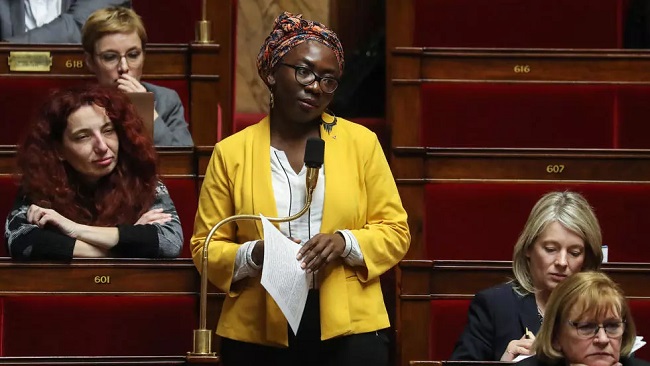
French President Emmanuel Macron led nationwide outrage Saturday after an ultra-conservative magazine portrayed a black lawmaker as a slave.
The French presidency said Macron called Danielle Obono from the far-left party France Unbowed and “expressed his clear condemnation of any form of racism”.
The magazine, Valeurs Actuelles, which caters to readers on the right and far right, showed Obono in chains with an iron collar on her neck to illustrate a seven-page imaginary story.
Prime Minister Jean Castex said it was a “revolting publication that calls for clear condemnation” and told Obono that she had the government’s backing.
“I share the indignation of lawmaker Obono,” he said.
“One is free to write a putrid novel within the limits fixed by the law. One is free to hate it. I hate it,” said Justice Minister Eric Dupond-Moretti.
Obono tweeted: “The extreme right — odious, stupid and cruel. In brief, like itself.”
The anti-racism body SOS Racisme deplored rising hate speech against African and Arab politicians and said it was mulling what legal measures could be taken to counter this.
The magazine however denied it was racist, saying the story concerning Obono was “a work of fiction… but never nasty.”
An official from France’s far-right National Rally party, Wallerand de Saint-Just, said the story was “in absolute bad taste”.
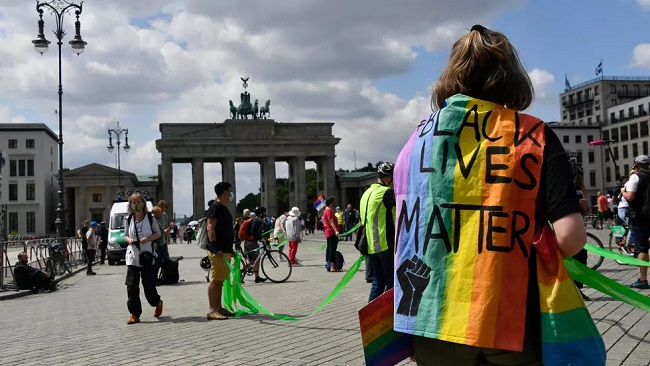
France witnessed several protests in June and July against racial injustice as well as colonial and police brutality, inspired by the Black Lives Matter movement and George Floyd’s death at the knee of police in the United States.
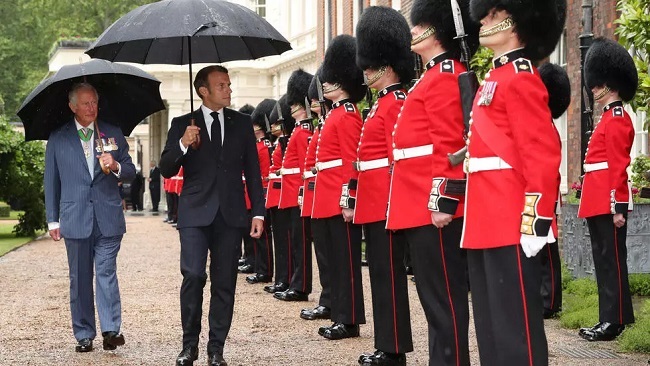
Macron, a centrist, who raised eyebrows when he gave an interview to Valeurs Actuelles last year and praised it as a “good magazine”, has pledged to root out racism.
But he also said France will not take down statues of figures linked to the colonial era or the slave trade, as has happened in other countries recently.
(AFP)
















10, September 2020
EU mulls legal action against Britain over plan to break Brexit divorce deal 0
Britain and the European Union will hold emergency talks on Thursday over Prime Minister Boris Johnson’s plan to undercut parts of the Brexit divorce treaty, with Brussels exploring possible legal action against London.
After Britain explicitly said it would act outside international law by breaching the divorce treaty, EU negotiators are trying to gauge how to deal with London.
European Commission Vice President Maros Sefcovic will meet British counterpart Michael Gove in London at 1200 GMT alongside scheduled trade talks between chief negotiators Michel Barnier and David Frost.
If the EU is unhappy with what London says, it could use a part of the Withdrawal Agreement to take legal action against Britain, though there would be no resolution before the end-of-year deadline for Britain’s full exit.
“The dispute-settling mechanism under the Withdrawal Agreement is there,” an EU diplomat dealing with Brexit told Reuters.
Two EU officials also involved in the talks said the Commission would analyse Britain’s proposed Internal Market Bill – overriding parts of the Withdrawal Agreement – once it is passed to take into account any amendments before making a final decision on the legal case.
The British government says its planned law merely clarifies ambiguities in the Withdrawal Agreement, but also says its main priority is the 1998 Northern Irish peace deal.
Europe’s leaders have been handed an ultimatum: accept the treaty breach or prepare for a messy divorce when Britain disentangles itself from the EU at the end of the year.
Britain signed the treaty and formally left the EU in January, but remains a member in all but name until the end of 2020 under a status quo agreement.
Sterling was flat at $1.2999 though overnight sterling implied volatility rose to 13%, its highest since March 26, and the FTSE 100 share index slipped.
Ireland
Talks on a trade deal have snagged on state aid rules and fishing.
Without an agreement, nearly $1 trillion in trade between the EU and Britain could be thrown into confusion at the beginning of 2021, a further economic blow as they deal with the coronavirus pandemic.
The latest dispute centres on rules for Northern Ireland, which shares a land border with EU member Ireland. Under the 1998 Good Friday peace agreement that ended decades of violence, there must be no hard border in Ireland.
To ensure that, Britain’s EU divorce agreement calls for some EU rules to continue to apply in Northern Ireland. But Britain wants power to override many of them, acknowledging this would violate international law.
U.S. House of Representatives Speaker Nancy Pelosi said any potential U.S.-UK trade deal would not pass the U.S. Congress if Britain undermined the 1998 agreement.
Former British leaders Theresa May and John Major scolded Johnson, whose government put forward the Internal Market Bill on Wednesday, for considering an explicit, intentional breach of international law.
“If we lose our reputation for honouring the promises we make, we will have lost something beyond price that may never be regained,” Major said.
European diplomats said Britain was playing a game of Brexit “chicken”, threatening to wreck the process and challenging Brussels to change course. Some fear Johnson may view a no-deal exit as a useful distraction from the pandemic.
“I’m not optimistic at this stage,” Irish Prime Minister Micheal Martin told national broadcaster RTE when asked how confident he was in a trade deal being reached.
“I think yesterday’s development, because it undermines trust in negotiations, makes it all the more difficult to get to where everyone says they want to get to, which is a free trade agreement with no tariffs and no quotas.”
Source: REUTERS