20, April 2020
Germany starts opening up as coronavirus outbreak ‘under control’ 0
Germany takes its first steps back towards normality on Monday, with smaller shops in some regions opening up for the first time in a month after politicians declared the coronavirus “under control”.
From florists to fashion stores, the majority of shops smaller than 800 square metres (8,600 square feet) will be allowed to welcome customers again, in a first wave of relaxations to strict curbs on public life introduced last month.
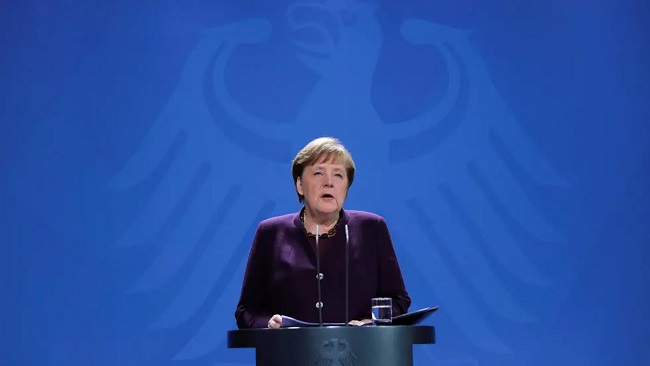
Chancellor Angela Merkel and regional state premiers announced the decision to reopen last week, though they have been careful to cast it as no more than a cautious first step.
While the first shops will open their doors on Monday, each of Germany’s 16 states is set to lift the restrictions at a slightly different pace.
In some states such as the capital Berlin, reopening will take a little longer.
Merkel, who has been praised for her handling of the coronavirus crisis, is hoping to reinvigorate the ailing German economy, which officially entered into recession last week.
‘Fragile’
With 139,897 confirmed cases and 4,294 deaths as of Sunday, Germany has been one of the countries worst hit by COVID-19, but also one of the quickest to react.
On Friday, the Robert Koch Institute for public health announced that the rate of infection — the number of people each ill person contaminates — had dropped below one for the first time, leading Health Minister Jens Spahn to declare the virus “under control”.
Yet Merkel, who was herself quarantined for two weeks earlier this month before testing negative for the virus, has warned that Germany’s success remains “fragile”.
“We will not be able to go back to our normal lives for a long time,” said her conservative party colleague Armin Laschet, the state premier of North-Rhine Westphalia, the country’s most populous region.
In an interview with Der Spiegel weekly, Laschet warned that some coronavirus restrictions could last until 2021.
A ban on gatherings of more than two people and a requirement to stand more than 1.5 metres apart from others in public areas remain in force.
That means that hairdressers, initially deemed an essential business, cannot open until at least May 4.
Cultural venues, bars, leisure centres and beauty salons will also remain closed for the time being, while large-scale public events such as concerts and football matches have been banned until August 31.
But Germans can look forward to at least some relaxations to the existing shutdown although they have not been welcomed by everyone.
With larger shops unable to open, the German Trade Association warned Friday of a possible “distortion of competition”.
Yet Economy Minister Peter Altmaier defended the 800-square-metre limit, saying that “the belt can only be loosened bit by bit”.
Schools reopening
Schools will also be partially reopened in the coming weeks, with most states set to welcome back older students from May 4.
Education policy is traditionally decided at state level in Germany, and Bavaria, the region worst hit by the virus so far, will keep its schools closed for an extra week.
On April 29, regional education ministers are set to present concrete plans on how social distancing can still be enforced in the classroom.
Germany hopes to combine the lifting of restrictions with a more efficient tracing of the spread of COVID-19.
The country hopes to ramp up testing — it has already tested around two million people — and aims to produce around 50 million protective masks, including 10 million of the higher efficiency FFP2 standard a week from August.
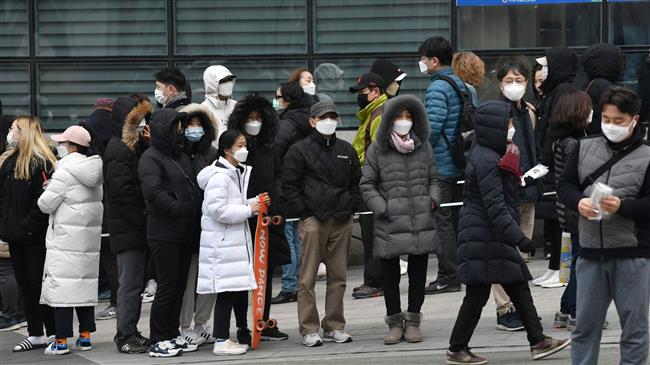
Though not yet obligatory, Merkel said her government “strongly advises” wearing a mask in public.
With more movement of the population expected as shops reopen, eastern states Mecklenburg-Vorpommern and Saxony have made masks obligatory on public transport.
In doing so, they have followed the example of the eastern city of Jena, which unilaterally enforced the wearing of masks earlier this month.
According to German media, the city has had no new cases in a week.
Source: AFP
















21, April 2020
Covid-19 deaths in France surpass 20,000 as hospitalisations continue to fall 0
France has reported 547 deaths in hospitals and nursing homes from Covid-19 in the last 24 hours as the number of new hospitalisations continued a slow decline.
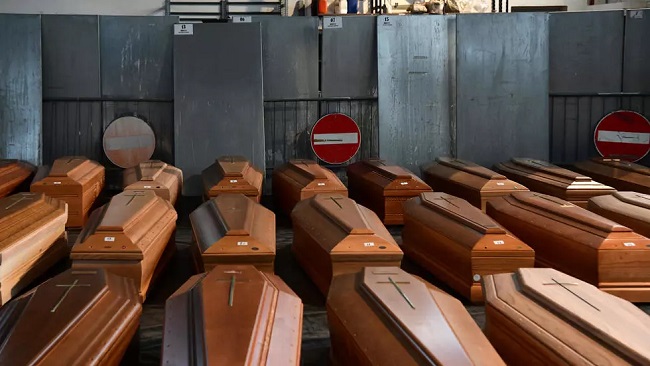
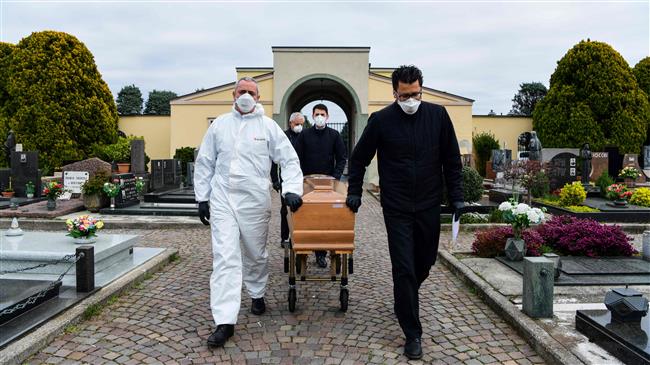
France – which on Monday became the fourth country to record more than 20,000 deaths as a result of the pandemic and has the fourth-highest toll in the world – has been in virtual lockdown for nearly five weeks and is due to start lifting some confinement measures from May 11.
“Tonight, our country has passed a barrier that is symbolic and particularly painful,” top health official Jérôme Salomon told reporters, announcing a total death toll of 20,265 people while welcoming new falls in the numbers in hospital and intensive care.
The 547 new deaths reported – including 444 in hospital and 103 in nursing homes – marked an increase over the previous 24 hours.
Salomon, however, highlighted other welcome signs that the virus curve had passed its peak. He said 5,683 patients were receiving intensive care for the virus on Monday, down from a peak of 7,148 on April 8. Hospitalisations likewise continued a near week-long decline.
Prime Minister Edouard Philippe told a news conference on Sunday that falls in the number of people in intensive care were one of the encouraging signals that pressures on hospitals were easing.
But he shut down any expectations that the gradual exit from confinement in May, due to start with the reopening of schools, would allow people to move around or interact as before, especially as a vaccine against the virus was still far off.
“It won’t be a return to normal life,” Philippe said, adding that as France introduces more testing, people with coronavirus would have to remain isolated at home or in hotels laid on by the government. “From May 11, we will enter a second phase, when we will regain some of our freedoms.”
The French state has given few details yet of the pace at which businesses like cinemas or bars will reopen, only saying that as some stores open up again, people will have to maintain safe distances from each other.
France will, however, lift its ban on visits to nursing home residents, provided people did not touch their relatives, Health Minister Olivier Véran told the same briefing. Elderly people in nursing homes account for nearly 40% of the coronavirus fatalities in the country.
The government has come under fire in recent weeks after shortages of medicines, hospital equipment such as ventilators and face masks for doctors as well as front line workers in sectors like supermarkets added to problems in handling the crisis.
Philippe said that in the past week France had managed to import just under 81 million masks, exceeding for the first time “in a long time” its weekly needs of about 45 million.
By June, France will also have secured and produced 15,000 more ventilators for resuscitation units in hospitals and another 15,000 less heavy-duty versions – helping it exceed its projected needs.
“That will not only allow us to secure our situation, but thereafter to also mobilise some ventilators to help France’s allies internationally,” Philippe said.
(FRANCE 24 with REUTERS and AFP)