
25, October 2018
Former French president Sarkozy loses court appeal in campaign financing case 0
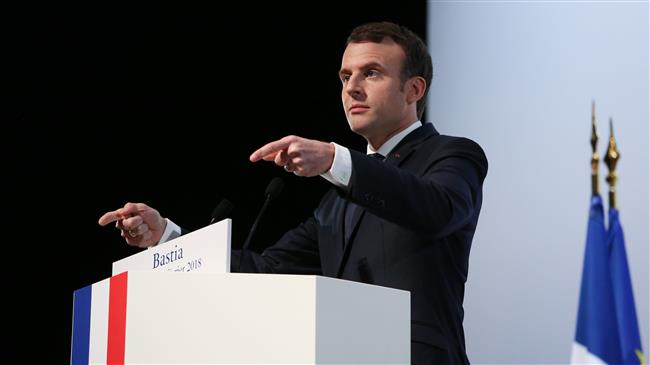
Former French President Nicolas Sarkozy has lost an appeal against an earlier decision to send him to trial over charges of illegal campaign financing, and his lawyer said he would challenge the decision in France’s highest appeals court.
If Sarkozy stands trial, he would be the second French president in the dock since Jacques Chirac, who was president from 1995 to 2007. Chirac was given a suspended sentence in 2011 after being convicted of misusing public funds.
The so-called “Bygmalion” campaign financing affair centers on accusations that Sarkozy’s party, then known as the UMP, connived with a friendly public relations firm to hide the true cost of his 2012 presidential election campaign.
France sets limits on campaign spending, and prosecutors allege that the firm Bygmalion invoiced Sarkozy’s party rather than the campaign, allowing the UMP to spend almost double the amount permitted.
After five years in power, Sarkozy was defeated by Socialist Francois Hollande when he ran for a second term in 2012. He has since faced a series of investigations into alleged corruption, fraud, favouritism and campaign-funding irregularities.
Sarkozy has denied charges of wrongdoing and has vowed to have all cases dismissed. His lawyer said he would challenge the latest decision in France’s supreme Court of Appeal.
Under French law, a suspect is not formally charged with a crime unless he is sent to trial.
On Oct. 8, Sarkozy lost a first appeal against facing trial over separate influence peddling and corruption charges.
In that case, Sarkozy is suspected of helping a prosecutor get promoted in return for leaked information about a separate criminal inquiry.
Sarkozy lost presidential immunity from legal prosecution a month after he left office.
(Source: Reuters)


















4, November 2018
UK:Prime Minister May denies Brexit deal reached with all-British customs mechanism 0
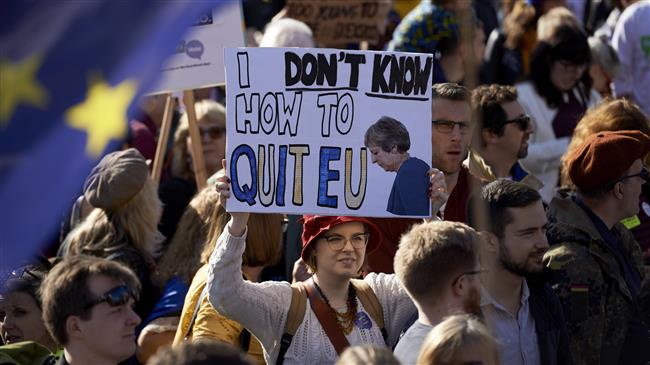
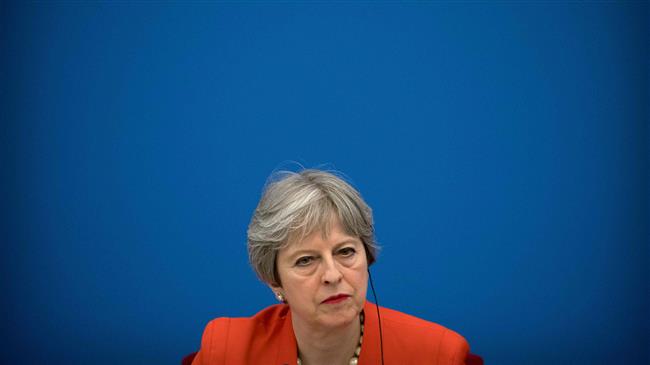
British Prime Minister Theresa May’s office has dismissed as “speculation” a newspaper report that suggests an all-UK customs deal will be written into the legally binding agreement governing Britain’s withdrawal from the EU.
A spokesman at May’s office said Sunday that a report in the Sunday Times suggesting that the EU had agreed to include the entire United Kingdom in its customs union after Brexit was not entirely true.
“This is all speculation. The prime minister has been clear that we are making good progress on the future relationship and 95 percent of the withdrawal agreement is now settled and negotiations are ongoing,” said the spokesman.
The EU and Britain are at odds over how to treat the border between Ireland, an EU state, and Northern Ireland, a UK province, after Brexit so that there will be no return to a hard border on the island.
May has resisted EU’s plan for including Northern Ireland in its customs union for a two-year transition period and beyond that until a permanent solution is found for trade.
The premier says that will separate Northern Ireland from the rest of the UK, insisting the EU could instead include the entire UK in the customs union as an interim solution.
British housing minister James Brokenshire said on Sunday that differences still remained on the Irish border, saying British and EU negotiators had yet to finalize a “backstop” arrangement.
“That very much remains our focus and attention in getting that deal,” Brokenshire told the BBC.
May relies on Northern Ireland’s Democratic Unionist Party (DUP) in her minority government. The DUP has threatened that it would stand against any Brexit deal that would include Northern Ireland in EU’s customs union.
Presstv
Now that you are here
The Cameroon Concord News Group Board wishes to inform its faithful readers that for more than a decade, it has been providing world-class reports of the situation in Southern Cameroons. The Board has been priding itself on its reports which have helped the world to gain a greater understanding of the crisis playing out in Southern Cameroons. It hails its reporters who have also helped the readers to have a broader perspective of the political situation in Cameroon.
The Board wishes to thank its readers who have continued to trust Southern Cameroon’s leading news platform. It is therefore using this opportunity to state that its reporters are willing to provide more quality information to the readers. However, due to the changing global financial context, the Board is urging its readers to play a significant role in the financing of the news organization. It is therefore calling on its faithful readers to make whatever financial contribution they can to ensure they get the latest developments in their native Southern Cameroons, in particular, and Cameroon in general.
Bank transaction: Soter Tarh Agbaw-Ebai
Banking IBAN: GB51 BARC 2049 1103 9130 15
Swift BIC BARC GB22XX
SORT CODE 20-49-11, ACCOUNT NUMBER – 03913015 Barclay PLC, UK
The Board looks forward to hearing from the readers.
Signed by the Group Chairman on behalf of the Board of Directors
Soter Tarh Agbaw-Ebai
Email: soteragbawebai@gmail.com