21, November 2020
Nigeria: Ambazonian refugees get health security in Taraba 0
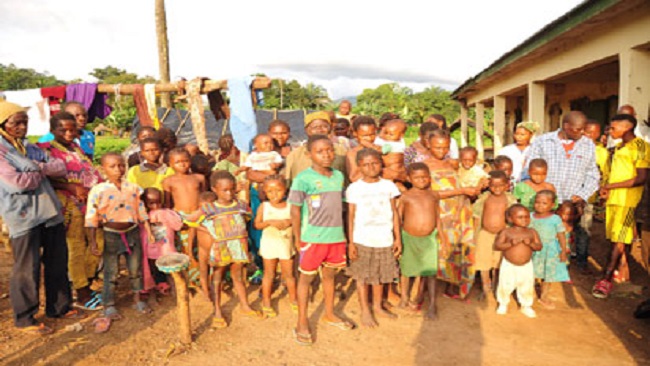
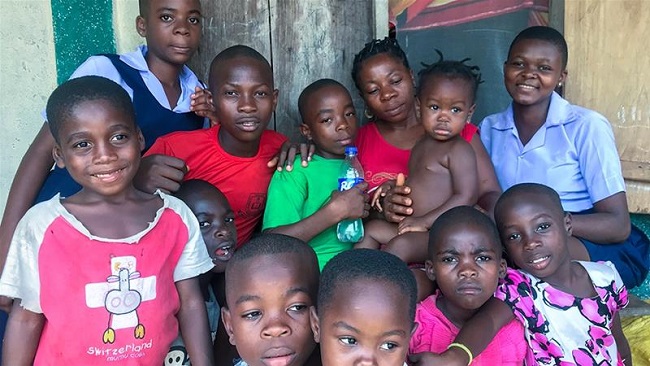
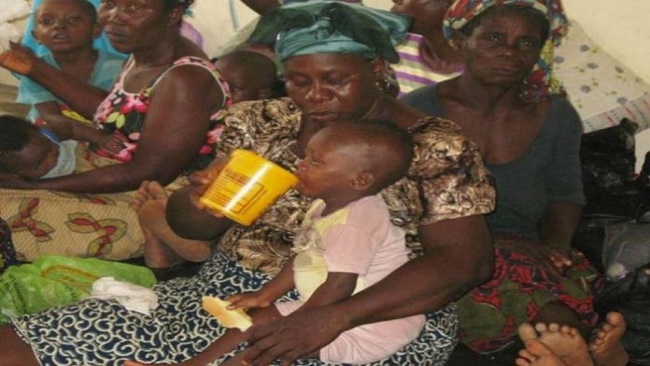
The Jesuit Refugees Service (JRS) has assisted no fewer than 50, 000 refugees and Internally Displaced Persons (IDPs) in Nigeria from 2018 to date.
Its Head of Programmes in Nigeria, Tamara Hart, disclosed this yesterday at the launching of Protection and Health Services for Camerounian refugees in Taraba State.
Hart said the group was not only working in 56 countries across the world but has also pursued its mission to accompany and serve other forcibly displaced people to enable them to heal, learn and determine their own future.
While presenting the overview of the JRS Bureau of Population, Refugee, and Migration (BPRM), she said the group commenced operations in Nigeria in 2018 and has since assisted over 50,000 refugees and IDPs through its field offices in Adamawa, Borno, and Taraba states, as well as its Abuja office.
In addition to the ongoing High Commissioner for Refugees (UNHCR) funded project in the state, the BPRM project, which she described as a “gift from the United States Government” would provide relief to the Camerounian refugees and members of the host community in four council areas of the state.
Besides the protection and health services, the project would also promote peaceful coexistence and reconciliation skills for the Cameroonian refugees and their host communities to enhance social cohesion.
Also speaking, JRS Nigeria Project Director for the United Nations High Commissioner for Refugees (UNHCR), Sylvester Kenneth, stated that JRS has been implementing the UNHCR-funded “Protection and Educational Services for Camerounian Refugees since 2019.”
He said the idea of the project was to assist the displaced persons from the neighboring country of Cameroun and host communities in Takum, Ussa, Kurmi, and Sardauna council areas of the state.
Commending the state government for its support for the refugees, he acknowledged that the state was the most accommodating state for Camerounian refugees in the country.”
Corroborating Kenneth, JRS Country Director, Rev. Father Patrick Etamesor, commended the state government for providing an enabling environment for the group to implement its projects.
“JRS has enjoyed enormous support from the government and people of the state, hence the implementation of the project. JRS has assisted refugees and displaced persons in various ways,” he said
On his part, the Project Director, Abang Egbe, said the project team would constantly consult relevant stakeholders on issues bordering on the successful implementation of the project in the state.
Impressed by JRS efforts in assisting the refugees who fled from Cameroun to the state following skirmishes in that country that had led to the destruction of lives and property, the Commissioner for Health, Dr. Innocent Vakkai, assured of the state government’s support for successful implementation of the project.
Source: Guardian.ng

















13, December 2020
Students missing after gunmen storm Nigerian school 0
Gunmen have raided a government secondary school in northern Nigeria’s Katsina state, police said Saturday, in an apparent kidnapping attempt for ransom.
The Nigerian military had located and exchanged fire with gunmen who kidnapped scores of secondary school students in northwestern Katsina state, according to a statement from the president on Saturday.
The gang, armed with AK-47s, stormed the Government Science secondary school in Kankara district at about 9:40 p.m. on Friday, police and locals said. A parent and school employee told Reuters that roughly half of the school’s 800 students were missing.
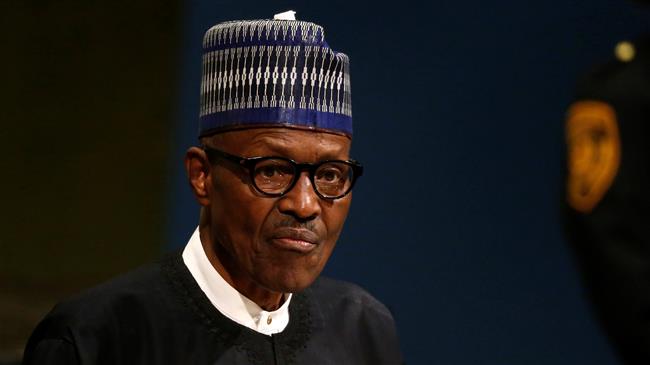
President Muhammadu Buhari said in a statement that the military had located the kidnappers in a forest and was exchanging fire with them, aided by air support.
In the statement, Buhari condemned the attack in his home state. Police and the military were still working to determine how many were kidnapped and missing.
Police at the scene on Friday exchanged fire with the attackers, allowing some students to run for safety, police spokesman Gambo Isah said in a statement.
Police said they would deploy additional forces to support the search and rescue. One officer was shot and wounded in the exchange of fire with the gang, they said.
Hundreds of students missing after gun attack on Nigerian school
Katsina is plagued by violence the government attributes to bandits – a loose term for gangs of outlaws who attack locals and kidnap for ransom. Attacks by Islamist militants are common in northeastern parts of the country.
Violence and insecurity across Nigeria have enraged citizens, particularly after scores of farmers were killed, some beheaded, by Islamist militants in northeast Borno state late last month.
Buhari, who arrived on Friday for a week in his home village some 200 km (125 miles) from Kankara, was scheduled to brief the national assembly on the security situation last week, but cancelled the appearance without official explanation.
Source: REUTERS