Featured
 Indomitable Lionesses: meet Kyria Bihina our saviour
  Cameroon cannot be governed by absence: It is time for the CPDM to prepare a new leader
  Nyene Mawn in Germany: Manyu Women leading, Manyu girls rising, Manyu communities thriving
  Archbishop Nkea, Bishop Bibi and Samuel Eto’o: Social media popularity should not come at the expense of truth
 - Cameroon Concord News to put up an obituary announcement on Biya soonest
Most Commented Posts
 4 Anglophone detainees killed in Yaounde
18 comments Chantal Biya says she will return to Cameroon if General Ivo Yenwo, Martin Belinga Eboutou and Ferdinand Ngoh Ngoh are sacked
13 comments The Anglophone Problem – When Facts don’t Lie
12 comments Anglophone Nationalism: Barrister Eyambe says “hidden plans are at work”
12 comments Largest wave of arrest by BIR in Bamenda
10 comments
Featured
-

Cameroon hails Lionesses after penalty shootout sends team to WAFCON final
-

Battle For Etoudi: Tchiroma announces ‘imminent’ return
-
Food insecurity threatens 2.6 million Cameroonians outside conflict zones
-

CIA doubted Israeli intel on alleged Iranian threat that forced Trump to change planes
-

Bishop Francis Lysinge laid to rest today
-

Iran exposes US military as weaker than perceived
-

Cameroon’s banana exports jump 34% in July to 20,577 tons
14, August 2026
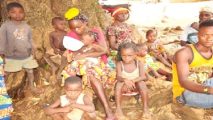
Food insecurity threatens 2.6 million Cameroonians outside conflict zones 0
Food insecurity in Cameroon now extends well beyond regions affected by armed conflict, with about 2.6 million people in relatively stable areas exposed to acute food insecurity risks, according to a report published by the National Institute of Statistics (INS) on August 7, 2026.
Of the roughly 4.5 million people identified in at-risk areas between January and March, 1.8 million lived in regions directly affected by conflict, particularly the Far North, Northwest and Southwest. The remaining 2.6 million lived in areas relatively spared from those security crises.
The figures show that food vulnerability cannot be explained solely by population displacement, insecurity or disruptions to economic activity caused by conflict. It also affects areas where markets function better and agricultural production is considered more stable. According to the INS, the affected populations account for 17% and 13%, respectively, of the populations in the two categories of areas.
Less Severe but Persistent Vulnerability
Conditions remain less severe in areas unaffected by conflict. About one in five households there has inadequate food consumption. The INS attributes this relative resilience to better market access, more stable agricultural production and greater diversification of food sources.
Trends over the three-month period also point to relative stability. In eight of Cameroon’s 10 regions, the share of households with inadequate food consumption showed no significant change. Only the North and Northwest recorded a slight increase in the number of affected households.
Stability, however, does not mean improvement. The INS warned that the relatively stable national picture masks localized deterioration that could emerge in areas under greater pressure, particularly in the North.
For areas unaffected by conflict, the institute expects current conditions to persist, with no significant improvement but no major deterioration either. This raises the risk that a substantial share of the population could remain trapped in persistent food vulnerability even outside areas affected by security crises.
5.4 Million People at Risk on Average in the First Quarter
At the national level, indicators improved over the course of the quarter. The proportion of the population considered at risk fell from 22% in January to 16% in February, according to the INS. Across the first quarter of 2026, however, the rate averaged 18%, equivalent to about 5.4 million people. The figure points to significant vulnerability despite temporary improvements in some indicators.
That estimate must be distinguished from the 4.5 million people who lived in areas identified as exposed to acute food insecurity risks between January and March. The two figures refer to different statistical indicators and populations and should not be treated as equivalent.
The INS findings broaden the issue beyond the humanitarian emergency in Cameroon’s conflict-affected regions. In relatively stable areas, persistent food insecurity also raises questions about household incomes, families’ ability to absorb higher prices and the effectiveness of food production and distribution systems.
The relative stability recorded in the first quarter therefore does not eliminate the threat. Instead, it indicates that a significant share of the population remains close to the vulnerability threshold and could fall into greater food insecurity after a shock to prices, harvests or household incomes.
Source: Business in Cameroon