9, June 2023
Sudan authorities declare UN envoy ‘persona non grata’ 0
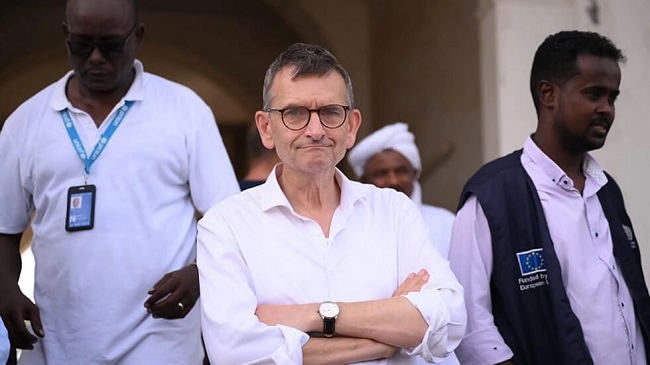
Sudanese authorities loyal to the regular army have declared UN envoy Volker Perthes “persona non grata”, accusing him of taking sides in nearly two months of devastating fighting with rival paramilitaries.
Fighting has raged in the north African country since mid-April, when army chief Abdel Fattah al-Burhan and his former deputy Mohamed Hamdan Daglo, who commands the paramilitary Rapid Support Forces, turned on each other.
In a letter to the United Nations last month, Burhan accused the envoy of bias, not respecting “national sovereignty” and exacerbating fighting between the regular army and the RSF.
UN chief Antonio Guterres has repeatedly defended Perthes.
“The government of the Republic of Sudan has notified the secretary-general of the United Nations that it has declared Mr. Volker Perthes… persona non grata as of today,” the foreign ministry said in a statement late Thursday.
A Sudanese government official who spoke to AFP on condition of anonymity said the decision was taken “because he sided with certain political parties and stressed that the political process be restricted to certain parties and exclude others”.
“When the head of the sovereign council (Burhan) wrote to the UN secretary-general asking for him to be replaced, and he did not respond, the Sudanese government had no choice but to take this decision,” the official added.
The United Nations has yet to comment on the announcement. It noted in a tweet on Thursday that Perthes was in the Ethiopian capital Addis Ababa for a series of talks.
Fresh fighting
Sudan has been embroiled in deadly conflict since April 15, with fighting spreading across the country from Khartoum to the western region of Darfur in defiance of a series of truces.
Witnesses reported hearing clashes on Friday near the Yarmouk weapons manufacturing and arms depot complex in Khartoum, from where plumes of smoke were seen rising for a second successive day.
Air strikes were also carried out in eastern parts of the capital and the sound of anti-aircraft guns was heard.
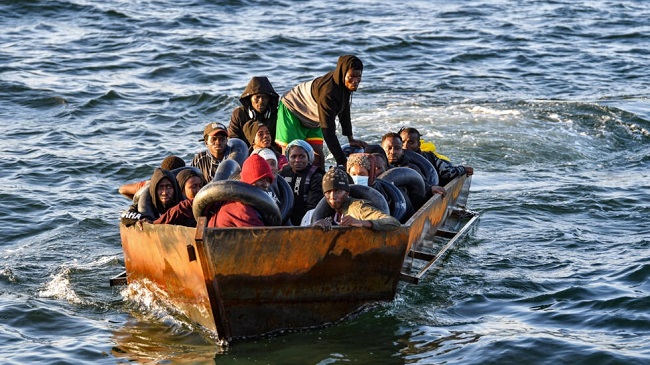
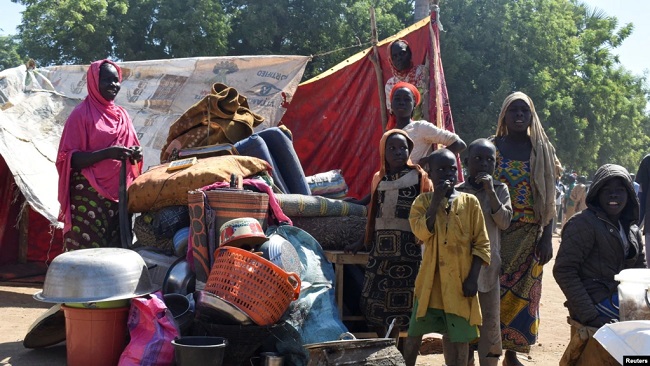
Since the fighting erupted, more than 1,800 people have been killed, according to the Armed Conflict Location and Event Data Project. The UN says nearly two million people have been displaced, including 476,000 who have sought refuge in neighbouring countries.
Those unable to leave have been forced to camp out for weeks as supplies of food and other vital goods run low.
Entire districts of Khartoum no longer have running water, mains electricity is only available for a few hours a week and three-quarters of the hospitals in combat zones are not functioning.
The most recent truce was agreed to allow desperately needed humanitarian aid into areas ravaged by the fighting, but like all those that preceded it, the accord was flouted by both sides.
The UN estimates around 25 million people — more than half of Sudan’s population — are now in need of aid.
Blame trading
Perthes and the UN mission he heads have been targeted since late last year by military and Islamist-backed protests denouncing perceived foreign interference.
A former academic who has headed the Sudan mission since 2021, Perthes has staunchly defended the UN against accusations of inflaming the conflict, saying those responsible are “the two generals at war”.
In his letter to the UN chief, Burhan charged that Perthes had presented a misleading picture “of consensus” in his reports to the UN, and “without these signs of encouragement, the rebel leader Daglo would not have launched his military operations”.
It has never been possible to verify who fired the first shots of the war.
Daglo, an ambitious militia leader originally armed by Bashir to crush rebels in Darfur, was Burhan’s second-in-command before the two fell out, most recently over the RSF’s integration into the army.
Source: AFP












10, June 2023
Biya holds emergency meeting to address Boko Haram attacks 0
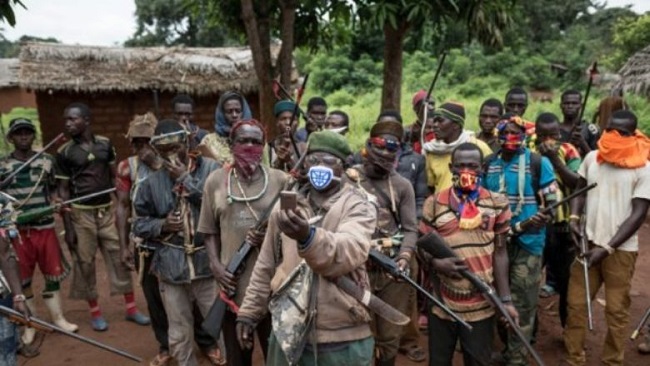
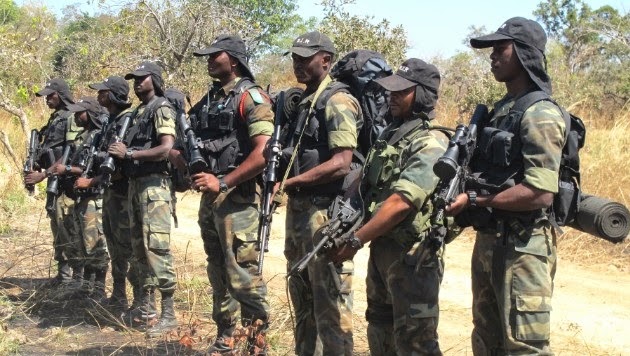
At the start of June, Cameroonian President Paul Biya ordered the nation’s army to hold an emergency meeting to address a recent resurgence in cross-border attacks by Islamic State in West Africa Province (ISWAP) (gazettengr.com, June 1). ISWAP, for example, claimed attacks in Gassama, Amchide, and Fotokol in the Far North Region of Cameroon in March. The first ISWAP attack was on the Multinational Joint Task Force (MNTJF), which includes Cameroon, Chad, Niger, and Nigeria (and Benin, though it does not fight against ISWAP). The latter two attacks, by contrast, targeted the Cameroonian army.
In April and May, ISWAP attacks in northern Cameroon continued. On May 31, ISWAP claimed the killing of two police officers as well as the theft of their weapons. On May 13, ISWAP claimed it had attacked an army base, causing the soldiers there to abandon their positions and flee. Other attacks, such as one on May 11 in Mora, Cameroon, have been thwarted by the MNJTF. In another case, an ISWAP courier was arrested on a camel in N’guigmi, Niger, leading to the MNJTF’s uncovering of several hideouts around Monguno, Nigeria. Notwithstanding the several successful raids, most recent attacks in Cameroon have been relatively small-scale. This compares to previous years, where dozens of Cameroonian as well as Chadian, Nigérien, and Nigerian soldiers have been killed on the shores of Lake Chad.
ISWAP is apparently seeking to pilfer supplies from northern Cameroonian villages in order to replenish stocks in advance of the rainy season—as well as possibly punish civilians for not paying taxes to the group. ISWAP’s claimed attacks and history of operating in northern Cameroon indicate that the group was responsible for many, if not all, of the recent attacks. Meanwhile, the late Abubakar Shekau’s faction—which considers itself part of Islamic State (IS), but is not recognized as such—has also been taxing civilians around Lake Chad, including in northern Cameroon. This was the case both before and after Shekau’s death in an ISWAP-led operation. It is, therefore, possible that Shekau’s loyalists are also conducting some attacks in northern Cameroon, in addition to ISWAP. Shekau’s successor, Bakura, is also pushing the faction’s forces further south from Lake Chad towards Sambisa Forest, which straddles the Nigeria-Cameroon border. This forest was Shekau’s base, but was largely taken over by ISWAP since his death.
The Cameroonian military is being forced into action not only because of ISWAP’s targeting of its soldiers in these disruptive, albeit relatively small-scale, attacks, but also because of the resulting severe economic disruption. Thousands of villagers have been forced to flee their homes due to the looting of markets and farms, sometimes losing hundreds of cows to theft. Indeed, these “pilfering attacks” were a hallmark of the late Shekau, although since his death many of his former loyalists have since reintegrated into ISWAP. These militants may now be employing similar tactics under the ISWAP banner.
Whether ISWAP or the late Shekau’s fighters are behind the incursions into Cameroon, the Cameroonian army’s response may lead to further “retaliatory” attacks by the two groups. Historically, the jihadists have escalated attacks against Nigeria’s neighbors when those countries’ armies increase the tempo of their counter-insurgency efforts. Therefore, despite a lull in attacks around Lake Chad since 2021, it is possible that the area will once again became a major battleground in the conflict going forward.
Source: Jamestown.org