28, December 2023
Bundes: Veteran politician Wolfgang Schaeuble dies aged 81 0
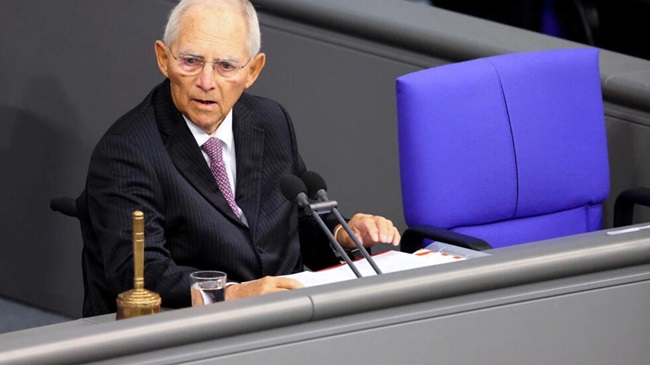
Wolfgang Schaeuble, who served as a member of the German parliament for over half a century, has died aged 81, ending one of Germany’s longest political careers in which he helped secure his country’s place at the heart of Europe.
Schaeuble devoted much of his career to re-unifying his country and later served as former chancellor Angela Merkel’s finance minister during the eurozone debt crisis. He died peacefully late on Tuesday, a spokesperson for the centre-right Christian Democrats (CDU) said on Wednesday.
Schaeuble was born in 1942 in the southern city of Freiburg and had been a member of parliament without interruption since 1972.
“Germany has lost a formative Christian Democrat who loved to argue and yet never lost sight of what politics is all about: making life better for citizens,” said German Chancellor Olaf Scholz in a statement.
As interior minister, Schaeuble, who represented the West, was key in drawing up the terms of Germany’s reunification treaty, signed in August 1990, after the fall of the Berlin wall.
“He epitomised post-war democratic Germany like few others,” said Interior Minister Nancy Faeser.
The CDU praised Schaeuble’s commitment to stability and responsibility in financial matters, saying “his legacy will live on in the annals of German and European history”.
As finance minister, Schaeuble pulled the strings of Germany’s policy response to the euro zone crisis, securing support on the right of Merkel’s conservative bloc for three Greek bailouts.
That determination bordering on intransigence helped make him the most popular German politician at home and the most hated abroad, earning him the soubriquet – bestowed by news magazine Spiegel – of “chancellor behind the scenes”.
Former Greek finance minister Yanis Varoufakis, who was outspoken in his criticism of the austerity policies championed by Berlin at the height of the debt crisis, said on Wednesday that history would judge Schaeuble harshly.
“Wolfgang Schaeuble was the embodiment of the political project of buttressing a monetary union in which he himself did not believe,” wrote Varoufakis on his website.
However, praise for his contributions came from across Europe, including from leaders in France, Slovakia, the Netherlands and Italy.
“Europe loses one of its staunch supporters,” said Italian Foreign Minister Antonio Tajani on X.
Schaeuble served as finance minister until 2017, when he took over as president of the Bundestag lower parliamentary house, showing the same focus that saw him adapt to paralysis after being shot three times at an election campaign event a few days after German reunification in 1990.
While that drive won him the respect of fellow conservatives and lawmakers from other parties, his career was not without setbacks.
For a time in the 1990s, Schaeuble was considered the anointed successor to former conservative chancellor Helmut Kohl. As head of the CDU in 1998 following Kohl’s election loss, Schaeuble had named Merkel as his deputy.
However, it was a pairing that would last less than a year and a half: Merkel was instrumental in forcing him to resign the CDU leadership in 2000 after a funding scandal, with Merkel taking over and eventually serving as chancellor in 2005.
“We will miss Wolfgang Schaeuble’s voice in Germany, I will personally miss his advice,” said Merkel in a statement. “I mourn the loss of a politician who shaped our country in many ways.”
Source: Reuters













29, December 2023
Genocide of Southern Cameroonians spelling end of Biya regime 0
The Vice President of the Ambazonia Interim Government says Yaounde’s killing of innocent Southern Cameroons women and children is slowly but surely spelling the end of the occupying French Cameroun regime.
Dabney Yerima made the remarks during a meeting with his aides on the situation in Ground Zero on Boxing Day as the brutal La Republique war intensifies in the rural areas of Southern Cameroons.
“We of the Ambazonia Interim Government believe that the martyrdom of Southern Cameroons women and children will end the brutal regime in Yaoundé and that in 2024 we will witness the victory of Ambazonia Restoration Forces as well as the elimination of all French Cameroun colonial administrators” Vice President Yerima stated.
Comrade Dabney Yerima also expressed dismay at the support provided by the Southern Cameroons diaspora in Europe and North America, saying the Ambazonians in the West need to step up their game to win the independence battle.
Yerima furthered that the people of Southern Cameroons will continue to stand up for the implementation of justice and the complete independence of their homeland.
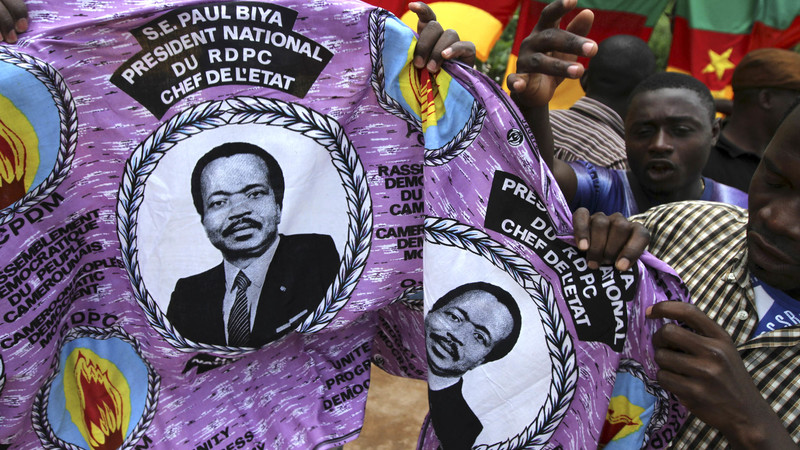
91-year old President Biya started the bloody war on Southern Cameroonians seven years ago following a strike by English speaking teachers and lawyers.
Since the start of the war, the Biya regime has killed at least 10,000 Southern Cameroonians and injured several hundred others, and left vast swathes of the North West and South West in ruins.
Yaoundé continue to impose a siege on Southern Cameroons territory by cutting off electricity and the internet.
By Haggai Fung Achuo