25, August 2025
US trades military support to African leaders for access to mineral wealth 0
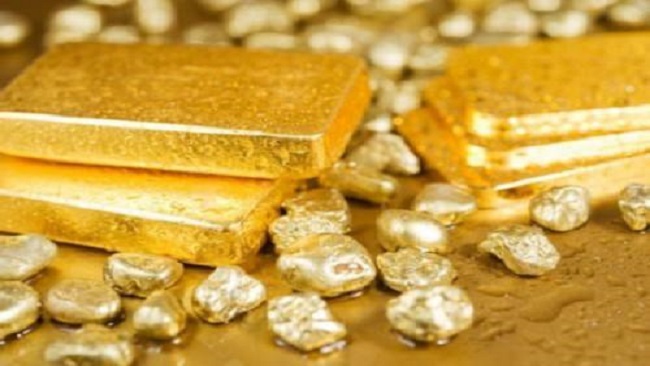
Under President Donald Trump the United States has reset relations with west Africa’s military leaders on a mutual back-scratching basis, bartering help fighting jihadists for the Sahel region’s mining riches, experts say.
While Joe Biden was in office the US suspended most of the development and military aid it sent to Burkina Faso, Mali and Niger in the wake of the rash of coups that brought juntas to power in the three restive countries between 2020 and 2023.
Trump’s return to the White House has shifted the US away from that stance, as part of a wider pivot in Washington’s African foreign policy and its attempts to counter Russia and China’s influence on the continent.
“Trade, not aid … is now truly our policy for Africa,” Troy Fitrell, the State Department’s top official for African affairs, told an audience in Abidjan, Ivory Coast in May.
In recent weeks several other senior American figures have paid visits to the capitals of Burkina Faso, Mali and Niger, which have all been struggling to root out jihadists linked to al Qaeda or the Islamic State group for more than a decade.
In early July, Rudolph Atallah, a security and counterterrorism adviser to Trump, visited Mali to offer the “American solution” for the unrest.
“We have the necessary equipment, the intelligence and the forces to stand up to this menace. If Mali decides to work with us, we’ll know what to do,” Atallah was quoted as saying by the country’s state newspaper.
Several days later, William B. Stevens, the State Department’s deputy assistant secretary for West Africa, likewise raised the possibility of private American investment in the anti-jihadist fight to an audience in the Malian capital Bamako, after stop-offs in Ouagadougou and Niamey.
“Washington offered to kill the leaders of jihadist groups, in exchange for access to lithium and gold for American businesses,” said Ulf Laessing, head of the Sahel programme at the Konrad Adenauer Foundation, a think tank affiliated with Germany’s conservative CDU party.
Trump has brought US access to key minerals front and centre of his negotiations with foreign countries, including in his attempts to end the Russia-Ukraine war and the long-running conflict between Rwanda and the Democratic Republic of Congo.
Lithium, gold, uranium
Mali is among Africa’s top producers of gold and lithium, a key component in the electric car batteries necessary for the transition to a low-carbon economy in the age of climate change.
Burkina Faso likewise possesses rich veins of gold, while Niger’s uranium deposits make the desert nation among the world’s top exporters of the radioactive metal.
Although all three Sahel juntas came to power while promising the people greater control and sovereignty over their country’s mineral wealth, the officers in charge have welcomed Washington’s change in tack.
“We have to look at investment, the potential of our countries,” said Mali’s Foreign Minister Abdoulaye Diop in July, hailing “today’s convergence of viewpoints between the American administration and the government of Mali”.
Laessing argued that “some officials in the State Department, worried about the end of USAID and the closure of embassies, pointed out Mali’s rich resources to the Trump administration as a way to encourage it to remain engaged and keep the American embassy in Bamako open, at a point where Russia and China are expanding their influence in the region.”
But for Liam Karr, an analyst at the American Enterprise Institute, any critical minerals deal would be “a much longer-term project”.
“The terrorism threat is the biggest issue … stabilising the region is key to any investment hopes,” Karr argued.
‘American mercenaries’
Washington’s courting of the Sahel states comes despite the juntas pivoting towards Russia, having cut ties with the West and former imperial ruler France in particular since the coups.
Moscow has sent mercenaries from the infamous Wagner paramilitary organisation, and its successor the Africa Corps, to help the Sahel countries’ armies push back the jihadists.
After Niger nationalised the local branch of French uranium giant Orano, the Kremlin, which commands the world’s largest arsenal of nuclear weapons, said it wished to mine the radioactive metal in the west African country itself.
So far, Russia’s foothold in the region has yet to provoke the White House’s ire.
In his visit to Mali, security adviser Atallah said he saw no problem with Moscow’s presence in the region, insisting that the country was “free to choose its partners”.
“Since the French were kicked out … and Russia welcomed into the region, Trump sees no problem in accompanying and/or supporting Russian efforts in the region. The fact that the Russians eschew democratic values and human rights promotion also aligns with the Trump administration’s transactional approach to relations between states,” Bisa Williams, a former US ambassador to Niger, told AFP.
Williams, now a consultant and academic, said Trump could strike an agreement that “would guarantee majority or near-majority ownership and a high percentage of extracted minerals in exchange for support fighting terrorism”.
That could involve the deployment of American mercenaries, along the lines of how Russia used Wagner, Williams said.
“That way, he wouldn’t have to defend the policy before Congress or his MAGA base.”
Source: AFP
















26, August 2025
Southern Cameroons minerals: Elias Pungong, Colin Mukete at daggers-drawn positions 0
The Nkout (2.7 billion tons) and Ntem (98 million tons) iron ore deposits in southern Cameroon are at the heart of a legal and financial battle. At the center of the dispute is Cameroon Mining Exploration (Caminex), the local subsidiary of the bankrupt British group International Mining and Infrastructure Corporation (IMIC).
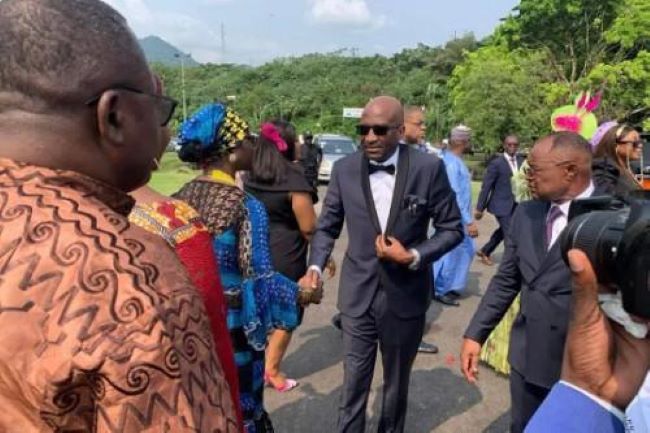
The control of Caminex is being contested by two parties: Libyan Foreign Bank (LFB), a subsidiary of the Libyan central bank and IMIC’s main creditor, represented in Cameroon by Elias Pungong; and Caisse Capital Ltd, an investment firm owned by Cameroonian billionaire Colin Mukete, who was also a financier of the British group.
At the heart of the dispute are the legality of LFB’s claim to IMIC’s shares in Caminex and the true amount of financing invested in the exploration of the Nkout and Ntem deposits.
According to Elias Pungong, LFB’s takeover of Caminex was a result of a London court decision. He asserts that after IMIC went bankrupt and could no longer repay its debts, LFB, as the main creditor, went to court in London. The court ruled in favor of LFB buying all of IMIC’s shares, making the Libyan bank the majority shareholder of Caminex.
This version is disputed by other creditors, including Caisse Capital. Its lawyer, Etah Akoh, claims that “the London court only went so far as to pronounce the liquidation of IMIC and appoint a liquidator.” He insists that by law, only a Cameroonian court could rule on the shares of a local company like Caminex. “In claiming otherwise, Mr. Pungong has lied, and we plan to sue him for false testimony,” the Caisse Capital lawyer said.
According to Etah Akoh, the London court could not have awarded the Caminex shares to LFB in any case, since the Libyan bank was only one of IMIC’s creditors. He stated that LFB was fully aware of Caisse Capital, which had injected $5 million into the project. “LFB made contact with us, and discussions took place,” he said. “How, under these conditions, can the bank now want to seize IMIC’s assets in Caminex for itself?“
In response, Elias Pungong said LFB’s $200 million claim against IMIC justified its status as a “senior debt,” or priority claim. “False,” Etah Akoh retorted. “From a legal standpoint, it’s not the amount that matters, but the structure and guarantees. A bank that lends $10 million with a mortgage takes precedence over one that lends $100 billion with no security.” In a Nov. 22, 2024, letter to the Minister of Mines, Industry, and Technological Development, Etah Akoh’s firm, Etah-Nan & Co, informed the mining authority that “LFB’s intrusion in Caminex’s affairs has no legal basis.”
Conflicting Claims Muddle Battle for Iron Ore Assets
The dispute also extends to investment figures. LFB claims that IMIC invested more than $400 million in exploration activities at Nkout and Ntem, financed by loans taken out by IMIC to fund Caminex’s activities. Sources say LFB claims the bulk of these investments in documents submitted to the Cameroonian government. LFB also acknowledges a $5 million debt owed to Caisse Capital by IMIC.
Contacted by Business in Cameroon, Elias Pungong claimed that LFB granted nearly $200 million in loans to IMIC and its subsidiary Affero Mining. He also stated that IMIC raised another $200 million on the London Stock Exchange to finance its activities in Cameroon, bringing the total invested in the country to over $400 million. He said the funds were used to acquire machinery, cover headquarters costs, and conduct exploration studies on the two mining sites.
However, these figures diverge from those advanced by Gordon Partnership, IMIC’s legal counsel. In a Feb. 21, 2018, letter to LFB, the London-based firm detailed its client’s debt situation. “In summary, IMIC owes LFB approximately $81 million and other creditors $70 million. Its subsidiary Affero owes LFB nearly $94 million,” the letter read. In other words, IMIC’s total debt would amount to $245 million, of which $175 million is owed to LFB. The law firm makes no mention of the $200 million IMIC allegedly raised on the stock exchange.
The difference of $155 million between the claimed investment and the debt figures fuels suspicions of fraud.
Caisse Capital alleges that the $400 million in investments put forward by LFB is fraudulent. According to its lawyer, no tangible proof has ever been provided for the financing LFB claims it provided through IMIC to Caminex. “A mining project that receives 224 billion CFA francs would inevitably leave visible traces. Yet at the time of IMIC’s bankruptcy, Caminex was buried under more than 2 billion CFA francs in tax debts, had 160 million in unpaid wages, had lost its offices, and was trying to sell a few vehicles to pay its employees. Its workforce was limited to a few workers abandoned in the bush due to lack of pay. Is that the face of a company that would have absorbed nearly $400 million? Certainly not,” Etah Akoh said.
Caisse Capital shares the position that only a small portion of the $175 million borrowed by IMIC and Affero Mining was actually used for the project. “Based on my experience as a lawyer in this sector, the monthly costs of such a company do not exceed 30 to 50 million CFA francs. Over three years, even including laboratory analyses in London or Canada, expenses could not have exceeded 15 billion CFA francs per permit. How then can you explain the 224 billion CFA francs announced by LFB? These figures are implausible.”
Despite the disagreements, LFB is claiming a central role in the management of the Cameroonian permits and is attempting to convince the government in Yaoundé to grant it a mining convention.
Caisse Capital argues that this is merely a maneuver to erase its own status as a creditor. Colin Mukete’s firm maintains that its $5 million loan to IMIC should entitle it to a stake in any future convention. It is firmly opposed to an agreement being signed for the sole benefit of Caminex and LFB, which it accuses of artificially inflating its contributions. “LFB is not a mining company. Its strategy is to deceive the Cameroonian government and then find a buyer who will acquire Caminex to recoup the $400 million it claims to have invested. This investment is fictitious,” Etah Akoh charged.
A Test for Cameroon’s Business Climate
The Ministry of Mines, however, seems favorable to resuming discussions with Caminex and LFB. This prospect alarms Caisse Capital, whose lawyer has threatened to go to Cameroonian and international courts to have any convention signed under these conditions annulled. “LFB and Mr. Pungong can try to obtain a mining convention with government support. I cannot prevent them from doing that. But I can, and I will, initiate legal proceedings to annul any convention signed on such a false basis. And once the proceedings begin, no serious lender will take the risk of financing this project,” said Caisse Capital through its legal counsel.
Beyond this standoff between creditors, the future of two of Cameroon’s most significant iron ore deposits remains uncertain. The government, having been solicited by LFB for a mining convention, will have to arbitrate a case that involves not only millions of dollars but also the credibility of the country’s business climate.
Source: Business in Cameroon