
6, June 2019
Rights monitors sound alarm over ‘neglected’ Southern Cameroons crisis 0
Rights groups have sounded a warning over the escalating crisis in western Cameroon, where separatists and government forces are locked in deadly combat.
“The international community is asleep at the wheel when it comes to the crisis in Cameroon,” the secretary general of the Norwegian Refugee Council (NRC), Jan Egeland, said in a report issued on Tuesday.
“Brutal killings, burned-down villages and massive displacement have been met with deafening silence.”
Two regions in Cameroon are in the grip of an armed campaign by English-speaking militants seeking independence from the francophone-majority country.
On October 1 2017, they declared the creation of the “Republic of Ambazonia,” covering the two English-speaking regions incorporated into post-independence Cameroon in 1961.
The declaration went largely unnoticed outside Cameroon, and “Ambazonia” — named after a bay at the mouth of the Douala River — has been recognised by no-one.
The government responded with a brutal crackdown, and the separatists in turn have mounted a campaign of attacks on state buildings, shooting and kidnappings.
According to the International Crisis Group think tank, 1,850 people have been killed, while more than 530,000 people have been forced from their homes, according to UN figures.
The NRC said the crisis in the Northwest and Southwest Regions topped its annual list of the world’s “most neglected displacement crises”.
There has been no major mediation effort, no large relief programme, minimal media interest and insufficient pressure to stop attacks on civilians, it said.
Second and third on the NRC list were long-running conflicts in the Democratic Republic of Congo and Central African Republic.
Separately, a report by a Cameroon-based rights group in Africa, the CHRDA, and the Canada-based Raoul Wallenberg Centre for Human Rights, accused the armed forces of conducting “a deliberate, violent campaign against civilian populations”.
It acknowledged that local armed groups also bore “much responsibility” for the violence.
“It is sometimes argued that the current crisis is just one more conflict in a series of reciprocal attacks and reprisals between government and secessionist forces,” the report, published on Monday, said.
“However, minimizing the seriousness of the attacks on civilians as part of the ‘normal’ conflict serves to shield serious human rights violations and crimes against humanity and may even enable their continuation.
“Minimizing the conflict also ignores evidence that the violence is spreading, engulfing Francophone regions of the country, becoming a threat to the entire sub-region.”
Around a fifth of Cameroon’s population of 24 million are English-speakers.
Resentment has long festered at perceived discrimination at the hands of the francophone majority in education, law and the economy.
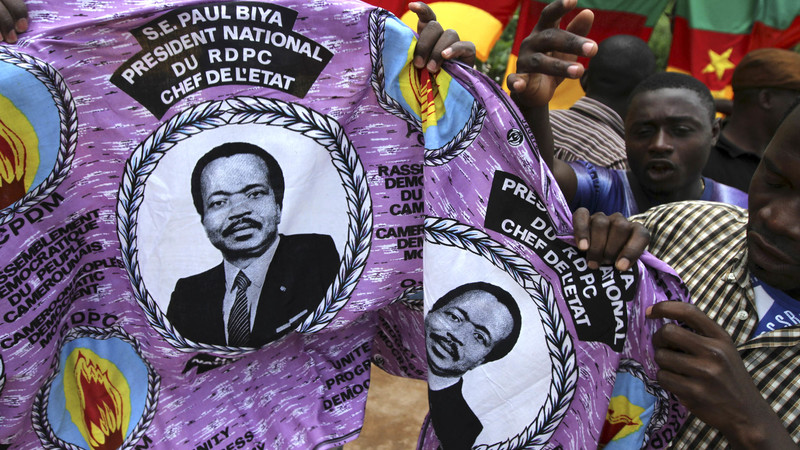
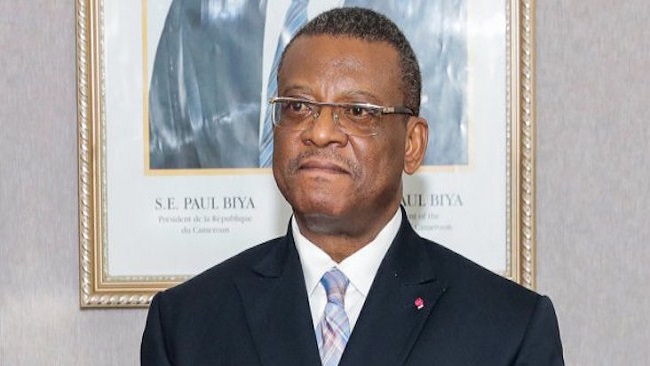
In recent years, growing demands for autonomy or a return to Cameroon’s federal structure were rejected by President Paul Biya, prompting radicals to gain the ascendancy in the anglophone movement.
AFP

















7, June 2019
UN concerned over refugees’ ‘ghastly’ conditions in Libya 0
The United Nations (UN) has criticized the “ghastly” conditions in migrant detention centers in Libya, where some refugees have died of tuberculosis and many others have simply disappeared.
“We are deeply concerned about the ghastly conditions in which migrants and refugees are being held in detention in Libya,” the spokesman for the UN High Commissioner for Human Rights (UNCHR), Rupert Colville, told reporters in Geneva on Friday.
According to UN figures, some 3,400 migrants and refugees remain jailed in the capital, Tripoli, which has seen a surge in fighting since a mix of militia outfits — which have come together as the so-called Libyan National Army (LNA) — launched a major military offensive against the UN-backed Government of National Accord (GNA) in Tripoli in early April.
Amid the rampant violence and insecurity, the Libyan Coast Guard has detained thousands of people off Libya’s coasts and handed them over to the country’s detention facilities.
Referring to the conditions in one detention center, in Zintan, which was recently visited by UN officials, Colville said that the refugees and migrants there were “severely malnourished, lacking water, locked in overcrowded warehouses reeking with the smell of rubbish and waste from overflowing latrines.”
He warned that the conditions in the prison, which houses 654 refugees and migrants, “amount to inhuman and degrading treatment or punishment, and may also amount to torture.”
‘This really is a crisis’
The UN human rights spokesman also said that 22 people had already died of tuberculosis in the Zintan detention center since last September.
Colville added that 90 other inmates had contracted the disease. Sixty of those, he said, had been locked in a separate isolation hangar, which he described as a “hell hole,” while the other 30 had been transferred to the Gharyan Detention Center, south of the capital.
“They have reportedly been sent there to die because there are no burial facilities for Christians in Zintan,” he said.
“Tuberculosis need not be a killer disease, but in these circumstances, clearly it is killing people and there is a risk that others will die,” Colville said. “This is really a crisis.”
He also expressed concern about the disappearance of hundreds of migrants from a facility in al-Khoms City, which is under the oversight of the Department for Combating Illegal Migration (DCIM).
The UN official urged the Libyan government to launch an immediate investigation “to locate these missing people.”
“The Libyan Coast Guard and the DCIM must ensure that they are accountable for every person in detention, and that their human rights are respected,” Colville said.
Libya has been in effective chaos since 2011, when longtime dictator Muammar Gaddafi was toppled from power after an uprising and a NATO military intervention.
The migrants fleeing Libya often attempt to reach Europe. Alarmed by increasing numbers of migrants, European countries have over the past years tried to convince Libya to crack down on such migration.
Source: Presstv