6, April 2018
Yaounde: CPDM gov’t bans the sale of arms and ammunition in six regions 0
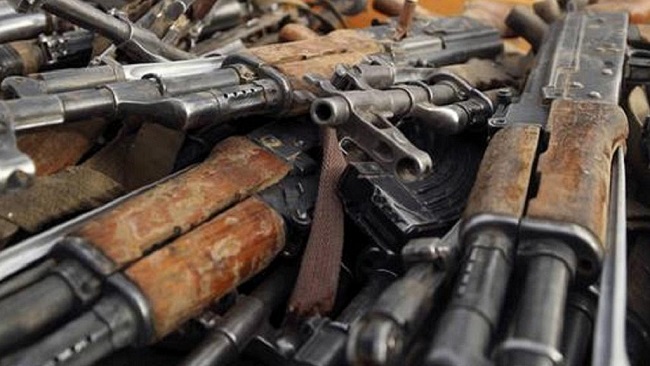
Cameroon has banned the sale of arms and ammunition in six regions of the country, including the two English-speaking regions where a deep socio-political crisis has played out for over a year, the authorities announced Thursday.
The Minister of Territorial Administration, Paul Atanga Nji, has decreed “the prohibition, until further notice, of the sale of hunting and protection weapons and their ammunition in the Adamaoua, Central, Littoral, West, North-West and South-West regions”, according to a statement.
“To date, the number of firearms in circulation far exceeds the number of authorizations duly granted by the competent authorities,” the minister said in the text.
To date, the number of firearms in circulation far exceeds the number of authorizations duly granted by the competent authorities.
Cameroon has ten regions. Among these, the two English-speaking regions (Southwest and Northwest) have been at the center of a political crisis since the end of 2016 awhile their neighbouring regions (Littoral, West) are also affected by the ban.
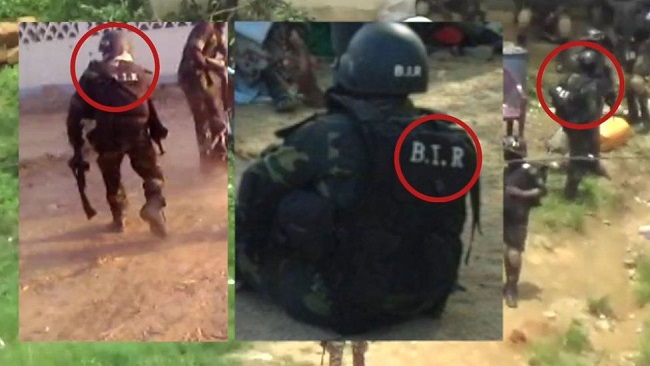
For more than three months, the Anglophone crisis has turned into an armed conflict of low intensity, where an armed branch of the Anglophone separatists, who are agitating for secession from Cameroon and the creation of a new state, “Ambazonia”, is fighting the security forces deployed in numbers by Yaoundé.
English-speaking separatists have killed 28 members of the security forces since late 2017, according to an AFP compilation based on official statements. Other observers in Yaoundé speak of a higher toll.
In addition, the Amadoua region affected by the ban is neighbouring the Central African Republic, where state authority is weak in provinces where armed groups fight for control of resources and influence.
According to the text, the armouries of the six regions concerned will have to be closed and an inventory of the weapons which are there will have to be drawn up.
The minister has asked holders of unauthorized weapons to turn them over to local authorities and those with legally recognized weapons to register.
In November and February, the authorities in the south-west and north-west respectively banned the sale of arms in their regions on a temporary basis.
Presidential elections are scheduled to be held later this year, even as the ruling party Cameroon People’s Democratic Movement (CPDM) won 63 out of the 70 senate seats in local elections held on March 25.
AFP







6, April 2018
Southern Cameroons Genocide Cover Up: Yaounde arrest Rwanda genocide suspect wanted in France 0
A former Rwandan policeman has been arrested in Cameroon on suspicion of involvement in the 1994 Rwandan genocide, a judicial source in France, where he is wanted over the killings, said.
Philippe Hategekimana was arrested in Yaounde, Cameroon’s capital, on March 30 under an international warrant issued by French magistrates specialising in crimes against humanity.
France is expected to request his extradition to face charges of organising and participating in multiple atrocities in southern Rwanda in April 1994, including the assassination of a mayor.
France, which had initially dragged its heels on prosecuting suspected perpetrators of the genocide of about 800,000 people, mostly minority Tutsis, has picked up the pace in recent years.
The first French trial over the genocide was in 2014 when former Rwandan spy chief Pascal Simbikangwa was sentenced to 25 years imprisonment for genocide and complicity in crimes against humanity.
Two years later, a Paris court sentenced two former Rwandan mayors to life in prison for their participation in a massacre at a church, where some 2,000 people seeking refuge were bludgeoned and hacked to death.
All three men were arrested in France.
Hategekimana also fled to France after the genocide, settling in the western city of Rennes where he changed his name to Philippe Manier and obtained French citizenship.
But he recently left for Cameroon.
The investigation against him was opened in Paris in September 2015 after a complaint from the Collective of Civil Parties for Rwanda (CPCR), a group set up by a Rwandan-born relative of genocide victims and her husband.
The genocide has caused two decades of tension between France and Rwanda, with the latter accusing Paris of complicity in the killings through its support and military training for the ethnic Hutu forces who carried out most of the slaughter.
Source: The Nation