1, April 2025
Former Nigerian head of state Obasanjo to invest $700mln in Kribi 0
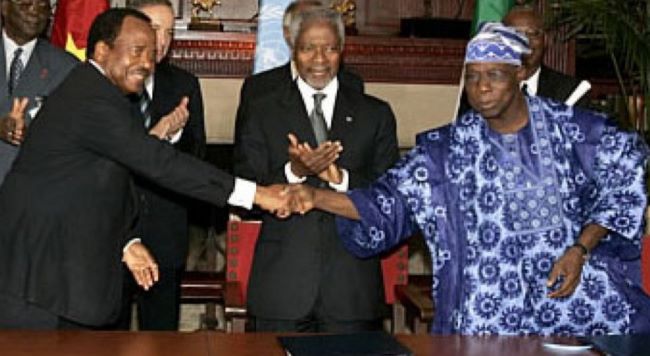
Olusegun Obasanjo, Nigeria’s former president turned businessman, is set to visit the Kribi deep-sea port in Cameroon this April to launch his company, Obasanjo Agro-Allied Business Ltd (OABL). His venture aims to strengthen cross-border trade between Cameroon and Nigeria.
According to Agha Albert Ngwana, CEO of Aftel Cameroon Limited, a partner of Obasanjo’s group, OABL plans to invest $700 million (about CFA420 billion) in multiple sectors, including agriculture, maritime transport, hospitality, and oil.
As part of the project, Obasanjo will expand his farm operations into Cameroon, cultivating maize and soybeans on 610 hectares of land to support his livestock business. OABL has secured land concessions from the Kribi port authority and intends to set up packaging factories, wholesale fertilizer distribution, and warehouse facilities.
The company also plans to develop a 10-hectare site for wood processing and introduce various maritime services to ease congestion at Nigeria’s Apapa and Lekki ports. “Our goal is to provide transshipment services and other key operations at the Kribi deep-sea port,” Ngwana explained. OABL’s plans also include building oil and gas storage facilities for ship refueling and constructing a five-star hotel in Kribi.
Obasanjo’s investment comes as Kribi prepares to launch the second phase of its port expansion. China Harbour Engineering Company (CHEC), a subsidiary of China Communications Construction Company (CCCC), completed the technical handover of the new infrastructure on February 21, 2025. The extension, which includes a 715-meter-long dock, is expected to boost efficiency and capacity when commercial operations begin in April.
OABL’s projects will not only strengthen economic ties between Cameroon and Nigeria—two of the region’s leading economies—but also support local producers, enhance regional development, and position Kribi as a key hub for cross-border trade. This aligns with the objectives of the African Continental Free Trade Area (AfCFTA) by promoting intra-African commerce.
In 2023, trade between Cameroon and Nigeria was largely driven by exports, reaching CFA39.5 billion, with imports totaling CFA39.4 billion, according to Cameroon’s National Institute of Statistics. However, authorities note that informal trade and smuggling significantly impact official trade figures, given the two countries share a long and porous 1,500-km border.
Source: Business in Cameroon












1, April 2025
Niger’s junta withdraws from Lake Chad anti-Boko Haram force 0
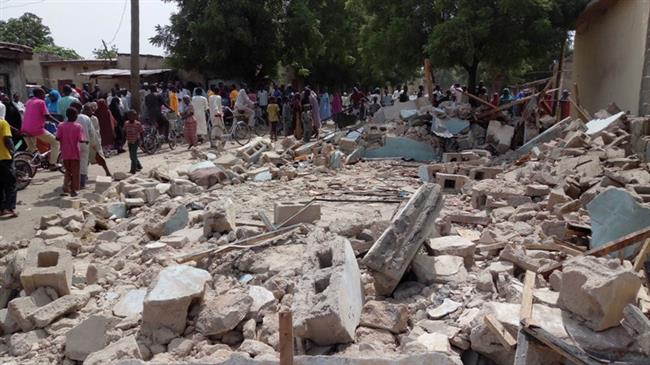
Niger’s ruling junta has quit a regional force fighting armed Islamist groups in west Africa’s Lake Chad area, cementing an acrimonious split from former allies in the region.
The decision to exit the Multinational Joint Task Force (MNJTF) was announced in a bulletin on state television over the weekend. The move “reflects a stated intent to reinforce security for oil sites”, the bulletin stated, without providing further details.
The MNJTF was formed in 2015 by Cameroon, Chad, Niger and Nigeria in the wake of increasing jihadist attacks across their territories. At its peak, it had an estimated 10,000 troops and fought many armed groups, especially Boko Haram and its offshoots. But any serious progress has been hampered or even undone by poor collaboration and equipping, analysts say.
“The force was never that effective, said Ulf Laessing, the Bamako-based director of the Sahel programme at Konrad Adenauer Foundation, a German thinktank. Its decline, he added, was “good news for jihadists and it is bad news for villagers on the lake side, fishers or farmers who just want to go about their business but who will now get less military support”.
Niger’s exit from MNJTF came days after the junta’s leader, Abdourahmane Tiani, was sworn in as president until 2030 under a new charter that suspended the constitution and dissolved all political parties.
Niger has also isolated itself from the Economic Community of West African State (Ecowas), after Ecowas imposed a range of sanctions following the coup that ousted the democratically elected president, Mohamed Bazoum, in July 2023.
Within two months of the coup, it had joined the splinter Alliance of Sahel States (AES) along with Burkina Faso and Mali, where there have also been military takeovers since 2020.
Since then, AES has introduced new biometric passports to replace the old regional passports and on Monday, it announced a 0.5% levy on imported goods from Ecowas states.
Ikemesit Effiong, managing partner at Nigerian geopolitical risk advisory SBM Intelligence, said the levy put an end to “a long history of free trade across the western Sahel” and could change the dynamics of Ecowas’s negotiations with AES.
“When squared with Ecowas’s statement commitment to keep open trade and borders with AES states, I think this [levy] will force Ecowas to drop its kid gloves strategy and be more forceful with the AES,” Effiong said.
It remains unclear what impact Niger’s withdrawal from the MNJTF will have on a security agreement signed with neighbouring Nigeria last August. The countries share a border that spans 1,000 miles but Nigeria-led Ecowas’s push for a rapid return to democratic governance has caused friction between both countries.
Effiong said recent moves in the capital, Niamey, which has been seeking new military and economic partners since expelling French troops in 2023, are unsurprising.
“Niger has been pulling out of all its main regional bilateral and multilateral commitments, much of which it sees as western influenced or inspired,” said Effiong, who noted that MTNJTF had received military and intelligence aid from western partners in the past.
Source: The Guardian