28, February 2026
Iran launches missile, drone strikes against Israel in response to US-Israeli aggression 0
The Islamic Revolution Guards Corps (IRGC) has announced the launch of a massive wave of missile and drone strikes against targets inside the Israeli-occupied territories, after Israel and the US initiated military assault against Iran.
In a statement on Saturday, the IRGC said it launched the first wave of Iran’s extensive missile and drone strikes targeting the occupied territories in response to the “aggression by the hostile and criminal enemy.”
The IRGC said they had targeted the US Fifth Fleet in Bahrain, other American interests in the Persian Gulf and Israel.
Explosions were also heard over central Doha and near Al-Udeid military base, the largest US facility in the region.
Iran’s region wide missile salvo could be heard in Saudi Arabia, Bahrain, Qatar and the UAE, as well as Israel and Iraq, in the hours following the first strikes, after it had repeatedly vowed to retaliate fiercely should it be attacked.
Earlier in the day, the Israeli regime and the United States launched unprovoked assaults targeting several cities in Iran, including the capital Tehran.
On Saturday morning, a number of loud explosions were heard in Tehran, Isfahan, Qom, Karaj, Tabriz, and Kermanshah.
A strike on a school in southern country of Minab in Iran killed at least 24 civilians and injured 45.
Iran, Iraq, Kuwait, Syria, the UAE and Israel all closed their airspaces to civilian traffic, at least in part, and multiple airlines cancelled flights to the Middle East.
US embassies in the Persian Gulf region urged American citizens to take shelter.
Source: Presstv












1, March 2026
Gen. Abdolrahim Mousavi, the martyred Chief of Staff of Iran’s Armed Forces 0
Major General Seyed Abdolrahim Mousavi, the Chief of Staff of Iran’s Armed Forces, attained martyrdom in a cowardly Israeli-American aggression on Saturday.
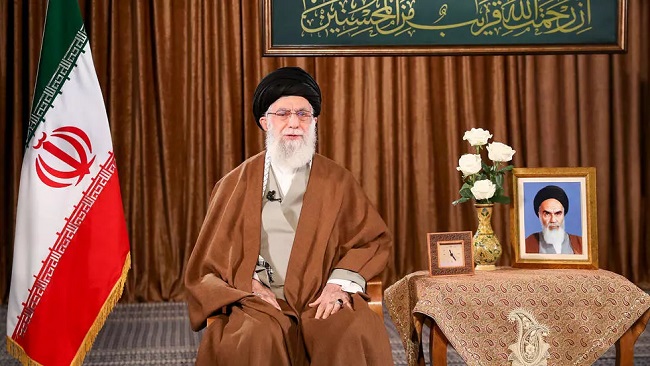
Leader of the Islamic Revolution, Ayatollah Seyyed Ali Khamenei, was also martyred in the Saturday aggression, alongside many top-ranking military commanders and defense officials.
Major General Mousavi succeeded Major General Mohammad Bagheri following the 12-day war in June last year and carried forward the remarkable legacy of his predecessor.
He played a particularly vital role in the June 2025 war, leading the Iranian armed forces in their retaliatory operations that forced the Israeli regime to beg for surrender.
Mousavi previously served as the commander-in-chief of the Islamic Republic of Iran Army and played an instrumental role in bolstering the might of the army.
On August 21, 2017, he was promoted from Brigadier General to Major General and appointed Commander-in-Chief of the Islamic Republic of Iran Army by the Leader, replacing Seyed Ataollah Salehi.
Later, on May 28, 2019, Ayatollah Khamenei appointed him as the commander of the Khatam al-Anbia Air Defense Base, while he continued to serve as the army’s top commander.
Mousavi was born in 1960 in the holy city of Qom in central Iran. He was a graduate of the Army’s Ground Forces Officers’ University and held a doctorate in defense studies from the Supreme National Defense University. He joined the Iranian army in 1979.
During the years of the Imposed War in the 1980s, Major General Mousavi served in the Army’s artillery unit on various fronts, including the western battlefields in Kurdistan (28th Kurdistan Division) and the southwestern fronts (33rd Artillery Group of the Ground Forces) in Khuzestan province.
He participated in many operations such as Valfajr 4, Valfajr 9, Beit al-Moqaddas 5, Qader, Nasr, and several others. He is recognized as a veteran of the war.
After the Imposed War ended in 1997, he completed the Advanced Command and Staff Course (DAFOS) and later earned a doctoral degree in defense management at the Supreme National Defense University.
From 1999 to 2005, he served as the Chief of Joint Staff of the Army, and from 2008 to 2016, he was Deputy Commander-in-Chief of the Army. Following that, from 2016 to 2017, he held the position of Deputy Chief of Staff of the Armed Forces.
Mousavi held several significant leadership positions within Iran’s military. From 1999 to 2005, he served as the Chief of Joint Staff of the Army, later assuming the role of Deputy Commander-in-Chief from 2008 to 2016.
In 2016, he was appointed Deputy Chief of Staff of the Armed Forces, a position he held until 2017, when he was named Commander-in-Chief of the Islamic Republic of Iran Army, a role he held until today.
Additionally, since May 2019, served as the Commander of the Khatam al-Anbia Air Defense Base, further solidifying his central role in the country’s military strategy and operations.
Major General Mousavi also served as the Commander of Imam Ali (PBUH) Officers’ University, where he contributed to the training and development of military personnel.
He also led the Army’s Northeast Operational Base, overseeing strategic operations in the region.
In addition, he was the Deputy for Training and the Deputy for Planning and Programs within the Army Ground Forces, playing a key role in shaping military preparedness and strategy.
Mousavi’s expertise in operations led to his appointment as the Head of Operations for the Army, and later, he became the Director of the Army Strategic Studies Center, where he engaged in high-level research and policy development.
Source: Presstv