15, February 2020
Amidst Boycott, Violence in Cameroon Election, AU, Catholic Church, others call for Political Breakthrough 0
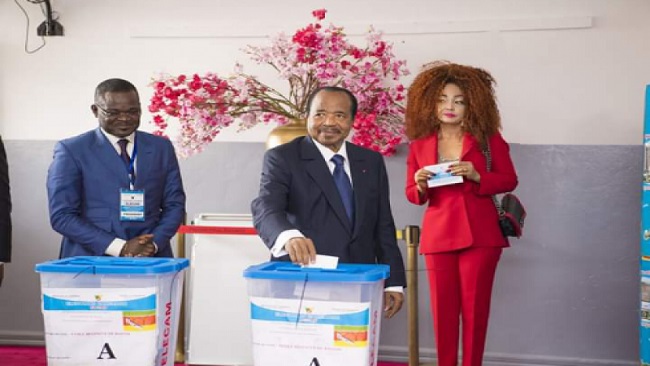
Following the February 09 Municipal and Legislative elections, an avalanche of calls for political breakthrough in Cameroon have been downloaded from several national and international bodies including the African Union (AU), Human Rights Watch (HRW), the Roman Catholic Church as well as a host of other rights focused institutions.
According to the AU observer mission dispatched to monitor the Cameroon elections, there was massive boycott as many Cameroonians have lost faith in the entire process. Moreover, the boycott launched by the main opposition party, the Cameroon Renaissance Movement (CRM) also worked to the disfavor of the elections. This further compounded by the ongoing conflict in the Anglophone regions which thwarted the process. It was a similar message from the Catholic Church which said something more than just elections can bring stability in Cameroon. According to the President of the Cameroon National Episcopal Council, Mgr Abraham Kome, the turnout was very low. He cited a case in President Biya’s home town of Sangmelima wherein in a polling station of 310 voters, only 85 bothered to take part in the process.
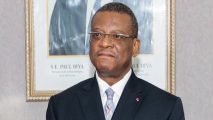
The armed conflict in Anglophone Cameroon also featured in the report of Transparency International (TI) as well as Human Rights Watch (HRW) and a general loss of confidence by citizens in the electoral process in Cameroon. This explains why even in urban metropolis void of any real armed conflict like Bertoua, capital of the East region, the abstention rate, according to the Catholic Church was 70% and in neighbouring Batouri, it was 89%. However, the government has challenged the reports arguing, through Cameroon’s Minister of Interior, Paul Atanga Nji that the reports do not reflect the reality on the ground. The Minister upheld that there was a huge turnout by Cameroonians. “The population in the North West and South West regions turned out massively to exercise their civic duty in all administrative units,” Atanga Nji said.
Amidst the situation
Amidst the current insecurity, violent conflict, voter apathy, elections boycott, disenfranchisement in Cameroon are three basic school of thoughts with each holding firm to an unshakable position characteristic of an extremist confluence. Proponents of the school of thoughts hold firm to their position and belief it is the best remedy for a country challenged at all fronts. In the opinion of the Director of the Central African Network of Human Rights Defenders known by its French acronym as REDHAC, Cameroon is challenged at all fronts and the ruling elites need to make some concessions. “The country is very sick at all levels,” Maximilienne Ngo Mbe said.
With each school of thought blaming the other for the current situation, it becomes a huge challenge finding a middle belt wherein all can come in. At the level of the government, the insecurity, violence especially in the Anglophone regions is caused by “enemies of peace.” They argue that before the uprising the country was enjoying “peace,” a “peace” which the retired Archbishop of Douala, Cameroon’s biggest town, Cardinal Christian Tumi described as “negative peace” because of the social inequality the ruling elites have subjected a greater part of the population and especially the minority Anglophones.
In the opinion of politicians including President Biya’s runner-up at the October 2018 election, Professor Maurice Kamto of the CRM party, they orchestrated a boycott because one part of the country (Anglophone regions) is in war and elections cannot be free and fair. They also argue that the electoral code which has been a subject of controversy in previous elections must be revised to provide equal opportunity to all, not just ruling party candidates.
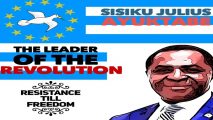
On the part of the separatists, the elections are “foreign” to their land as there is no treaty in international law or at the level of the United Nations binding the Former British Territory (Anglophone Cameroon) and the Republic of Cameroun (French). According to them, the marriage between the two Cameroons in 1961 was an annexation scheme which they want to break. They hold firm to their position and argue that only a negotiated settlement would stop their arms struggle. In a recent outing on his Facebook page, Dr Ayaba Cho Lucas, one of the main leaders of the armed Anglophone nationalism advocating for a separate state called Ambazonia has urged his counterparts to arm what he called ground zero until the central government negotiates. Rather, the government has been slow to negotiate or address the underlying causes but has also upheld the extremist vision of peace by non-peaceful means. In his traditional end of year speech on December 31, 2019, President Paul Biya called on separatists to lay down arms or be crushed by the Cameroon defense forces. All these positions have ensured that there is violence, bloodshed and voter apathy not just in the Anglophone regions but the entire country before, during and possible after if sustainable peace is not attained.
Before, During, After Elections
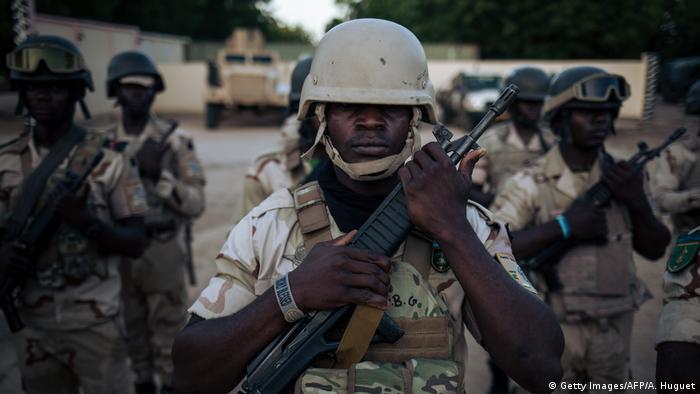
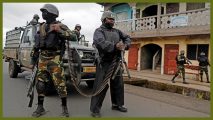
Cameroonians went to the polls in the context of growing insecurity and conflict which has affected at least six out of its ten regions. The East is heavily militarized because of the incursions of rebels of the Central Africa Republic (CAR), while the North is embedded in the Boko Haram conflict, which after experiencing a lull, has, in recent times, taking a more ferocious mood with regular attacks and killings. The Adamawa region only enjoyed a respite of peace in recent times thanks to the dispatching of hundreds of elite Gendarmes to counteract the activities of kidnappers.
However, the greatest challenge has come from the two Anglophone regions in the West where separatists have been fighting against state security forces for three years. The state’s authority in those areas has been reduced to some rare urban metropolis with the few administrators still present under heavy military companion. In the October 2018 presidential election, the turnout in some of these areas was as low as 5% and in other cases entire population had fled because of the violence.
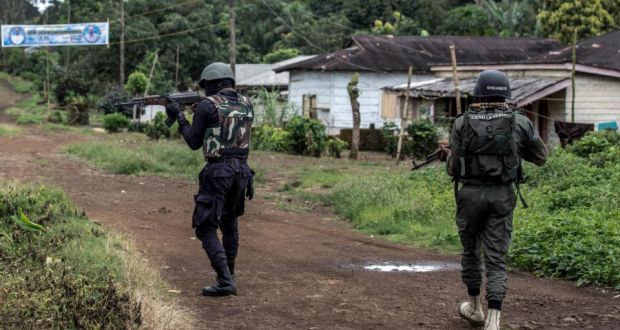
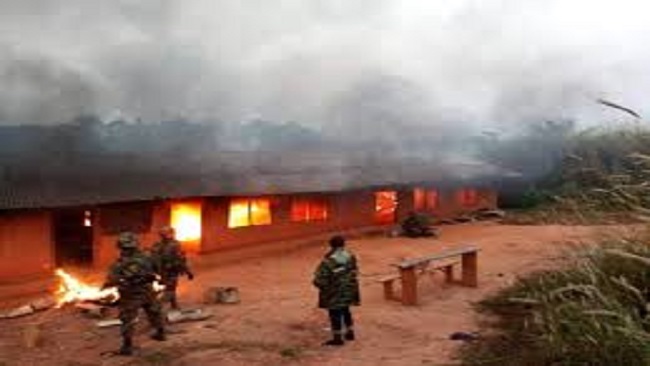
In its analysis of the situation, HRW said there was violence before, during the elections and possible after the election as it fears for the safety of those elected. This violence was orchestrated by both separatist fighters and government soldiers. The rights organization estimated that separatists kidnapped about 100 persons, mostly aspiring MPs and Municipal Councils, mainly from the opposition Social Democratic Front (SDF). At least three offices of Elections Cameroon (ELECAM), the elections management body were burnt down in Misaje on January 07, and Babessi on January 16 in the North West region. In the same region, a local Post Office in Bafut which was housing electoral materials was also burned down. In the South West region, ELECAM’s offices in Tombel were set ablaze on February 02. Homes belonging to government officials and some opposition party candidates were also destroyed.
Rather than protecting the population, HRW argued that government forces also worsened the situation by committing acts of human rights violation. Between January 17 and 20, security forces entered Bali, a locality in the North West region destroying over 50 homes and killing several individuals. All these according to the group accounted for the massive boycott in the elections especially as separatists who controlled most of these areas had called for massive boycott coupled with similar boycotts from some opposition parties including the Kamto’s CRM and the Cameroon Peoples’ Party (CPP) of Kah Walla among others.
The war has crippled the country’s economy as the two Anglophone regions are harbingers of much of the country’s wealth including crude oil, cocoa, coffee, banana, tea, and other cash crops. The largest agro-industrial complex, the Cameroon Development Corporation (CDC) which is the second largest employer after the state is at the brink of collapsing because of the war. This has pushed the government into a borrowing spree to finance most projects while some are merely abandoned because of lack of funds.
Even though regime faithful paint a favourable socio-political climate, the recent elections have proving that Cameroon needs a total overhaul of its electoral law, constitution and strong laws that would give more powers to the local tax payers. However, such a revision would still leave one part of the population, the English speakers disenfranchised as the conditions on the ground for them goes beyond the electoral code, but the transformation of the conflict into gains. Moving forward with elections in the present context has further strengthened the argument of separatists and instead put the lives of civilians.
Force has not solved the equation after three years and not even the country’s elite forces have been able to outsmart civilians sometimes holding just rifles. While addressing the American Parliament in November 2019 on the situation in Cameroon, the Deputy Secretary of State in charge of African Affairs said President Paul Biya has been “ill-advised” to use military options which cannot produce any substantial results. “You can’t wipe out a thought militarily,” Tibor Nagy said. He went further to state that the inability of the Cameroon government to enter into genuine negotiations with separatists further radicalizes many more to consider that only an armed struggle would answer the equation. In the inability to confab with separatists for the past three years, only unbearable pressure by the international community can cause the government to make this bold step and save what is still left. The growing dissatisfaction among the majority Francophones as expressed in the low turnout in the election is an indication that Cameroon in general is at the brink of a total collapse and possible repercussions going far beyond its border. Such a breakdown would for example fasten the position of Boko Haram extremists in the North and other armed movements.
Source: The Organisation for World Peace











17, February 2020
Southern Cameroons Crisis: Human Rights Watch shares the blame 0
Human Rights Watch (HRW), the global human rights watchdog, has released a report on the ongoing carnage playing out in Cameroon’s two English-speaking regions.
The report holds the country’s security forces responsible for some of the most atrocious human rights crimes taking place in the country’s two English-speaking regions.
Cameroon’s security forces are supposed to protect civilians, but they seem to be departing from their traditional role of protecting and serving the people. Their guns have become toys with which they play. Intimidation has become their hallmark and killing fellow citizens no longer generates guilt.
But the report also points a finger at armed separatist fighters who claim they are fighting for the total liberation of their territory, but have, over the last two years, been engaged in behavior that needs to be punished.
A conflict that started as protests by teachers and lawyers was poorly managed by the government due to arrogance and intransigence. Three years after, killing and kidnapping have become great sports in the Northwest and Southwest regions, with security forces playing an active role in these new activities.
Below are some of the tales of agony that HRW obtained from victims of the violence that seems to have received the government’s seal of approval.
Violations by Security Forces
Twelve Bali residents told Human Rights Watch that soldiers, including members of the Rapid Intervention Battalion (BIR), and gendarmes began a three-day security operation in their village on January 17. Armed separatists had operated in the area since 2017. Witnesses said that security forces beat and killed at least four civilians, including two men with intellectual disabilities, Julius Ntali, 55, and Mumbat Charlie, 25, who appeared to have been shot, and his body burned as the house was set on fire.
A witness to Ntali’s killing said:
On January 18, there was a gathering in a house in Sang neighborhood for a funeral. I passed by and saw that Julius was there, eating. It was about 3 p.m. when the security forces stormed the area. They shot indiscriminately, and everyone ran away for their lives. Julius didn’t understand what was happening around him and was hit. We only found his body two days later when the area became quieter, since the military had left. His body was in a state of decomposition, but I saw a sign of a bullet in the head.
A witness to Charlie’s killing said:
On January 19, at least 10 BIR soldiers came to Mom neighborhood in Bali, where I live. They shot in the air around and burned the home where Charlie was living. I was in my house. I watched everything from my home, about 30 meters away. When the shooting finished and the burning was over, I went out and found Charlie’s body. He had been shot in the neck and in the head. His body was totally burned.
Several witnesses told Human Rights Watch that the security forces killed at least two other men in Tih neighborhood between January 17 and 20. However, Human Rights Watch was not able to independently verify this information.
Security forces beat at least four women, including a nursing mother with her baby and a 70-year-old woman with a physical disability, in a home in Sang neighborhood, Bali, where they were hiding at about 1:30 p.m. on January 19, during the military operations. One of the victims, a 34-year-old nurse, said:
The soldiers used wooden sticks to beat me and the other women. They asked us where the Amba boys [separatists] were. We said we didn’t know, and they kept hitting us. The beating lasted up to 30 minutes. A soldier slapped a nursing mother in the face. She had a 4-month-old baby with her.”
Soldiers, including members of the BIR, and gendarmes also beat a 46-year-old man in an abandoned school, the Bali Comprehensive High School, in Sang neighborhood on January 19, seriously injuring his face. He said:
I was in front of the Bali Presbyterian Church when a gendarme called me. He was with 30 other gendarmes and soldiers. He confiscated my phone and asked where the separatists were hiding. I said I didn’t know. He acted as if he didn’t believe me. So, the military pulled me and took me on foot to an abandoned school, one kilometer away. While we were walking, the military slapped and kicked me. At the school, they accused me of being an accomplice to the separatists, hit and punched me for about 25 minutes. They hit my nose badly and I bled profusely. I cried until they brought me back to the main road and left me there.
Security forces also burned and looted up to 50 homes in Bali. Witnesses said they believed that the military retaliated against civilians suspected of harboring separatists or supporting the SDF. Human Rights Watch reviewed satellite imagery taken before and after the attack and confirmed the destruction of buildings consistent with witness testimony.
Human Rights Watch also reviewed video footage featuring homes and businesses that were destroyed in Bali. This footage was both gathered from social media platforms and sent directly to Human Rights Watch. Verifying and geolocating these videos corroborated sites of damaged buildings that were consistent with the satellite imagery of those locations and with witness testimony.
A woman who fled to the forest when the security forces approached her neighborhood, Sang, described what she saw from her hiding place:
The military came on January 19 at about 1 p.m. They arrived on foot and started shooting everywhere. I ran away with my four children and hid nearby. I saw how the soldiers burned my home and my workshop; they destroyed everything.
The Bali residents interviewed said that the separatists who had been in town fled well before the soldiers arrived and there was no confrontation between the security forces and the separatists.
A 55-year-old resident of Bali whose home was burned down by the soldiers on January 17 said:
Dozens of Cameroonian soldiers came to Bali with armored cars and trucks. They targeted the homes of SDF leaders and civilians’ homes where they suspected the Amba boys [separatists] were hiding. The military came to punish and scare the population. As the military approached my neighborhood, Paila, I ran away and hid. My home was razed. I counted 28 soldiers burning it and transporting bags of items looted from it, including a TV and food.
The security forces also searched the Bali district hospital on January 19, causing some patients to flee out of fear. A medical staff at the hospital told Human Rights Watch:
I was on duty when six armed gendarmes entered our facility at about 1 p.m. They asked me where we hid and treated the Amba boys [separatists]. I responded that we only had patients. They wanted me to show them all wards. They entered all the units, including the maternity. I was scared of their weapons, and so were the patients, and some panicked and ran away out of fear.
Abuses by Armed Separatists
Kidnapping
On February 2, armed separatists kidnapped Joseph Tarh Pen, a CPDM member running for mayor in Santa, North-West region. In the days after he was kidnapped, a video circulated on social media showing Tarh, stripped naked and in the dirt, while accused of being a traitor. Human Rights Watch spoke with one relative and two friends of Tarh who identified him in the video. They said that the video was filmed after Tarh’s kidnapping in Piyin village, near Santa. Tarh’s relative said that two of Tarh’s brothers – who were contacted by the separatists to arrange a ransom payment – were also kidnapped, on February 3. The two brothers were released on February 8, while Tarh is still held by the separatists at time of writing.
Armed separatists from the group Restoration Forces led by a commander known as “General Man Pass Man” kidnapped the SDF mayor of Babessi, North-West region, along with four council members from the party on January 5, 2020 in Babessi. The Restoration Forces released them on January 22, following a ransom payment of 1,000,000 CFA (US$1,678). Human Rights Watch spoke with three of those abducted. One, a 49-year-old man, said: “They told us that they kidnapped us to prevent us from participating in the elections. When they let us go, they said we will be monitored all the days of our lives.”
The separatists had also kidnapped and tortured the Babessi mayor in June 2019.
In November 2019, the Restoration Forces kidnapped 20 SDF candidates in the town of Jakiri, North-West region. The officials were held in a small house near a separatist camp in Vekovi village. They were released on December 8, after ransom payments believed to be between CFAF 250,000 and CFAF 500,000 ($419-$838) were paid for each abductee.
“It was about 7 p.m. when two Amba boys [separatists] broke into my shop,” a victim from Jakiri said. “They pointed a gun at my forehead and told me to go with them. They told me I was being kidnapped because my name was on the list of those running for local elections.”
Burning of Property
Armed separatists burned down the home of Acha Kennedy, a candidate for the ruling CPDM, in Bamenda, North-West region, on January 12, 2020, and the home of the mayor in Bafut, North-West region, on January 15, witnesses said. A neighbor of Kennedy said:
At around 9:30 p.m. I opened the door and saw five motorbikes going down to the residence of Mr. Acha. I watched closely. They were Amba boys [separatists]. They had their guns and held tires of vehicles in their hands. They set them on fire and threw them on the roof of Acha’s home. That was how the house was set ablaze. We live in fear.
Witnesses said that a group of about 15 armed separatists – from a group known as “Nsei boys” operating in Mbesoh neighborhood, in Bamessing – burned down four homes belonging to two officials in Bamessing, North-West region, on November 20, 2019. One of the homes was used as a private health center.
A witness, the brother of one of the officials, said:
I used my brother’s home as a health center. I was there with a dozen of people waiting for consultations when the separatists came. They had guns, machetes, and knives. Some appeared to be high on drugs. They demanded we leave. Then, they set the home on fire. The roof was burned, as well as all my medical equipment.
Another of the official’s homes was burned on January 23. He said that he had also been threatened for sending his children to school.
A sister of the other official said that the separatists beat her when they burned her sister’s home. “They had tanks of 20 liters each full of petrol and kerosene, which they started pouring around,” she said. “Then, they set the house on fire. I broke into tears, and so two of them started hitting my back, buttocks, and feet using machetes and sticks.”
Obtained from the HRW report.