
7, February 2020
Cameroon elections overshadowed by boycott and violence 0
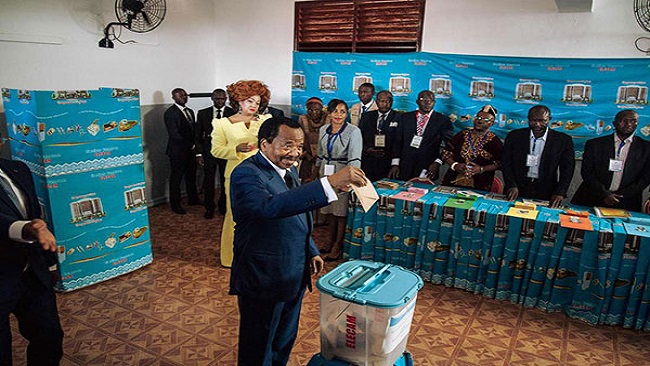
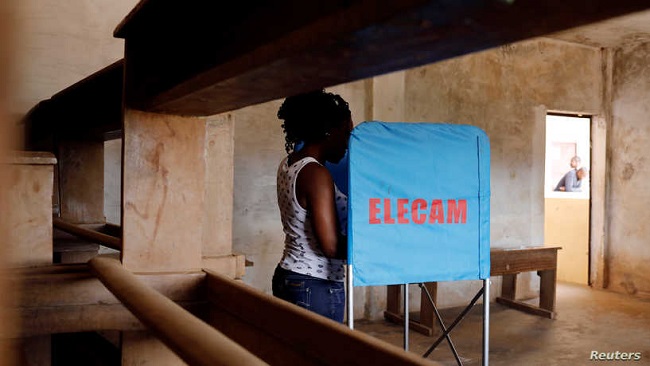
Voters in Cameroon will cast their ballots Sunday in a country where the mood has been darkened by separatist violence and calls for an election boycott.
Elections to renew the central African country’s legislature and local councils are taking place for the first time in seven years, after two postponements.
Despite the delays, the campaigning has been low key.
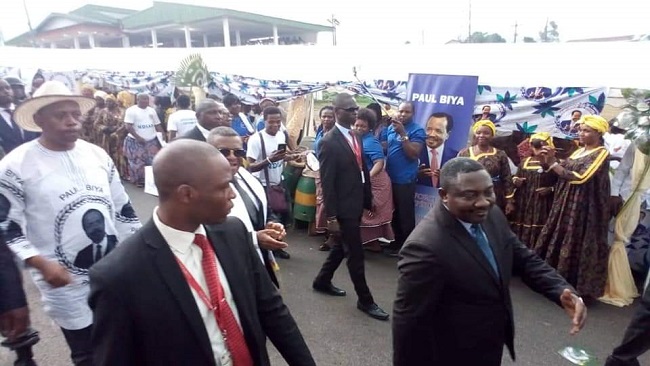
In the capital Yaounde, the few banners put up by the ruling Cameroon People’s Democratic Movement (RDPC in its French initials) are barely more numerous than posters calling on people to pick up their litter.
The RDPC supports President Paul Biya, one of the world’s oldest and longest-serving leaders, who has ruled with a steely fist for 37 of his 86 years.
The main opposition party, the Movement for the Rebirth of Cameroon (MRC) is refusing to field a single candidate.
Its leader, Maurice Kamto, spent nine months in jail after his defeat in 2018 presidential elections and is now abroad.
“We could have had a few seats in parliament and some town councillors, but how would that enable us to influence events in Cameroon?” Kamto said in an interview with AFP in Paris last month.
“I would have voted for the MRC but on Sunday I’m going to stay at home,” a young Yaounde voter, who gave his name as Xavier, told AFP.
The boycott will all but guarantee a crushing victory for the RDPC, which in the outgoing legislature had 148 out of 180 seats.
“Where’s the opposition?” was the whimsical question aired by a local RDPC chief, Augustin Tsafack, on the sidelines of a party rally in Yaounde.
The other large opposition party, the Social Democratic Front (SDF), which currently has 18 seats, will take part in Sunday’s vote, going back on a threat to snub it.
– Violence –
In parallel with the leaden political mood, Cameroon is struggling with two conflicts.
In two English-speaking regions in the west, the armed forces are battling separatists who want to secede from the majority French-speaking country.
The 28-month conflict has claimed more than 3,000 lives and caused more than 700,000 people to flee, according to tolls compiled by NGOs.
“How can the state guarantee security for elections in the anglophone regions, given that some towns are now inaccessible by road?” an independent observer from one of these regions asked at a meeting of the electoral commission in Yaounde on Wednesday.
The SDF traditionally draws much of its support from the anglophone regions but now fears that it has been outflanked by the radicals — and says its candidates there have come under attack.
Similar worries are being voiced for the safety of polling stations in Cameroon’s Far North region, which has been battered by Boko Haram jihadists crossing from Nigeria.
– City power –
Municipal elections will also take place on polling day, something that has excited most media interest given the seemingly inevitable outcome of legislative vote.
Some cities, including Douala, the country’s economic hub, could swing to the opposition, according to some forecasts.
City chiefs are to gain powers under measures taken in December to decentralise some of the authorities out of Yaounde.
The reforms have been triggered by the anglophone crisis although they fall far short of meeting the separatists’ demands.
“The stakes (on Sunday) are local,” said Stephane Akoa, a researcher at the Paul Ango Ela think tank in Yaounde.
“Things are going to change,” he said. “Mayors who aren’t ready will pay the price.”
Source: AFP














8, February 2020
Fear grips Southern Cameroons ahead of voting day 0
Long-delayed elections are due to take place in Cameroon on Sunday, but in the country’s violence-torn English-speaking areas, the fear is almost palpable.
“Everyone is holed up at home,” a civil servant said in Buea, capital of the Southwest Region, one of two provinces gripped by bloody separatist violence.
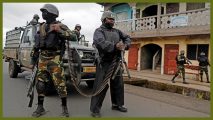
Ahead of polling, the streets were empty except for heavily-armed military patrols; shops and homes were shuttered; and many people were tight-lipped — “there’s fear of reprisals,” taxi driver Derrick Mbua said.
The elections, to renew Cameroon’s legislature and local councils, should have been held in 2017 but were twice postponed.
Their credibility has already been dented by a boycott by the country’s biggest opposition party.
Its leader Maurice Kamto spent nine months in jail after contested presidential elections in 2018 won by Paul Biya, who has ruled Cameroon for 37 of his 86 years.
But Sunday’s vote also faces a mighty security challenge in the Northwest and Southwest Regions.
They are home to Cameroon’s anglophones, who account for around four million of the 23 million population in this mainly French-speaking country — their presence is a legacy of decolonisation in the late 1950s.
Violence
Decades of anger at perceived discrimination, and refusal by the central government to meet demands for autonomy, triggered a separatist movement which declared independence in 2017.
Bitter fighting has claimed more than 3,000 lives and nearly 700,000 people have fled their homes, according to NGO estimates.
Tensions have escalated in the runup to the vote, which the separatists have vowed to block. In the 2018 presidential elections, the turnout in these two regions was just five percent.
According to a Buea-based NGO, in the past three weeks, an election commission worker has been kidnapped, an election commission building burned down and a candidate’s home torched.
In the Northwest Region, separatists machine-gunned a convoy of election campaign vehicles operated by the ruling Cameroon People’s Democratic Movement (RDPC), injuring five people.
Hundreds of troops have been sent to reinforce the troubled regions.
Police and army roadblocks dot the main highway in Buea, and commandos in balaclavas patrol aboard trucks armed with machine guns or in armoured vehicles.
Amnesty International on Thursday said 14 people were killed in an army attack on the village of Ndoh, in the Southwest Region, on January 23, a day after reports of a killing of a soldier in the area.
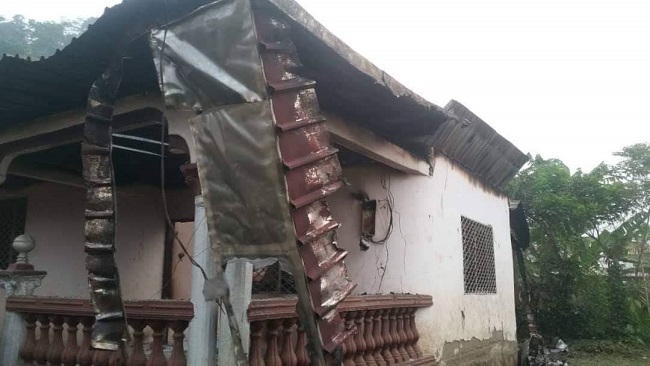
More than 50 homes in the region were set ablaze, it said.
“The security measures and increased military presence announced by the Cameroonian government to ensure this weekend’s vote can take place, appear to have been a pretext for a much more sinister operation,” the watchdog’s specialist for the Lake Chad region, Fabien Offner, said.
“(…) Brutal military operations have been conducted while crimes committed by armed separatists continue unabated. Civilians are finding themselves trapped in a spiral of violence.”
Voter fatigue
The ruling CPDM is the only party that is campaigning visibly in the two regions, but its presence is low-key.
Cameroon’s other large opposition party is the Social Democratic Front (SDF), which traditionally draws its support from the anglophone areas.
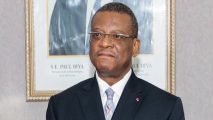
Prime Minister Joseph Dion Ngute addressed a rally of several hundred supporters in Buea on Thursday, which took place behind a thicket of armed troops.
He said the government had acknowledged anglophone grievances by giving the two regions a special status, the outcome of a “national dialogue” last year.
The forum was boycotted by the separatists and they dismissed its decisions.
“We are going to have to wait for the changes to have an impact on daily life for people to step back from the separatists,” said James Fotabong, a Buea businessman.
Many residents said they would not bother to cast their ballot and were dismissive of voting for representatives who were unable to restore peace.
“I won’t go out to vote,” said Francis Mukwele, the manager of a dry-cleaning store. “And I can’t imagine that people will go out to vote here in Buea — I don’t even know where I’ve put my voter’s card.”
Security has been stepped up in the troubled anglophone regions ahead of Sunday’s twice-postponed vote.
Culled from Pulselive