
12, September 2019
Southern Cameroons Conflict Goes Back 100 Years 0
The west African nation of Cameroon is plagued by near-daily clashes between security forces and anglophone separatists that can be traced back to its split between Britain and France 100 years ago.
Here is some background:
WORLD WAR I SPLIT
Germany was stripped of its African colony of Kamerun after its 1918 World War I defeat when the League of Nations, the forerunner to the UN, split the territory between victors Britain and France.
Four-fifths went to France, becoming independent Cameroon in 1960.
The British portion, along the border with Nigeria, became independent in 1961. A northern Muslim-majority section chose to join Nigeria while the remaining southern area was unified with Cameroon in a federation.
The federal structure was scrapped in 1972 and the anglophone portion was annexed.
ENGLISH-SPEAKING MINORITY
Largely francophone Cameroon has 10 regions, two of which are mainly English-speaking: Northwest Region, whose capital is Bamenda, and Southwest Region with Buea as its capital.
They are home to around 14% of Cameroon’s population of 23 million.
The two regions are permitted some self-governance and language rights, including bilingual schools. But many complain of francophone-favoured discrimination in education, the justice system and the economy.
DEADLY PROTESTS
Calls for a breakaway English-speaking state mounted in the 1990s with demands for a referendum on independence accompanied by low-level unrest.
In 2001, secessionists defied a ban on rallies to protest the 40th anniversary of unification with Cameroon and were confronted by security forces. Several people were killed and secessionist leaders arrested.
The separatist Southern Cameroons National Council (SCNC) set up a “government” in Britain and leaders moved into exile.
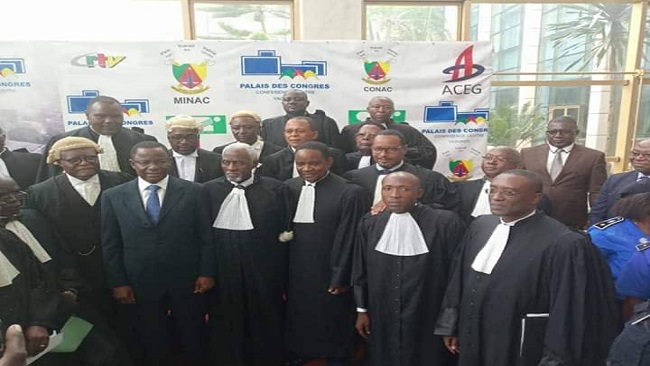
There was a new outbreak of violence in 2016 after lawyers went on strike to demand the right to use Anglo-Saxon common law. Teachers followed, protesting at the appointment of francophones in the region.
While some protesters want only a return to federalism, a minority is pushing for the creation of an independent state called Ambazonia.
ARMED REVOLT
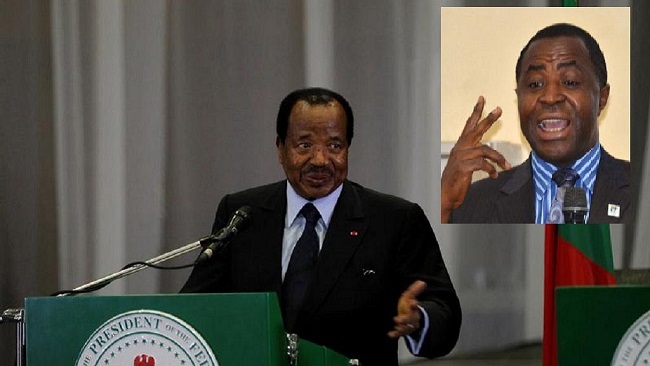
In January 2017, senior secessionist activists were arrested and charged with terrorism and rebellion. President Paul Biya halted their trials in August, apparently trying to calm the situation.
In October 2017, separatist leaders issued a symbolic declaration of independence. At least 17 people were killed in clashes on the sidelines.
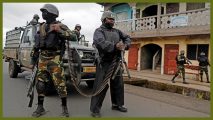
Radical separatists took up arms in late 2017, attacking security forces and torching symbols of the administration, such as schools. They also kidnapped police officers, civil servants and businessmen, sometimes foreigners.
CIVIL WAR
In April 2018, the main opposition Social Democratic Front (SDF), which defies the separatists, described the violence as “civil war”.
Separatists torched the Northwest Region home of SDF leader Ni John Fru Ndi in October and also kidnapped his sister, who was later released. Fru Ndi was briefly kidnapped twice in 2019.
A US missionary was killed in the unrest in October 2018 and the following month 79 schoolboys were kidnapped in Bamenda but freed two days later.
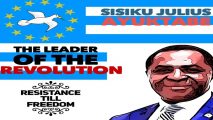
In December 2018, Biya ordered the release of 289 people arrested in connection with the crisis. However, in August 2019, separatist leader Julius Ayuk Tabe and nine others were sentenced to life in prison for charges including “terrorism and secession”.
Nearly 2,000 people have been killed in violence between separatists and security forces in the anglophone regions since October 2017, Human Rights Watch says. Around 530,000 have fled their homes, according to the UN.
EWN












12, September 2019
Southern Cameroons Crisis: Announced dialogue welcomed by UN Secretary General 0
The national dialogue recently announced by Cameroonian President Paul Biya has been praised by the UN general secretary António Guterres. This was revealed by the secretary’s spokesman Stéphane Dujarric in a statement published on September 10, 2019.
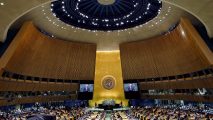
“The Secretary-General welcomes the announcement made today by President Paul Biya on the launch of a national dialogue process in Cameroon. He encourages the Government of Cameroon to ensure that the process is inclusive and addresses the challenges facing the country. He calls on all Cameroonian stakeholders, including the Diaspora, to participate in this effort. The Secretary-General reiterates the readiness of the United Nations to support the dialogue process,” the spokesman wrote.
The dialogue announced by Paul Biya will be articulated around themes that will answer the concerns of residents in the South-west and North-west. It will also bring answers to issues like bilingualism, cultural diversity, social harmony, reconstruction and development of regions affected by the sociopolitical crisis, the education and legal system, decentralisation and local development. Issues like the return of refugees and displaced persons, demobilization and reintegration of ex-combatants as well as the diaspora’s role in the country’s development will be addressed.
The socio-political crisis started about three years ago in South-west and North-west Cameroon. It started as corporate demands expressed by lawyers and teachers but gradually became violent pro-independent claims with armed groups wreaking havoc, death, and grief.
21,291 Cameroonians fled to Nigeria to avoid combats between armed groups and the regular army, according to the UNHCR. International Crisis group indicates that at least 1,850 people have died during the 20 months of combat.
Source: Business in Cameroon