
9, August 2019
PLO Lumumba meets Vice President Yerima, Promises Support For Ambazonia 0
The Director of Kenya School of Law and the former Director of the Kenya Anti-Corruption Commission, Prof. Patrick Loch Otieno Lumumba has promised to help the people of Southern Cameroons. The renowned academic while making a keynote address during a conference in Thuringen in the Federal Republic of Germany, said he will use his contacts to help the people of Ambazonia join Pan African Organizations.
Prof PLO Lumumba praised the leadership of the Southern Cameroons Interim Government for the resistance against the Biya Francophone government in Yaounde pointing out that Africa remained poor despite having the potential for generating enough revenue for sustainable development.
Lumumba reportedly told Vice President Dabney Yerima that Africa’s problems was being worsened by the persistent brain drain of professional trained people travelling to work in the developed world and a total lack of visionary leadership.
The Ambazonian Vice President and Prof Lumumba agreed that many intelligent migrants in the West want to return home but the leaders do not project home for their people. Lumumba said the phenomenon was largely due to the continent’s poor labour policies, low pay and high unemployment levels.
Prof Lumumba advised the Ambazonian leadership to desist from relying on divine intervention to solve the problems in Southern Cameroons.
By Asu Isong


















9, August 2019
Why Southern Cameroonians Must Have Hope; Vice President Dabney Yerima 0
Fellow Ambazonians,
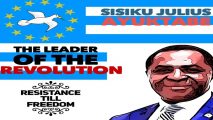
I come to you with revolutionary greetings from your President, Sisiku AyukTabe and his leadership team as they enter the tenth day of their hunger strike. Our prayers and thoughts are with them and all our heroes in illegal detention in French Cameroun at this challenging time.
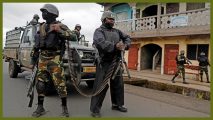
There is a short video in circulation of our heroes crammed like sardines in a truck. They are on their way to a ‘court’ in La Republique du Cameroun. In the video, our heroes were defying their incarceration by singing liberation songs. From their audaciousness, tears of joy rolled down my eyes. There is a spirit in the young men of this revolution that gives me hope. They remind me of the statement; unjust practices must be broken and challenged before a just society is established.
Since 2017, our young men and young women have defied all odds. The government of French Cameroon declared war on us. We had nothing but primitive weapons to defend ourselves. In their minds, in a few months, we would be cowed and destroyed through their reign of terror. But we have and continue to prove them wrong. The cruelty our heroes endured after the peaceful prison protest of 22nd and 23rd of July 2019 was despicable. But that hasn’t discouraged them. They have returned full of focus, drive and determination to get to the promise land-Buea. They have returned with sharpness in their mind and a direction in their vision.
Day in, day out, by their actions, our heroes in captivity in La Republique du Cameroun continue to defy the enemy. By their actions, they keep letting the oppressor know that one can cage the person but cannot cage the revolutionary. By their actions, they are letting the oppressor know that beatings, tyranny and detention are temporary measures to postpone an inevitable outcome. By their actions, they are letting the oppressor know that the Ambazonian of the twenty-first century fears nothing but fear itself.
My people, as a nation, we have faced inexcusable inhumanness’ but we are still standing. We have faced concentration camps, burned villages, cold blood massacre but we are still standing. We have hope. Hope which cannot be shattered by illegal detention! Hope which cannot be destroyed by the killing of four months old baby Martha! Hope which cannot be shattered by the burning of two hundred and fifty villages! The French Cameroun government knows only one currency- violence. We have many- hope, fortitude, courage, decency, belief. With these and God willing, we shall prevail against this tyranny.
The despicable brutalities of La Republique du Cameroun will not stop us. The opposition we now face will definitely fail. We will win our freedom because the sacred heritage of our nation and the eternal will of The Almighty are embodied in our just pursuit. In their defiance of the enemy, these heroes of ours give us HOPE. The great Desmond Tutu said ‘Hope is being able to see that there is light despite all the darkness’. Let’s keep our hope as our caged heroes are doing with their singing and hunger strike and our dream will be a reality.
God Bless You,
Dabney Yerima
Vice President
Federal Republic of Ambazonia