20, January 2019
Nigeria: Corruption takes centre stage in election campaign 0
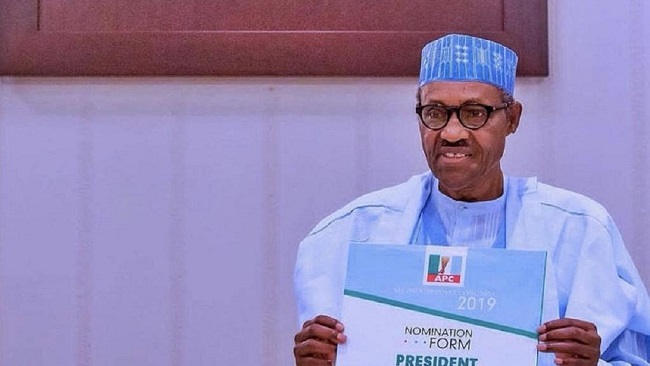
Corruption is taking centre stage in the run-up to Nigeria’s presidential elections, with the incumbent accused of failing to tackle the scourge of graft and his challenger facing claims about his past.
Muhammadu Buhari, an austere and pious former general, will take on wealthy former vice-president Atiku Abubakar at the polls on February 16.
Both are ethnic Hausas, Muslims from the country’s north. Buhari, who rose to power in 2015 on a promise to eradicate the “cancer” of graft gnawing at Africa’s most populous nation, has cultivated an image of blamelessness.
Bola Tinubu, Nigeria’s political “godfather” closely allied with Buhari, earlier this month described him as “a straight and honest man”.
“Leave a naira (local currency) on the table with Buhari in the room. You will find the naira on the table when you return,” he said, in a thinly veiled criticism of Abubakar.
For his part, Abubakar is alleged to have amassed several hundred million dollars by misusing public funds as vice-president under Olusegun Obasanjo between 1999 and 2007 — yet he has never been investigated in his own country.
“On the issue of corruption, I have challenged anyone, anywhere, who has any evidence of corruption against me to come forward,” Abubakar has said.
“I will shock everyone because I believe that I will fight corruption like never before.” But in the United States, Abubakar’s name has popped up in a Senate investigation into money laundering.
It charged in a 2010 report that US national Jennifer Douglas, Abubakar’s fourth wife, “helped her husband bring over $40 million (35 million euros) in suspect funds into the United States through wire transfers sent by offshore corporations to US bank accounts.”
The couple are also accused of having received more than two million dollars in commissions for a contract with German industrial giant Siemens, which has since pleaded guilty in the case.
– Two essential reforms –
But this week Abubakar put paid to rumours that he was subject to a visa ban and unable to travel to the US by jetting to Washington for meetings with American counterparts. Abubakar told AFP last year he would retain no stakes in his various companies if he is elected president.
His sprawling business empire includes interests in telecommunications, transport, real estate, agriculture, import/export and healthcare.
Verifying his pledge to stand aside will be difficult in the opaque economic system in Nigeria, which global watchdog Transparency International ranked in the 148th place of a total 180 countries for corruption in 2017.
Buhari stands in stark contrast to his flamboyant fellow northerner’s private jet, Rolex watches and luxury cars.
His spokesman in 2015 said the president had “an austere and spartan lifestyle”, unlike other Nigerian politicians who have amassed wealth during their careers.
But Buhari, who vowed to usher in more transparent and accountable government, has come under harsh criticism for an apparent lack of progress in the fight against graft.
Steps in the right direction have included two essential reforms — a single Treasury account for all government revenue and the introduction of a biometric identification system in banks to better trace clients and transfers of funds.
“Those are the two areas I commend the government,” said Saadatu Falila Hamu, a specialist anti-corruption lawyer based in Abuja.
“But despite this, the government has focused their fight against corruption on people of the opposing political parties.” Hamu also faulted Nigeria’s main anti-corruption body, the Economic and Financial Crimes Commission (EFCC), for “inefficiency”.
– Oil contracts –
In November, EFCC director Ibrahim Magu boasted having seized the equivalent of $2.3 billion as well as sumptuous villas, jewellery, and cars — but often outside legal procedures.
Buhari has pledged to review all oil exploitation contracts to be renewed after this year. Such an electoral promise “can either lead to total chaos in the industry or lead to sanity”, said analyst Soji Apampa.
Nigeria depends on oil sales for 70 percent of its revenues. In 2013 under president Goodluck Jonathan, the head of the central bank reported a $20 billion shortfall in revenue — a scandal that helped bring about Jonathan’s fall and Buhari’s election in 2015.
Nevertheless, the state-run Nigerian National Petroleum Corporation, considered a slush fund for successive governments, remains notoriously opaque and Buhari — who is also oil minister — named a close associate to head it.
“Imagine a broken pipeline with all of Nigeria’s resources flowing through it. Instead of fixing the hole, you bring a man with a whip” to deter people from stealing, Apampa said. “We haven’t seen a government with an elaborate plan” to repair the pipeline, he added.
AFP











21, January 2019
Cabinet Reshuffle: The Rise and Rise of Chantal Biya 0
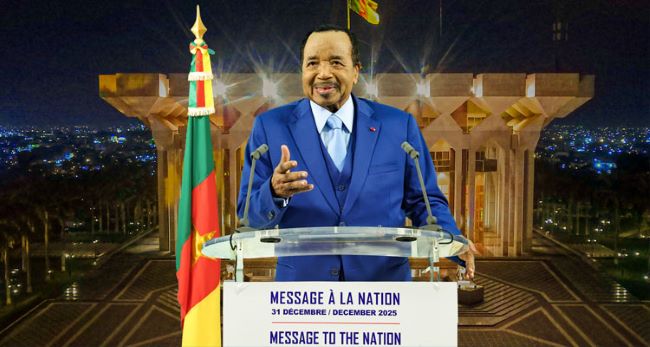
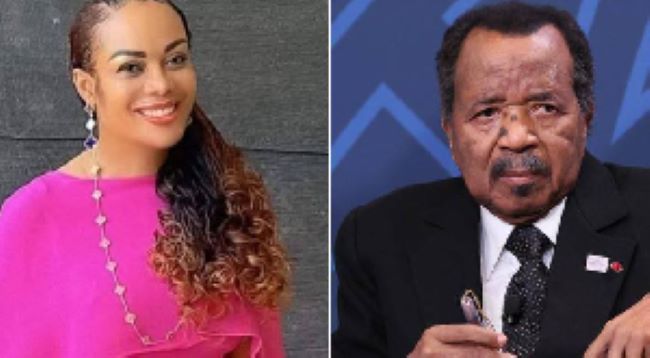
Ever since the formation of the last two governments, (March 02, 2017 and January 4, 2019), Cameroonian public opinion including that of the independent press have attributed a vast majority of those appointed to first lady Chantal Biya.
Some senior editorialists have even observed that Chantal Biya named the Philemon Yang and now Dion Ngute governments which have several relatives of the Cameroonian lady holding key positions in the cabinet and heading lucrative state-owned companies. These Chantal Biya family members are very influential and feared by other members serving in the Biya regime.
Many in Yaounde, the nation’s capital have opined that Chantal Biya is slowly but surely positioning her kinsmen and women in leading position in the administration. Among them, Ferdinand Ngoh Ngoh, Minister Secretary-General of the presidency of the republic, the most powerful member of the Chantal Biya galaxy who was made minister of state on the 4th of January.
There is also Pierre Ismael Bidoung Mkpatt Minister of Sports, (his wife Habissou Bidoung Mkpatt is in the circle of the closest to the first lady) and Oswald Baboke, (originally from the East and not Nanga-Eboko as the wife of the Cameroonian president). Oswald Baboke is the deputy director of the civil cabinet, responsible for the private affairs of the first lady. Baboke is currently one of Cameroon’s most influential leaders.
Cat calls greeted the Dion Ngute government and subsequently generated some controversies over the weekend when a large number of Cameroon government ministers appointed on the 4th of January 2019 traveled to Nanga-Eboko, Chantal Biya’s hometown and stronghold of Ferdinand Ngoh Ngoh for a meeting of thanks to the head of state for appointing them into the government.
By Sama Ernest with files