
30, December 2018
Presidential election starts in Congo-Kinshasa 0
People have started voting in the presidential election in the Democratic Republic of the Congo, amid delays and reported disorganization.
On Sunday, polling staffers were setting up voting machines in stations minutes before opening.
Reuters cited a witness in the eastern city of Goma as seeing residents casting their vote, but another polling station in the city was still closed 90 minutes after polls opened at 06:00 a.m. local time (04:00 GMT).
President Joseph Kabila, who has been in power since his father’s assassination in 2001, is not standing for re-election and will step down after the vote.
Kabila’s party, the People’s Party for Reconstruction and Democracy (PPRD), has designated former Interior Minister Emmanuel Ramazani Shadary, 58, as its presidential candidate.
As well as Ramazani, the front-runners are Felix Tshisekedi, 55, of the mainstream opposition Union for Democracy and Social Progress (UDPS), and Martin Fayulu, 62, a little-known lawmaker and former oil executive, who has made a late surge after being named the joint candidate for several opposition parties.

A total of 21 candidates are running in the presidential race.
United Nations (UN) Secretary General Antonio Guterres on Friday urged rival candidates to participate in a peaceful competition.
Guterres urged citizens to “seize this historic opportunity to participate in the consolidation of the country’s democratic institutions.”
The call for a peaceful vote came a few days after clashes between the supporters of rival candidates left at least one person dead and over 80 injured.

DR Congo is one of Africa’s most volatile countries and has never known a peaceful transition of power since independence from Belgium in 1960.
In the past 22 years, two massive wars have shaken the country, claiming many lives and sucking in armies from around Southern and Central Africa.
Lower-level conflicts are burning in the center and east of the country, which analysts say could easily flare into fully-fledged wars.
Source: Presstv





5, January 2019
Chief Dr. Dion Ngute’s invitation to “Come and Chop” 0
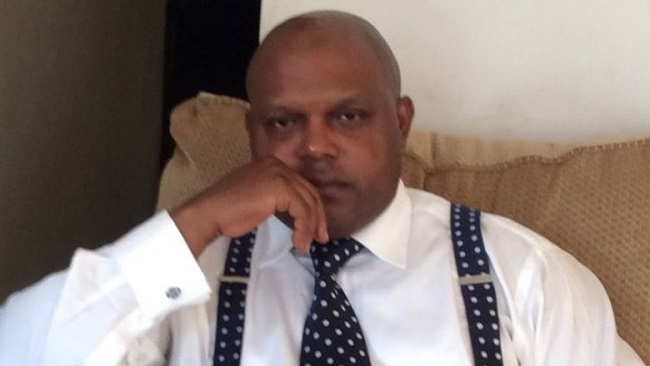
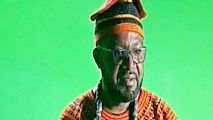
President Paul Biya has appointed Chief Dr Joseph Dion Ngute as the new Prime Minister replacing Philemon Yang. The appointment was made public some 24 hours after his residence was burnt down by Ambazonian Restoration Forces in his native Bobongo, Ekondo Titi in the Ndian County of Southern Cameroons
Joseph Dion Ngute was Minister of Special Duties at the Presidency of the Republic. Born on March 12, 1954, Joseph Dion Ngute is a career diplomat with a Ph.D from the University of Warwick in the United Kingdom attached to his name.
He was rector of the Advanced School of Administration and Magistracy ENAM in 1991 before joining the Biya ruling CPDM clan on the 7th of December 1997 when he was appointed as Minister Delegate at the Ministry of External Relations in Charge of the Commonwealth. Joseph Dion Ngute also moonlights as the traditional ruler of the Barombi tribe, Ndian County in Southern Cameroons.
Dion Ngute’s appointment and the war in Southern Cameroons
Rotating the post of Prime Minister between the two Southern Cameroons zones with these men of yesteryears will not resolve the Anglophone crisis. Moderate Southern Cameroons political commentators have opined that “If Biya wants to save Cameroon from implosion, he should without further delay, return Cameroon to a federal system with a rotating presidency.” “Only such bold initiatives which give Anglophones a stake in the country called Cameroon can convince Ambazonians to reconsider their struggle for independence.”
All these musical chair appointments are token measures of appeasement a smack of desperation to fuel the NW/SW schism and divide the resistance. It might have worked before, but it will fail because people like Musonge, Philemon Yang, and Dion Ngute no longer speak on behalf of Anglophones. His house was burnt just yesterday, and this should signal to Biya that Dion, like other SW CPDM elite, are considered traitors of the Ambazonia struggle. His appointment as PM is just an invitation for him and his cronies to “come and chop”