21, July 2018
Disunity in Cameroon: Mediation unlikely as Anglophone crisis escalates 0
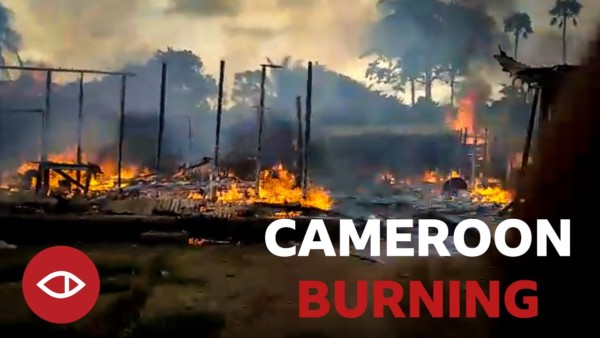
The violence in Cameroon’s Anglophone regions has reached unprecedented levels in recent months and shows no signs of stopping in the run up to presidential elections on 7 October. Neither side is inclined to negotiate as increasingly brazen separatist attacks are met with increasingly brutal responses from security forces.
On 12 July, at least 10 people were killed when suspected separatists attacked the defence minister’s convoy travelling between Kumba and Mbonge in the south-west region. A few days later on 17 July, security forces engaged separatist militants in a gun battle in Bamenda, capital of the north-west region.
These are but two examples of the acts of violence that are occurring on a weekly basis in Cameroon’s north-west and south-west regions. As usual it is the citizens who bear the brunt of the fighting.
In a June report, the International Crisis Group estimates that 163 people have been killed to date in the conflict – the majority of whom were civilians. The UNHCR estimates that at least 160,000 people have been displaced by the fighting and a further 20,000 have sought refuge in neighbouring Nigeria.
The current crisis in the Anglophone regions began in October 2016 with widespread protests against the central government’s continued marginalisation of Cameroon’s English-speaking community. The violence escalated a year later after secessionists declared the symbolic independence of the two western regions.
The government responded swiftly with mass arrests, bans on public gatherings, and the use of deadly force against civilians. Armed separatist groups proliferated as the security forces continued to militarise the Anglophone regions.
Although the current flare-up began in 2016, Cameroon’s “Anglophone problem” has its roots in the country’s colonial history. The north-west and south-west regions – previously administered by Britain – joined an independent federated Cameroon in 1961. A snap 1972 referendum abolished most the of the western regions’ autonomy and implemented centralised state control from Yaoundé.
In a way, the government’s response to the current Anglophone agitation is not surprising. It is the same tactic employed in the country’s Far North region where the state has been battling Boko Haram since 2014. Government forces have been repeatedly accused of arbitrarily killing or detaining citizens suspected of complicity with extremists.
Despite facing two insurgencies, President Paul Biya – in power since 1982 – retains a strong grip on power. On 13 July, the 85-year-old Biya announced his intention to run for re-election in October.
Holding elections in the north-west and south-west regions will be virtually impossible in the current climate of insecurity. This would significantly disadvantage the country’s largest opposition party whose support base is in the Anglophone regions.
The AU and Cameroon’s Western partners have repeatedly called for negotiations. Though the government agrees to the need for talks, it rejects any form of outside mediation.
The Catholic Church is the only local institution that could act as an independent mediator – it represents about one third of all Cameroonians and is present in all of the country’s 10 regions. Unfortunately the church seems to be riven by the same divisions as the rest of the country. Its inability to present a unified front thoroughly undermines its capacity as a facilitator of potential peace talks.
A more fundamental issue relates to what a successful resolution of the crisis would look like. The government will not except any form of succession. Moreover, it is not clear to what extent residents of the western regions actually support succession. What is clear, however, is that a majority of Anglophone Cameroonians support a peaceful resolution.
To this extent, the more moderate opposition leaders have been pushing for a political solution – calling either for a return to the power-sharing of federalism or for the devolution of power to regional leaders through decentralisation.
Despite some conciliatory noises and mostly hollow gestures, the government seems unlikely to grant any major concessions to Anglophone leaders. For their part, opposition leaders have not done enough to condemn separatist violence and encourage peaceful resistance.
A negotiated settlement is the only hope for a peaceful resolution of the current crisis. Unfortunately, given the entrenched positions of both the state and separatist militants, it is a rather slim hope at the moment.
Source: Daily Maverick


23, July 2018
Yaounde: Opposition Fails to Present Candidate to Challenge Biya 0
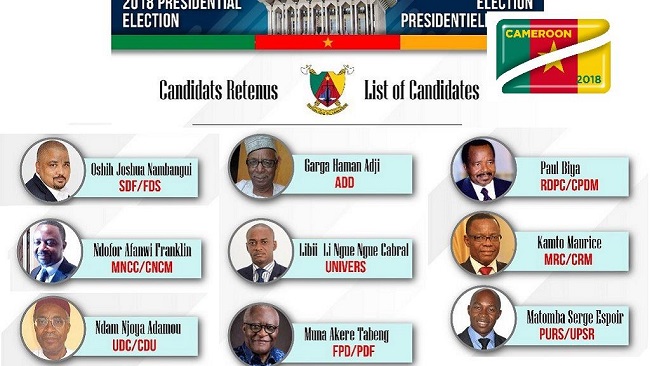
Cameroon’s opposition has again failed to present a single presidential candidate to challenge Paul Biya who has been in office for 36 years. Twenty-eight candidates will be contesting the country’s October 7 presidential election, which Biya is favored to win.
The youngest candidate registered to compete in the October 7 presidential election is journalist Cabral Libi. Just before the filing deadline, the 38-year old said he was still uncertain if he would run because he could not single handedly raise the $60,000 required by the election commission to run. He says he had to ask well wishers to help him.
He says he has demonstrated that he is the only candidate strong enough to challenge the incumbent president because he was able to raise over $ 60,000 from well wishers within three days to pay the caution fee required by Cameroon’s electoral laws for each presidential aspirant.
Libi is one of the 28 candidates to contest the poll. Two women: Ze Genevieve, an independent candidate and Habiba Issa who will run for the opposition UPC party, also registered to challenge the 86-year old Biya, who has been president for 36 years.
Last January, Cameroon’s notoriously fractured opposition attempted to unite behind a single candidate. About a dozen opposition parties were negotiating to back Akere Muna, a prominent lawyer who specializes in fighting corruption. Muna pledged a non-partisan platform, but today is running on the ticket of his Peoples Development Front political party.
Maurice Kamto, who was meeting with Muna and the main opposition political party the SDF to discuss the possibility of a single candidate, is today running for his Cameroon Renaissance Movement Party. Kamto says after discussing with some political parties, he found out that all of them wanted a single candidate, but felt they were the stronger politicians that other weaker parties should join.
He says he then decided that he, like other politicians who want to run for president should present to Cameroonians their programs and projects that they will implement if elected, instead of basing their strengths on the religious, tribal and ethnic groups they represent.
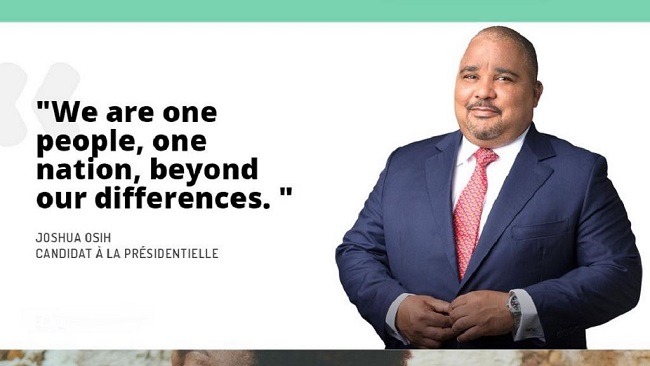
The SDF has chosen a 50-year old lawmaker, Joshua Osih, as their candidate and says it is sure Osih will perform better in the elections if the polls are transparent and fair.
The ruling CPDM party has gathered at least 30 of the divided opposition political parties to rally behind its candidate, Paul Biya. Issa Tchiroma, president of the Cameroon National Salvation Front, says the opposition’s inability to come up with a single candidate indicates how they are divided and so he will support Biya, who according to him is the only one that can bring peace and development to the troubled country.
“By declaring his candidature, this is an indication, clear indication that he sent to the nation and the world that he is the man of his generation. Mr president move forward, we are ready to support you,” said Tchiroma.
Cameroon is dealing with attacks by Boko Haram militants in the north, separatist movements in two English-speaking regions and a spillover of violence from the Central African Republic.
Biya has ruled Cameroon since 1982 and is Africa’s second longest serving president, after his neighbor Theodoro Obiang Nguema of Equatorial Guinea.
He is seen by many as favored to win the polls. If he does, he will rule the central African state up to 2025 when the next presidential election will take place.
Source: VOA