
1, June 2018
Southern Cameroons Crisis: The calm before the storm 0
An unsettling calm seems to be permeating through Cameroon after the gruesome massacre of young Southern Cameroonians in the North West region of the country. The situation in Cameroon’s two English-speaking regions has continued to deteriorate following the slaughtering of 30 young men and women in Menka-Pinyin last Thursday following a violent attack by government forces.
This unnecessary act of brutality has drawn wide condemnation around the world and the government seems to be bowing to the international pressure that comes with such condemnation. The American Ambassador to Cameroon, Henry Berlerin, had clearly called on the country’s president to have a rethink of his political agenda by urging him to emulate the examples of Nelson Mandela and George Washington. A coded language that has left the government and its surrogates in total confusion.
But what is of more concern is the fact that the U.S. Ambassador’s statement has the full backing of the U.S. Congress. Mr. Berlerin, who was viciously ridiculed by the regime and its praise singers, was simply delivering a message to the country’s president, Paul Biya; a message contained in a letter dated February 9, 2018 and signed by four American lawmakers. The Congressmen had instructed Mr. Berlerin to advise Mr. Biya that, after spending more than 35 years in office, it was time for him to hand over to the next generation and that a new leadership was necessary for governance in the country to experience some improvements.
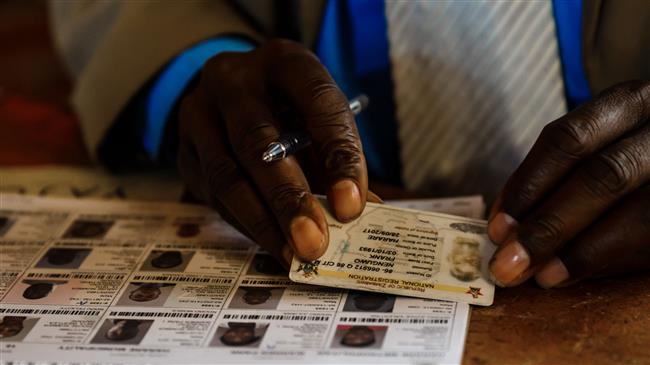
“We respect the rights of Cameroonians to select their leaders and note that the past Presidential elections have been marred by allegations of fraud, electoral institutions bias, and an unfair playing field. We note that the political process is heavily controlled by President Biya and his party, and that the State Department’s Country Report on Human Rights covering Cameroon’s last presidential elections, in 2011, assessed the contest to have been “flawed by irregularities, including the failure to properly distribute all voter cards, late opening of polling stations, multiple voting, ballot-box stuffing, the absence of indelible ink, and intimidation of voters.” The most recent Human Right Report notes “restrictions of freedom of expression” as a top human right concern, and states that “opposition and civil society activists were harassed, detained and denied the right to assemble or operate by the government,” the letter signed by the Congressmen said, adding that …”After 35 years, new leadership is necessary for governance improvements.”
Regarding the conflict in the two English-speaking regions, the Ambassador’s press statement after meeting with Mr. Biya on the eve of May 20, 2018 celebrations tied in well with the letter of the congress men. The lawmakers had in the letter condemned violence on both sides, and particularly the disproportionate use of force and military power by the government. The Congressmen singled out the country’s Rapid Intervention Battalion (BIR), which they noted, had been notorious for many human right atrocities in Southern Cameroons and in the Northern part of the country.
“…Given that certain units of the BIR operating in the North have been found ineligible for assistance under the Leahy law due to human rights abuses, we ask that rigorous scrutiny be applied to the BIR and any other security forces operating in the Anglophone regions, to ensure that U.S assistance is not abetting violation of Cameroonians’ rights. Further, we respectfully ask you to convey the message that security force abuses can exacerbate resentments that fuel instability, and work with your partners both in the U.S military and among like-minded embassies to emphasize the need for respect for basic rights in the Anglophone regions” the letter added.
Even the United Nations has not been indifferent to what is happening in Cameroon, a country once touted as the oasis of peace in the Central African region. A statement by the United Nations in its emergency plan for Cameroon holds that the issues in the two English-speaking regions are mainly political, with some humanitarian components. This implies that the Yaounde government must bend over backwards to address the political issues that are ruining the country’s unity.
“The situation in the south-west and north-west remains primarily a political and human rights crisis, but is increasingly having humanitarian implications. Recent needs assessments indicate that at least 160,000 people have been internally displaced in the two affected regions, and they need humanitarian and protection assistance over the next three months. In addition, at least 21,000 Cameroonians have been registered as refugees in Cross River, Benue and Akwa Ibom States in Nigeria.”
The report adds that “The crisis in the south-west and north-west regions is taking place against a backdrop of several other humanitarian emergencies that are affecting 3.3 million people across the country, compounding pre-existing vulnerabilities. Since 2016, political and social instability, exacerbated by sporadic violence, has had a negative impact on the civilian population of Cameroon’s South-West and North-West Regions, hosting four million inhabitants (16 per cent of the total population). In November 2017, the socio-political crisis progressively translated into insecurity and armed violence. Since then, the escalation of tension and upsurge in hostilities between non-state armed groups and defence and security forces have triggered humanitarian needs across the two regions, linked to significant internal displacement.”
The document further points out that “The government’s decision to declare war on its own people has had a far-reaching effect. The crisis has impacted children’s right to education, with at least 40 schools affected and an estimated 42,500 school-aged children with limited access to education for the past two years. Several attacks by non-state armed groups have also targeted schools, leading to the death of at least two teachers, further disrupting the educational system. Where schools are still functional, there are significant gaps in teaching and learning material. The disruption of education is putting children at greater risk of exploitation, child labour, early marriage and unwanted pregnancy. This phenomenon is exacerbated by the perception that schools could be targets of attack, resulting in parents refusing to send their children to school.”
Life in the two regions has been disrupted by the crisis. The government believes in an all-out military victory, holding that brute force will being back peace to the country. But close to two years after, things are getting worse and the future looks very bleak. Before the crisis, most of the population in the two affected regions relied on agriculture and small trades. Threats of attacks continue to have a negative impact on trade, livelihoods and markets, and access to land. In Kumba, South-West region’s largest city, where at least 20% of the population fled to surrounding villages, food is identified as the main priority.
Farmers, small-scale fishermen and their families find themselves in an extremely vulnerable position due to the disruption of their activities. Internally displaced people (IDPs) have had to resort to negative food-related coping strategies, reducing the number of meals (to one meal a day) and adult consumption in order to feed the children. Additionally,restrictions on movements (curfews, security and administrative measures), poor infrastructures, and checkpoints continue to hinder access to land and markets. This situation will surely get worse in the days ahead if a peaceful settlement is not sort by the government
The days ahead do not hold out much hope for Cameroon. French-speaking Cameroonians living in the English-speaking regions are today living in fear. The Southern Cameroons Interim Government has issued an order for all French-speaking Cameroonians to pack and leave the two English-speaking regions. The Yaounde government is yet to make plans on how to receive its refugees. Southern Cameroonians have already started chasing their French-speaking counterparts and this will be getting worse in the days ahead.
On June 1, 2018, there were skirmishes in Etoko in Manyu Division between the Police and Ambazonian fighters who are already seeking to implement the Interim Government’s order. The threat of evicting French-speaking Cameroonians on a large scale and the admonishment and advice of the Trump Administration have left the Yaounde government in fear and confusion. And this explains the calm that has engulfed the country after the massacre in Menka-Pinyin.
After the Interim Government issued its order, a young Red Dragon fighter who has been in the jungles of Lebialem for more than six months said that Francophones had an interest to comply with the Interim Government’s orders, adding that they were running out of patience and would surely be staging a show that would shock the world once the deadline expired.
He added that “Let nobody think this is an empty threat. We have seen our brothers and sisters being killed by government forces and we are ready to revenge. There will be a bloodbath after the expiry of the Interim Government’s order. We have faith in our Interim Government and we will do all what it takes to ensure that the laws of the land are respected. If the Yaounde government thinks this is a joke, then it has not yet understood that it has a huge crisis on its hands. We are prepared to die. We have been enslaved for decades and now is the time to liberate our land. We have never thought that independence will come easy. We know it is never delivered on a platter of gold. We are aware of what happened to Eritrea, South Sudan and even in faraway Timor Leste. We are well read. We are also university graduates, but the government’s decision to declare a war on us will turn out to be its greatest undoing. If the world is still on the sidelines, then it really wants to play spectator to a Rwanda-style genocide at the end of the month. We will be staging a massive show that will shock everybody. We never asked for this war. It was imposed on us and we will do all in our power to end the oppression that has been ours for decades.”
Speaking to our correspondent in Mamfe recently, a fighter who had elected anonymity said that they were using different strategies to roll back the enemy. He stressed that all was fair in love and war, adding that the government had made a mistake to engage Southern Cameroonians in a battle that was not necessary.
“We are making sure the enemy feels the pain. The enemy has resorted to indiscriminate killings and this is hurting our people. We too are using all the means available to us to strike the enemy who is scared of dying. The young Beti soldiers who have been sent to come and destroy our cities and towns will pay a huge price. They have been killing our people as if they are animals. We will pay them in their own coins,” he said.
He added that “In Njeke, a small town close to Kembong, we deceived the enemy. We had a small party in Njeke where we killed a goat as part of the party. We cooked everything. We poisoned a whole pot and ate the part that was not poisoned. We sent someone to inform the hungry soldiers that we were partying. By the time they arrived the venue of our party, we had melted into the bushes. They seized a whole pot of goat meat. They also started feasting on it without suspecting anything. But that pot had poison in it. Today, some of them have already died and many are fighting for their lives. We will continue to delete them from the face of the earth using any means we know. The soldiers are hungry. Their masters in Yaounde cannot sustain them. The population is hostile to them and this has left them with lots of butterflies in their stomachs.”
It is heartrending to know that things have declined to such levels where Cameroonians are today killing each other. This is the unfortunate legacy Mr. Biya is leaving for Cameroonians. Mr. Biya, once touted as the one person who could transform the country into a modern paradise, is today a nightmare that will not go away anytime soon. Cameroonians – Francophones and Anglophones – have always lived in peace, but the government’s corruption, nepotism and inefficiency have ruined the love and peace that once existed between these two linguistic groups.
The government’s brutal action over the last 18 months has shattered any hopes of dialogue and unity. Despite global condemnation, Yaounde authorities have continued to behave like gangsters instead of disciplined officials who should, at any moment, seek to work out things through dialogue.
The Yaounde regime has never taken time to investigate any killings. All it has always done is to resort to collective punishment wherein the houses of innocent civilians are razed, and innocent youths gunned down point blank. The actions of the country’s armed forces have created more fighters over the last six months, as ordinary civilians – both boys and girls – now believe they have to defend themselves against a military that is using their tax money to murder the people they are supposed to protect.
Southern Cameroonians have been calling for international assistance. They now want the world to protect them against their supposed protectors. The government’s mass murdering tactics and collective punishment have drawn a lot of flak in recent times and even the Trump Administration has been disappointed by the methods the dictatorial government in Yaounde is using to restore order in the two restive English-speaking regions of the country.
The letter of the American congressmen should be seen as a warning. The words of the American ambassador must also be viewed as a sound piece of advice that must be taken seriously. The Yaounde regime must look into the mirror of history to understand how Americans operate around the world.
In the early 90s, the American Ambassador to Zaire, Bill Richardson, had advised Mubutu to quit power and that if he did not act accordingly, he would be humiliated and this actually came to pass. A few months after that friendly advice, Zaire unraveled and the “Leopard of Zaire”, another name for Mr. Mubutu, was chased out of power by a ragtag military that had the support and blessing of Western countries.
The pressure on the government and its supporters is mounting and it is clear that the Biya regime is gradually crumbling under pressure, especially as the order of the Southern Cameroons Interim Government will enter into force today. The tough guy appearance that government official spotted at the beginning of the crisis seems to be melting. Government officials who caused the crisis to escalate are today staying away from the spotlight. Fame Ndongo, Laurent Esso and Issa Tchiroma are all keeping a very low profile as they know they are to blame for the gory genocide that is playing out in Southern Cameroons.
No matter what happens today in Cameroon, a few things are obvious. The country’s unity has been shattered and life will never be the same in that country. While it will be hard for Southern Cameroons to be independent, it is clear that after the spilling of blood and the destruction of homes in the north-west and south-west regions of the country, a new political dispensation must be engineered if both linguistic communities have to live in peace.
The new Cameroon will surely not have the same political features like the old Cameroon. While Southern Cameroonians have a huge appetite for independence, they must find ways to tamper their appetite. The international community is gradually injecting itself into the game. Unfortunately, it has a very low appetite for independence. Federalism may be the median path that may bring some peace to the troubled country. But for now, the calm in the country is scarier than the sound of guns.
By Kingsley Betek in Yaounde















3, June 2018
The Federal Republic of Ambazonia: A nation in the making this time tomorrow 0
Crossing the Moungo Bridge from Douala gives you the feeling of arriving at a big family reunion. As you approach Tiko, one of the chief towns in the Fako County, you are greeted by children who have not been to school for the last two years but rehearsing the new Ambazonia national anthem. The situation is true for Manyu, Lebialem, Mezam, Menchum, Ndian, Meme, Kupe Muanenguba, Boyo and Fako.
Southern Cameroonians are talking of their baby nation with immense pride and hoping that the Interim Government is winning on the diplomatic front. The war has lasted barely two years and there are indications that it may drag for another decade which will eventually give Southern Cameroonians a good cause for celebration.
It is abundantly clear that there is going to be a referendum for independence in Southern Cameroons whether Biya and the French likes it or not and Ambazonians will vote decisively to split from French Cameroun. The resistance that is being displayed by Southern Cameroonians on Ground Zero with the support of the Ambazonia Self-Defense Council Restoration Forces represents a major achievement for the leadership of the Interim Government.
After the plebiscite in 1961 and the fraudulent reunification on October 1, most of Southern Cameroons remains profoundly underdeveloped, especially in more remote areas in Lebialem, Akwaya, Menchum, Bui and Oku. The Acting President of the Federal Republic of Ambazonia, His Excellency Sisiku Ayuk Tabe noted during his last interview with the Cameroon Concord News Group that Ambaland is frequently misreported as being poor but its oil wealth and rich agricultural lands means that in GDP terms it is rich.
French Cameroun is heading towards collapse. The current proportion of Cameroon government’s revenue that is being consumed by the ruling CPDM crime syndicate and the Francophone dominated army is not sustainable. It will take considerable political courage for the Fulani-Beti-Ewondo military to tell Mr. Biya that he has overstayed his time.
The Interim Government (IG) of Southern Cameroons should establish an effective military force to deal with the rampant insecurity created by Mr. Biya and his appointees in Southern Cameroons and they should avoid following the route of other former African liberation movements which have succumbed to autocracy when in power. Like the great Sisiku Ayuk Tabe, Mola Sako Ikome should contribute his own quota and be ready to hand over the baton of command.
Southern Cameroons/Ambazonia was an independent state long before it joined La Republique du Cameroun. So, the Interim Government does not need to bother itself about continued negotiation with French Cameroun on sharing oil wealth and border demarcation. The greatest blunder the international community could make would be to juxtapose the establishment of the new Federal Republic of Ambazonia and the failures of the Biya regime in Yaoundé. The creation of the Federal Republic of Ambazonia should be seen by the US and the European Union as a bold step to create the necessary conditions for sustainable peace and security in Sub Saharan Africa.
Southern Cameroonians in the Diaspora who are busy creating funny organizations in order to undermine the authority of the Interim Government should understand that since the very beginning of the Southern Cameroons revolution, many of the problems faced by Southern Cameroonians on Ground Zero have been blamed on the Biya Francophone Beti Ewondo regime. This will no longer be possible as the international community prepares to start mediating. Expectations are very high and Southern Cameroonians on Ground Zero will no more tolerate any nonsense from the Diaspora. The hard work of turning our fledgling Southern Cameroons nation into a functioning state with its own army will have to begin and end with the IG.
By Sessekou Asu Isong, London