
19, December 2017
UK Labour Party leader says he will be Prime Minister next year 0
UK Labour Party leader Jeremy Corbyn says he is likely to replace Theresa May as the country’s new prime minister sometime in the next 12 months.
In an interview with Grazia magazine published Monday, Corbyn said he expected another general election in 2018, projecting himself as the favorite.
“I will probably win. I’m ready to be prime minister tomorrow,” he asserted. The next general election will be held in 2022.
Latest YouGov popularity poll puts Corbyn slightly behind May 37 percent to 28 percent. However, the Labour leader proved earlier this year that he is well capable of turning the page on his Conservative rival.
When earlier this year May called for a snap general election in June, she was certain that Corbyn stood no chance against her as the two were split by double-digit numbers in almost all polls.

That did not hold the Labour leader back as his party made a huge comeback and won enough number of parliamentary seats to strip the Tories from their majority and forced May to strike an embarrassing deal with the Northern Irish Democratic Unionist Party to form her new government.
From there, it has all been downhill for May, who is facing a Tory rebellion over Brexit in the parliament. Her cabinet also seems divided over the issue.
Corbyn, who campaigned against Britain’s divorce from the European Union (EU) in last year’s referendum, said the vote that saw 52 percent of Britons favor Brexit “was the largest participation of people in an electoral process ever in Britain” and the outcome had to be respected.
Having held his own meetings with EU officials about Brexit, Corbyn said May’s government needed to secure a transition deal for the process to prevent a “mess” by the March 2019 deadline.
“I think we should continue putting pressure on the Government to allow a transition period to develop, because at the moment we’re in danger of getting into a complete mess in March 2019.”
Source: Presstv














19, December 2017
Scuffles in Uganda parliament over ‘life presidency’ 0
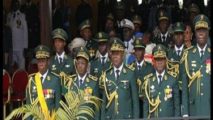
Scuffles erupted in Uganda’s parliament on Tuesday over the presence of unidentified soldiers in the building as lawmakers debate a bill that could extend the president’s time in office.
Amid the chaos, the speaker adjourned proceedings to investigate the alleged presence of soldiers in prayer sanctuaries inside the building.
The bill under debate seeks to remove a constitutional clause that prevents anyone over the age of 75 from being president.
Critics say the bill would allow President Yoweri Museveni, who is 73 and ineligible to run again, to extend his rule, possibly for life.
Museveni has ruled since 1986.
A vote is expected this week.
A number of opposition lawmakers were forcibly removed from parliament in September, allegedly by soldiers with the presidential guard, while discussing the bill.
(Source: AP)