
27, November 2017
Ireland urges UK to stay in customs union to avoid hard border 0
The Republic of Ireland has threatened to veto Brexit trade talks unless Britain provides guarantees over Dublin’s border with Northern Ireland.
The Irish EU commissioner, Phil Hogan, said on Sunday that the border problem can easily be solved if British Prime Minister Theresa May drops her plans to take Britain out of the European Union customs union and the single market when it departs the 28-nation bloc in 2019.
“If the UK or Northern Ireland remained in the EU customs union, or better still the single market, there would be no border issue,” he said. “That’s a very simple fact.”
Britain’s international trade secretary, Liam Fox, quickly rejected Hogan’s solution. He told Sky News that the resolution of the border issue between the two Irelands will have to wait until details about future trade relations with the EU have been worked out.
“We don’t want there to be a hard border, but the UK is going to be leaving the customs union and the single market,” he said.
A hard border would make passport and customs controls mandatory, hampering business ties between the Republic of Ireland and Northern Ireland.
The EU has required sufficient progress on the border issue as a pre-condition to launch the Brexit trade talks next year before officially leaving the bloc in 2019.

In an interview with the Observer, Hogan (pictured above) also warned there was “blind faith” from some UK ministers that Britain would secure a comprehensive Brexit free trade deal. He warned that Ireland would “continue to play tough to the end” over its threat to veto trade talks until it had guarantees over the border.
The Irish government wants a written guarantee that there will be no hard border with Northern Ireland, something Dublin emphasizes can only be achieved, in effect, by keeping the region within the single market and customs union. However, May has repeatedly made clear that Britain will leave the single market and customs union, regardless of the border implications.
Ireland’s approach has also been rejected by Arlene Foster, leader of the Democratic Unionists, a Northern Ireland party that is using its votes in the parliament to prop up May’s minority government.
Foster told her party conference Saturday that the party would not back any agreement that “creates barriers” between Northern Ireland and the rest of the United Kingdom, in effect ruling out special status for Northern Ireland in the post-Brexit era.
Source: Presstv

















27, November 2017
Ambazonia Crisis: French Cameroun National Assembly Speaker defiant in face of SDF opposition 0
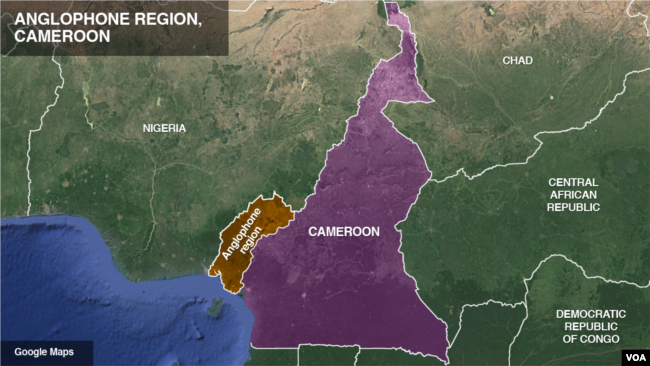
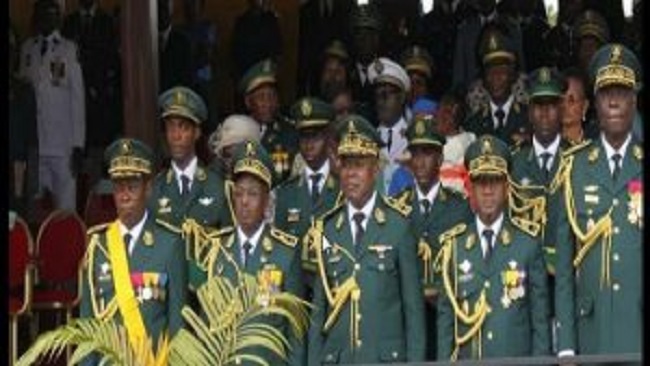
The Speaker of the French Cameroun National Assembly, Cavaye Djibril has said that work will resume at the Ngoa Ekele building today Monday the 27th of November 2017. Officially, SDF Members of Parliament have not declared an end to their strike action that rocked the 3rd parliamentary session and caused activities to be suspended in the so-called Lower House since Thursday, November 22, 2017.
The SDF MPs have been demanding that the Biya Francophone Beti Ewondo regime opens an inclusive dialogue on the Southern Cameroons crisis.
Without revealing the aftermath of the talks that were held between the government and SDF parliamentarians, Hon. Cavaye announced on the official website of the National Assembly today’s recovery program in the Francophone dominated national assembly.
– 10 am Conference of Presidents,
– 10.30 am Plenary session deposit of a text and
– 11 am Committee on Foreign Affairs with the adoption of the report on the draft law number 1015 / PJl / AN.
Mr. Cavaye revealed that the MPs including those of the SDF will all answer present today. Another French Cameroun CPDM MP, Hon. Marlyse Rose Douala Bell was quoted as saying that “Unless they change in the meantime. We met at the funeral of Hon. Arthur Ekeke Lysinge in Buea and we talked a lot about how the parliament should discuss this Anglophone crisis. When I say, it’s with the SDF deputies. I think there are also negotiations that are being done at the parliamentary group level and elsewhere to keep this 3rd session going without further disruption.”
By Sama Ernest, CCN