
12, January 2017
Trust in Biya is gone, so too is confidence in his appointees 1
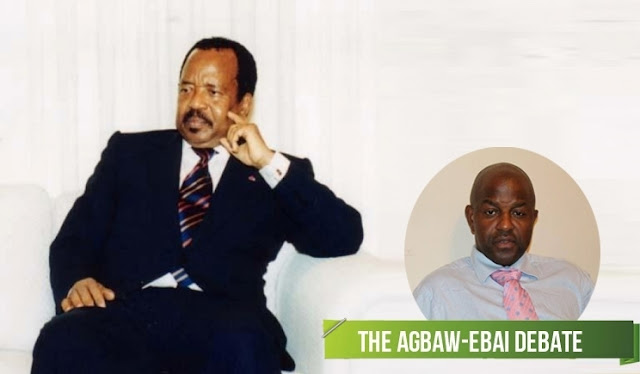
Etoudi is propagating the idea that the various designated mediators sent to Southern Cameroons have failed and that there is an urgent need for the presence of the 83 year old Cameroonian dictator-the man widely believed to have plunged the nation into its present state of confused identity. The pro Yaounde politicians are insinuating that Paul Biya’s presence could be an effective solution for things to return to normal in the South West and North West regions. It is not true. What is true is that Biya has lost his chance among the greats.
The failure of dialogue and negotiations cannot be blamed on the Anglophone leaders but on Biya’s pattern of governance. Biya is not only tactless but very reckless and too full of himself. The Anglophone crisis has eventually exposed him. We of this publication can now say loudly and clearly that Biya is a political disaster that has been around for the last 34 years. While the Cameroon Anglophone Civil Society Consortium has been consistently consistent with their demands and actions, Biya and his entire CPDM crime syndicate have been caught committing the same errors or falling into spectacular new ones.
To be sure, even primary school pupils of British Southern Cameroons including those of La Republique du Cameroun have come to the conclusion that there is just no one to challenge the Consortium. So, tribalism has made Paul Biya to end as a prominent and successful failure. Schools in the South West and North West have not resumed as articulated by a certain Ghogomu Mingo and the anti Anglophone Minister of Higher Education, Jacques Fame Ndongo. Minister Atanga Njie is hiding!! So too are all CPDM political actors from the defunct South West and North West regions. Justice Ayah Paul is seeking for notice. However, it is evident; schools will only open their doors if the Anglophone problem is resolved.
Given the current situation, no glimmer of hope is envisaged for a return to normal in the coming days if Biya does not step aside or personally engage the new generation of Anglophone leaders. Reviewing of government strategy will change nothing. British Southern Cameroonians have had enough of this Francophone bad faith and marginalization. The Prime Minister and Head of Government could not do anything, cabinet ministers, Senators, MPs and Mayors either. Jean Kueté, the Secretary General of the Central Committee of the ruling CPDM party was almost lynched in Bamenda after an unsuccessful attempt to hold a political meeting.
A frustrated Biya has come to understand that his 34 years as head of state has been because of the goodwill of the Cameroonian people not the army or the gendarmerie. The regime is now aware that the North West/ South West Divide tactics is a thing of the past. Yaoundé is also well informed that the cast of the men called to lead the talks were unpopular citizens in their respective constituencies. The pronouncements that came out of some cabinet ministers namely, Laurent Esso, Fame Ndongo, Atanga Njie and Issa Tchiroma Bakary made the situation moved from bad to worse.
The Yaoundé regime underestimated the Consortium and described them using a battery of adjectives. But our teachers, lawyers, Okada men, business community, Anglophone Roman Catholic Bishops including some right thinking CPDM political elites are now reading from the same script. To God be the Glory. To Biya’s greatest surprise, the Consortium has become so powerful to the extent that if the Anglophone leaders decide to request the release of Chief Inoni and Fonjindam-they will get it done in one second!! We of this group are appealing to the Consortium not to forget the Wum detainees. It was in Wum in Menchum Division where it all started. This is strength you get when you involve the common man in any political struggle. We of the Cameroon Concord News Group are proud to surrender our loyalty to The Cameroon Anglophone Civil Society Consortium.
Contrary to what many are thinking today that the only one able to solve the Anglophone Problem in Cameroon is the President of the Republic. We believe that Biya will only be among the Francophone representatives in the presence of the United Nations and African Union envoys to map out the way forward for the two territories. Trust in Biya is gone, so too is confidence in his appointees. Only a neutral third body can mediate between us and them.
By Soter Tarh Agbaw-Ebai
Editor-in-Chief
Cameroon Concord News Group










13, January 2017
Nigeria to offer asylum to Gambian President Yahya Jammeh 0
Nigerian lawmakers have voted to offer Gambian President Yahya Jammeh asylum if he hands over power to opposition leader Adama Barrow, who was declared the winner of the country’s December presidential election. The House of Representatives, Nigeria’s lower house, on Thursday approved a motion to authorize President Muhammadu Buhari to offer Jammeh asylum if he steps down when his five-year mandate ends on January 19.
Jammeh has a constitutional right to remain in office until his term ends. The Nigerian president is due to travel with other West African leaders to Gambia on Friday to persuade Jammeh to accept the election results. Jammeh had initially accepted the results of the December 1 election, in which Barrow was declared the winner, but reversed his position more than a week later and called for a revote. Barrow says Jammeh lacks the constitutional authority to call for a new vote or to invalidate the election.
Leaders from the Economic Community of West African States (ECOWAS) have already traveled to the Gambia in an attempt to strike a deal with the president to make him to leave power. ECOWAS has said that Jammeh must step down and vowed “to take all necessary action to enforce the results” of the election. Jammeh has, however, questioned the role of the regional body as a genuine mediator. In New Year’s speech broadcast on state TV, the Gambian president accused the regional bloc of declaring a war against his country. He also pledged to defend his country against what he called any foreign aggression.
Jammeh has also described the mediation by ECOWAS as an insult to Gambia’s constitution. His refusal to accept the results prompted political upheaval in the country, bringing pressure from the international community on him to accept the result and step down. Several countries and the United Nations Security Council have called for a peaceful transition of power in Gambia. Jammeh seized power in a military coup in 1994 and has been in power ever since. He has long been under fire by human rights groups, who accuse him of torturing, imprisoning, or even sometimes killing his opponents.
Presstv