14, July 2016
Sell Cameroon and share the money 0
Some few days after President Biya took over from the late Ahmadou Ahidjo, he announced that Cameroon will never go to the IMF or World Bank to beg for money. Biya had been handed over everything including the country’s reserves. Some months before the former head of state was lowered into an early grave in Dakar Senegal, Cameroon was already seeking first and second standby World Bank accords. Cameroon Tribune, the nation’s national daily newspaper wholeheartedly approved of the relations with the IMF and the World Bank.
The country’s lead editorialists such as Charles Ndongo, Eric Chinje, Ful Peter, Boh Herbert, Lawrence EyongEchaw, Ntemfac Ofege, Abel Mbida, Emmanuel Wongibe and Ebonkem Forminken went on to threaten anyone, like Paddy Mbawa and Chief Bissong Etahoben who campaigned against the IMF. The super editors made sure positions and ranks were terminated as a result of any political discourse on the IMF/World Bank.
That was in the early stages of rigor and moralization when no one anticipated a vicious salary cut and an unprecedented devaluation of the FCFA including the emergence of Ni John Fru Ndi and the Social Democratic Front. Civil servants regularly told those in the private sector that “after all my salary is passing”. From what we now know, neither these Cameroon government media gurus nor the super editors have been charged for deceiving the Cameroonian people.
The celebration of the coming of the IMF’s privatization has continued ever since. So today we can sing with pride of the collapse of the Cameroon Shipping Lines, Cameroon Airlines, Cameroon Bank, Cameroon Railway Company, Cameroon Aluminum Company (CELLUCAM), the Public Works Department, Cameroon Transport Company (SOTUC), the Cameroon Cotton Company (SODECOTTON), Preventive Medicine Department, Produce Marketing Board, Chantier Naval, the CDC, SOCAPALM etc
The Supreme Court has been replaced with the Special Criminal Court. French speaking state counsels and judges with no mastery of the English language are being appointed to head courts in Anglophone Cameroon. Cameroonian prosecutors turned up in court because of fear for their jobs. Nationally, the arrest of highly placed government officials has been greeted with cold-hearted intolerance from rightwing CPDM politicians – several of whom say they got what they deserved for embezzling state funds.
The truth is all too clear. Who is responsible for the collapse of Cameroon as a nation? Some of the very politicians like Garga Haman Adji, Fru Ndi, Maigari Bello Bouba, Jean Jacque Ekindi, Diakolle Daisalla, Akoteh, Dr Aka Muan, lawyers and journalists who championed the cause of democracy and the rule of law against the Biya dictatorship. Now they support, or fail to speak up against anything about the Yaounde regime. Where is the movement that was seeking justice for Captain Guerandi? Where is the Union for Change? Where is the real UPC that represented the late Um Nyobe and Dr Felix Moumie? Where is Laakam? Where is the Anglophone National Congress? Where is the SDF? Where is the SCNC?
In a nation where laws are widely abused to settle personal scores and to discriminate against minorities, no answer is needed. Any anti Biya official can be sent to jail and yet Europeans and US diplomats are busy romancing with this consortium of CPDM crime syndicates operating in Yaounde, the nation’s capital. The French can free anyone sentenced in Cameroon and they are making a mockery of our already poor and corrupt judiciary system.
Former barons of the regime have spent years in Cameroon’s most hellish prisons some in solitary confinement. Amnesty International reported today Thursday the 14th of July 2016 that more than 1000 people are being detained in a prison facility in Maroua meant for 350 persons. Many have been killed while awaiting trial.
Cameroon now has two specific problems: what to do with an 83 years old frail leader and a government that has no succession plan. But Cameroon also has surely larger problems. Every time a Cameroonian civil servant, radio and television commentators, lawyers, judges, politicians, human rights activists, the business community and the clergy appease the leadership of the ruling CPDM party, the social space occupied by them grows widely. The only solution left is for us to sell Cameroon and share the money. If it does not work for you with money after the sale, former Cameroonian citizens will of course have the resources to relocate in other countries such as Gabon, Equatorial Guinea, Chad, Nigeria, and Ghana and why not in the West.
The very slow and agonized fissuring of the state of Cameroon is to be measured not only in the arrests of senior government officials and Biya’s continued stay in power, nor only by entertainment coming from Brenda Biya and her mum, Chantal Biya. It can be measured, too, by a moral collapse and a cowed ambivalence of the silent majority. Those who are too frightened to confront the West backed Biya crime syndicate today will find themselves being consumed by it tomorrow. Inoni, Marafa, Mebara who is next? But before that happens, it will be good that we sell the country and share the money.
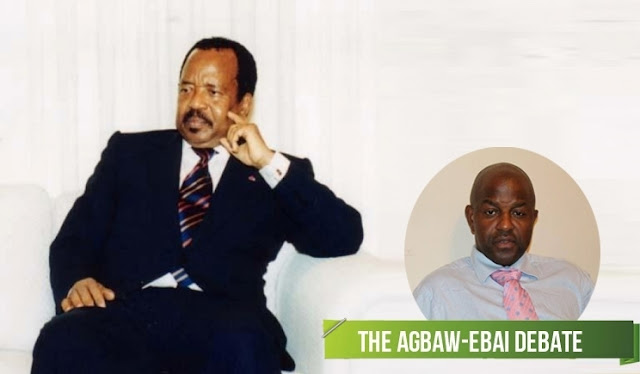
Soter Tarh Agbaw-Ebai (Cameroon Concord News Group)


15, July 2016
Morocco to rejoin the African Union 0
Morocco is reportedly set to rejoin the African Union (AU) after leaving the pan-African organization more than three decades ago. An anonymous diplomatic source told Moroccan newspaper Akhbar al-Youm that the historic move is anticipated to be announced during the 27th AU Summit scheduled to take place in the Rwandan capital, Kigali, on July 17-18.
The source refused to confirm whether King Mohammed VI would attend the upcoming AU summit starting this Sunday. However, it said Moroccan Foreign Minister Salaheddine Mezouar has recently been on a diplomatic trip to several African capitals, including Egypt, Libya, Sudan, Senegal, Tunisia Cameroon, Cote D’ivoire and Ethiopia, to inform them all of Morocco’s decision.
Morocco has access to services available to all AU states, but remains the only African UN member not to be a member of the AU. In recent years, several African officials have urged Rabat to return to its seat at the AU. “Morocco is a fully-fledged member of the African family, and no-one has the right to exclude the Kingdom from the AU,” Senegalese Foreign Minister Mankeur Ndiaye said during King Mohammed’s visit to Senegal in May 2015, adding, “We think that now is the time for Morocco to return to the African Union.”
The AU, which replaced the Organization of African Unity (OAU) in 2001, includes all 54 African states besides Morocco that are members of the United Nations. The country decided to withdraw from the continental organization in 1984 over the union’s decision to accept the self-proclaimed Sahrawi Arab Democratic Republic (SADR) as a formal member. Morocco considers the territory as part of the kingdom and insists its sovereignty cannot be challenged. Morocco annexed the vast, mineral-rich territory of the Western Sahara after Spain withdrew in 1975. It is currently viewed as Morocco’s “southern provinces” and the government continues to carry out multi-million-dollar development projects in the area.
However, neighboring Algeria, like numerous other African countries, recognizes the territory as the SADR, and hosts the headquarters of the Sahrawi liberation movement, the Polisario Front. Morocco has offered wide-ranging autonomy for the region; but the Polisario Front movement, which claims the disputed territory belongs to the ethnic Sahrawis, insists that a referendum be held so that the local population can decide their fate. For decades, the UN has been seeking to hold a referendum on independence for the territory.
Presstv