
10, December 2020
French Cameroun: Ruling CPDM Crime Syndicate claims victory in first regional election 0
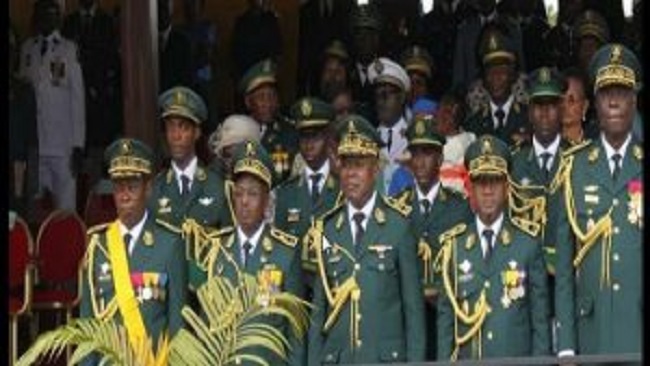
The party of Cameroon’s President Paul Biya overwhelmingly won in the country’s first regional election held over the weekend, according to official results published Wednesday, in a vote which was boycotted by the opposition.
The long-serving leader had called the election partly to defuse a separatist insurgency in the English-speaking west.
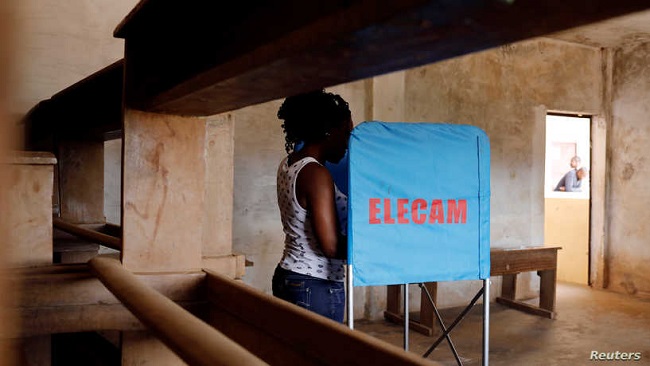
A 24,000-strong electoral college made up of municipal councillors and traditional chiefs voted to fill the posts of 900 regional councillors: 90 for each of the country’s 10 regions.
The ruling party won in nine of the 10 regions, while the 10th was won by a party in the presidential majority, according to results collected by AFP region by region from the Ministry of Interior and from Elecam, the body in charge of organising the vote.
The results did not come as a surprise, as municipal councillors with the greatest proportion of votes were overwhelmingly from the ruling party.
In the anglophone Northwest and Southwest regions, which have been plagued by a bloody conflict between the military and separatist groups for nearly four years, Biya’s party, the People’s Democratic Movement (RDPC), was the only one in contention.
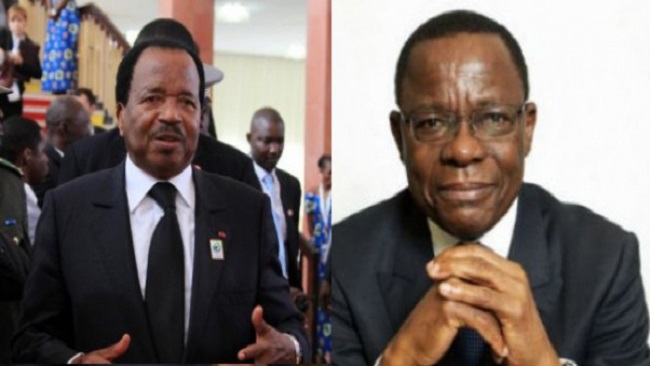
The two main opposition parties, Maurice Kamto’s Movement for the Rebirth of Cameroon (MRC) and the Social Democratic Front (SDF) had both boycotted the polls.
Kamto has organised protests against Biya in recent months, claiming that holding elections before finding a solution to the secessionist conflict in the anglophone regions amounts to supporting partition.
The army has been fighting secessionists since 2017, and both sides are accused of abuses against civilians.
The government had presented these first regional elections as a historic step in completing the country’s decentralisation of power and settling the anglophone crisis — even if they were first set out in the 1996 constitution.
Biya dusted off the measures after coming under intense pressure from the international community over the uprising that has so far cost 3,000 lives and forced more than 700,000 people to flee their homes.
Biya, who has ruled the country for 38 years, has faced an unprecedented surge of street protests against his regime in recent years.
In addition to that, the far north of the country has been repeatedly targeted for attacks by jihadists.
Source: AFP












10, December 2020
Ghana’s tactful president Nana Akufo-Addo wins second term 0
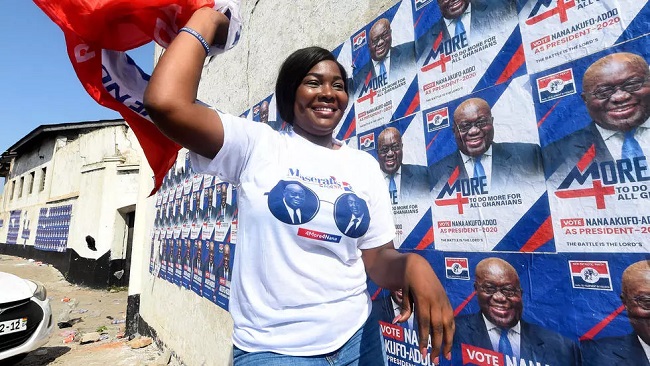
Ghana’s president Nana Akufo-Addo, a former human rights lawyer with the reputation of a smooth operator, has won a second term with 51.59 percent of votes in Monday’s tightly contested election.
The 76-year-old ran against 11 candidates including his long-time opponent John Mahama, 62, a former president himself known as “a man of the people”. He came in second with 47.36 percent of votes.
Akufo-Addo, who sports ‘Harry Potter-esque’ glasses, is a London-educated economic liberal with a cheerful smile. But while he often comes across as jovial, he is a dynamic and forceful leader.
In a speech that went viral in 2018, the president pleaded with fellow Africans to get rid of a dependence mentality towards former European colonisers, aligning himself with historic pan-African leaders such as Kwame Nkrumah and Jerry Rawlings.
“Long before he came into politics, he was somebody who had built a strong reputation fighting the military dictatorship, which enabled him to build friendships across political lines,” said Kwesi Jonah, a senior research fellow at Ghana’s Institute for Democratic Governance.
Current chairman of the regional bloc ECOWAS, he more recently played an important role mediating political crises in Togo and Guinea.
– High growth during first term –
In 2016, after two failed attempts at the presidency, the New Patriotic Party (NPP) leader rode to power on promises that included free high school education and a factory in each of Ghana’s districts.
On education in particular, “he has done very well,” said Jonah — a point that counts in a country where 18- to 35-year-olds account for more than half of all eligible voters.
While in office, he launched the Year of Return to encourage descendants of slaves to “come home” and encourage investments.
Ghana has recorded high levels of growth during his first term in office as he worked to diversify an economy largely dependent on cocoa exports and more recently oil and gold.
But many still live in extreme poverty with scarce access to clean water or electricity.
Severely hit by the coronavirus pandemic, growth in the nation of 30 million people is expected to fall this year to its lowest in three decades, to 0.9 percent according to the International Monetary Fund.
That is a steep decline from 6.5 percent growth in 2019.
– Anti-corruption drive –
Born in the capital Accra in 1944, Akufo-Addo was never far from power. His family, richly royal and deeply political, includes three members of Ghana’s legendary “Big Six”, considered the country’s founding fathers.
After picking up an accent in Britain, along with a lifelong passion for Tottenham Hotspur, Akufo-Addo worked as a lawyer in France before returning to Ghana.
Throughout his career, as a lawyer, then member of parliament and minister, he built a strong anti-corruption reputation.
“Everybody saw him as the guy who, when voted into power, would be able to bring corruption under control,” said Kwesi Jonah, a senior research fellow at Ghana’s Institute for Democratic Governance.
Once in office, he appointed a special prosecutor to investigate and prosecute corrupt officials.
But the prosecutor, Martin Amidu, resigned in November, shortly after releasing a report into a government-backed royalties deal, accusing the president of obstruction and interference.
Despite denials of any wrongdoing from the government, it did not put Akufo-Addo in a flattering light and discontent with his administration — many of which include family members — is simmering.
During this year’s campaign, the president did not make ambitious promises as he had in 2016.
“He has been in power for four years,” said Jonah, “so he knows it is very difficult to get money to do things.”
A first and urgent task will be to limit mounting debt and control rising inflation.
Source: AFP