12, November 2020
The United States still has two self-declared presidents 0
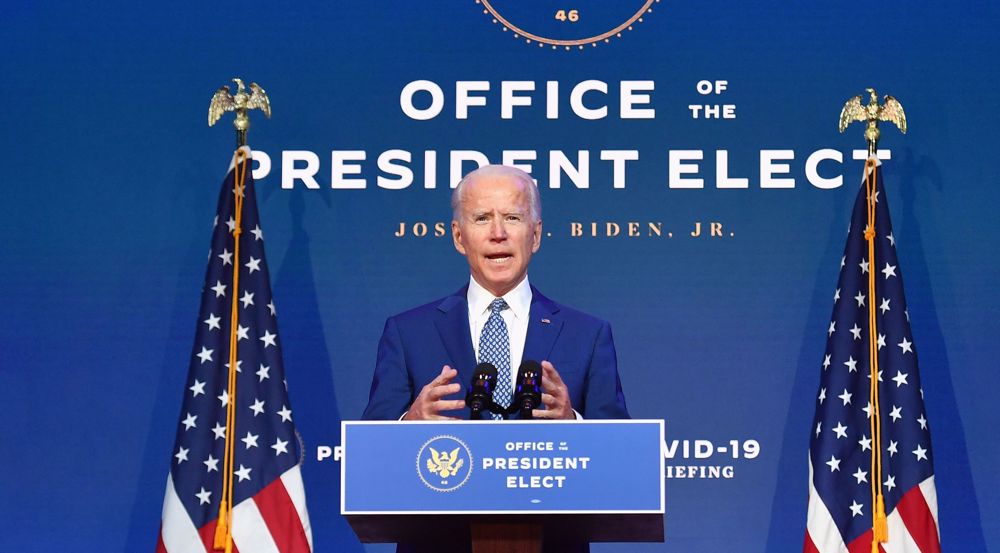
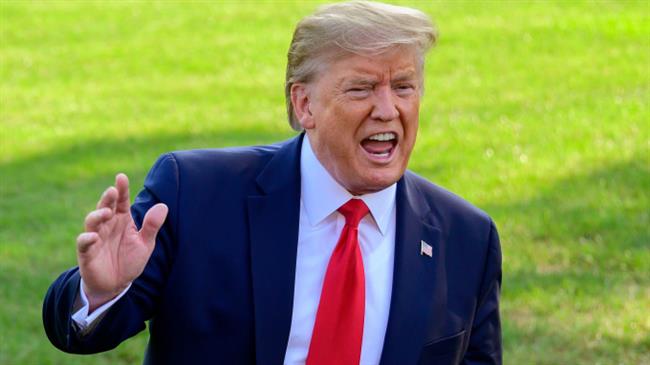
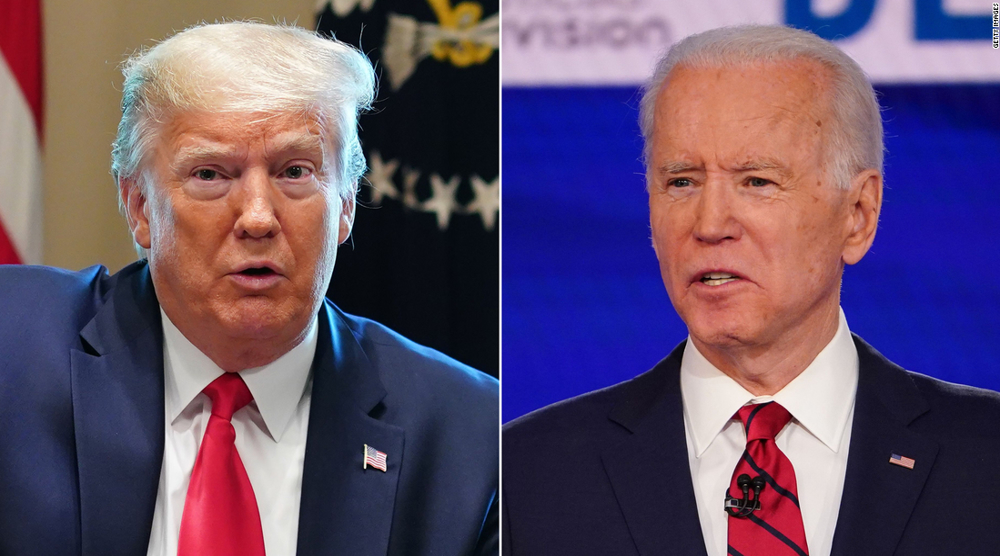
Tensions and divisions continue to mount in the United States, which still has two self-declared presidents. That’s even though vote counts remain unfinished, in a very tight race and in a uniquely-conducted vote which was preceded by months of controversy.
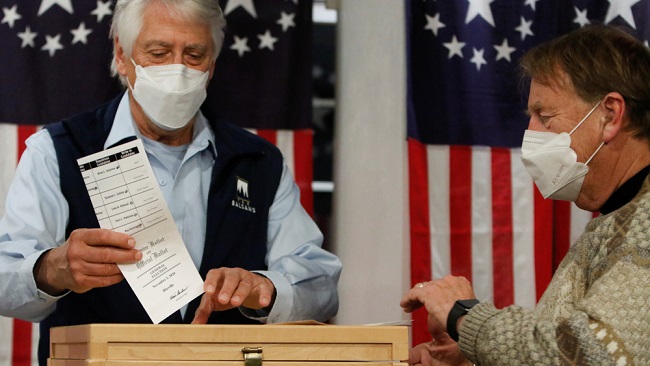
For the past week there has been enormous grassroots pressure, mainly coming from conservatives, that confidence in the electoral system has been so repeatedly undermined that a rush to judgment is not acceptable to many.
The state of Georgia announced they need to recount every ballot by hand, and lawsuits may force several other states to do the same. Democrats and seemingly all of the mainstream media are demanding President Donald Trump concede, with challenger Joe Biden maintaining a slight lead.
Top Republicans have refused to acknowledge Biden as the president-elect and thrown their support behind Trump to not concede. Many have insisted that Trump is within his rights to look into charges of “irregularities” in last week’s election.
Three of the past six presidential elections are now disputed. Many warn that massive alienation, instability and possibly violence could result if a large minority refuses to accept any final vote results which are not subjected to the check and balance of a judicial review.
Support for judicial review of the electoral process mainly falls along party lines. For decades the US has had endemic low voter turnout, but those who do vote have become extremely polarized, with the disputed election of the year 2000 often cited as a primary reason.
Without a concession, tensions and legal battles are likely to mount for weeks. On December 6 the Electoral College meets – the US does not decide their president by direct vote – and that institution has become increasingly unpopular due the 2016 disputed election.
One week after they went to vote, the US has become even more bitterly divided regarding their executive branch and electoral system.
Source: Presstv












13, November 2020
What is Ambazonia? The Southern Cameroons independence struggle 0
Paul Biya, Cameroon’s dictator of 38 years has declared war on Southern Cameroon-Ambazonia as conflict escalates in the West African country.
However, to place the fighting in context some history is required.
In the wake of the escalation of the anglophone crises in the late quarter of 2016, the majority francophone government of Cameroon was tasked with the challenge of either using dialogue to solve the problems raised by the teachers and lawyers in their various demands and memorandums or as usual use violence and force to crack down on the protests and bring the desired results of oppression and suppression.
A strategy which has been used for decades by the majority Francophone government to keep the minority English speaking Cameroonians (Southern Cameroonians) under perpetual structural and developmental marginalization. This strategy as always brought pain and misery on a people who needed their demands looked into and handled by a government that claimed to be for all the people.
The lawyers’ strikes which started in the early days of August 2016 brought all lawyers associations from the Southern Cameroons practicing under the common law judicial subsystem to table their demands to the minister of Justice who without much consideration ignored them and proceeded with the same practices the lawyers petitioned against. It was in this line that common law judicial practitioners and lawyers decided to descend on the streets to protest against the judicial marginalization. Amongst some of the points petitioned against was the transfer of civil law trained judges from Ecole normale de l’administration et Magistrature (ENAM) to Common law courts in the Northwest and Southwest regions—Southern Cameroons. These judges by constraint are forced to judge cases using the common law judicial procedures which they do not master. They are also forced to use the French language in a common law court whose cases are attended by English-speaking Cameroonians who understand little or nothing in French and subsequently English-speaking lawyers. This problem, without minimizing the other demands constituted a major focus for English-speaking lawyers who saw this as practical judicial marginalization of the Southern Cameroons people and considered it a travesty of Justice.
Note that prior to this time, the English-speaking lawyers had raised these issues on numerous occasion but the government reacted only to the translation of the OHADA law into English. OHADA is a system of business laws and implementing institutions adopted by 16 French-speaking West and Central African nations. OHADA is the French acronym for Organization pour l’Harmonisation en Afrique du Droit des Affaires, which translates into English as Organization for the Harmonization of Business Law in Africa. It was created on October 17, 1993 in Port Louis, Mauritius.
Before now, the OHADA law had been written solely in French. As such, English-speaking lawyers of the common law jurisdiction of Cameroon faced enormous difficulties in the courts as they were forced to interpret the OHADA articles in a language they did not master.
That is why English-speaking lawyers across Southern Cameroons descended on the streets to make their voices heard. As usual the government of President Paul Biya stormed the protest grounds with brutality and violence, teargassing and shooting live ammunition at protesters. Reports and videos of government brutality and several wounded lawyers went viral on social media platforms. Other videos showed forces of law and order manhandling protesting lawyers. In the town of Buea, a policeman is seen in a video dragging a lawyer on the ground in a degrading and inhumane manner. Such videos and pictures led to widespread anger and condemnation by English -speaking Cameroonians who expressed disgust at the Biya regime for treating the men and women of law in such a despicable manner. But the government maintained its position on not listening to the lawyers.
Teachers also had similar problems tabled to the Biya regime, amongst which was the transfer of French-speaking teachers to teach in English-speaking schools in the Northwest and Southwest regions—Southern Cameroons. These demands as usual had been ignored for several decades by the same regime. The various teachers trade unions in the English-speaking regions therefore announced a sit-in strike on November 21, 2016. Teachers were to stay at home until the government in Yaounde, the capital, attended to their demands.
On November 16, 2016 also, Mancho Bibixy an English-speaking radio animator and journalist in the town of Bamenda, holding a mega phone, called on the government delegate of the Bamenda city council to come and tell the people who was responsible for the deplorable state of the roads in the city. He had spent the night trying to pull out his car from a ditch along the road. Thousands of such ditches had been dug and abandoned by a Chinese company which worked on a water project awarded by the Bamenda city council. Some of the ditches are almost 10 feet deep and they had caused several accidents. Reports of vehicular accidents or locals falling into ditches at night abound.
Mancho Bibixy, went to the commercial street in Bamenda and stood on a coffin he had punches and placed on his car and made his demand—the people must be told who was responsible for these disasters. He said he knew the reputation of the French Cameroon regime’s addiction to violence and brutality but that he was ready to die and be buried in the coffin he’d bought. He wanted the government delegate to the Bamenda city council to commit to repairing the roads within a deadline.
Thousands of English-speaking Cameroonians joined the protest. The regime reacted violently, teargassing, using water canons and shooting live bullets at protesters. At least four people were critically wounded. The government’s brutal reaction transformed what had started as a mere protest against bad roads into a movement with hundreds of thousands of youth pouring out to demand a return to the 1961 federal system of government between two states: French Cameroun and Southern Cameroons. The focus now turned to the long-time marginalization of the minority English-speaking Cameroonians by the majority French-speaking government in Yaounde. Many people were arrested while dozens were placed on government target lists for arrest.
Protests escalated over the following two weeks. The youth mounted barricades along major road junctions and streets in Bamenda and other towns across the Southern Cameroons, like Kumba and Buea, grounding all activities. The movement went viral. Southern Cameroonians were determined to get the French Cameroon regime to respond to the demands tabled by the lawyers and teachers. The alternative was return to the 1961 federal system of government. Unification was contested after an illegal United Nations organized plebiscite in April 1961.
One week later the security forces violently cracked down on student protest at the University of Buea, in the administrative capital of the English-speaking southwest region. Students wanted authorities to remove the 10,000 CFA Francs—about $20—penalty imposed for late tuition payments.
The police and military responded and ordered students off campus even as they shouted, “No violence!” Students demanded a response from the university administration. The police charged the students with batons and gun butts. Military officers chased students while police fired teargas and blasted water cannons. Students were followed to their living quarters. Reports of videos of police and military officers dragging female students in the mud, forcing other women to crawl in the mud, and beating them with batons, soon appeared online. Female students were allegedly raped. Videos of the atrocities went viral.
Two weeks after the launch of the “Coffin Revolution,” the Social Democratic Front (SDF), the main opposition party organized two rallies—December 2, and 3— and called for the ruling CPDM party to revisit the 1961 federal system of government as a means of solving the demands made by the lawyers, teachers and civil society. The attendance was massive and the majority of the Southern Cameroons people supported the call to a return to the federal system of government.
How did the authorities react to the rallies by the Social Democratic Front (SDF)? The authorities organized another political rally in Bamenda on December 8, 2016. The theme was “A Return to Peace” in the English-speaking regions. Angered by the government’s defiance by not responding to demands by teachers, lawyers and civil society, the population of Bamenda vowed to stage counter protests against the CPDM. The state securities turned a simple policing operation into an urban warfare between protesters and forces of law and order. In a disproportionate and useless outburst of violence even soldiers were called in as reinforcement.
Alleged incidents of English-speaking people burning Cameroon’s national flag during the protests were broadcast on national and private TV stations—without any video evidence or eye witness accounts. The French Cameroon government used such inflammatory concoctions to generate anger against English-speaking Cameroons. It worked. There was widespread condemnation of the protests on TV and radio stations across the country. The regime used the cover to attack peaceful protesters. At least seven people were killed and many arrested.
2016 ended with tragic violence in the North-West and South-West Regions. Rapes, torture, inhuman and degrading treatment of young girls, hunted down in the slums and student rooms in Buea. There were massacres of unarmed people in Bamenda and Kumba. Many national and international human rights organizations strongly condemned the atrocities.
In January 2017, the teachers, lawyers trade unions, merged with other civil society organizations to form the Cameroon Anglophone Civil Society Consortium (CACSC). The consortium demanded as a first step the release of more than 100 peaceful protesters and civil society activists arrested in the 2016 crackdown. When CACSC called for no-shows in come towns on Monday January 8, 2017 the response was 100% across the Southern Cameroons.
The government agreed to enter into dialogue with members of the CACSC, led by Tassang Wilfred in Bamenda, on January 6, 2017. During the first meeting, the consortium refused to talk until the government released all detained activists. The government released some but kept behind about 30 activists in the Kondengui Central Prison, including Tsi Conrad and Ngalim Felix. The consortium insisted on the release of all the detainees, and presented a draft for a federal state with autonomy for the Anglophone regions. The consortium leadership refused to call off the teachers’ and lawyers’ rights and walked off the meeting.
The government followed with more arrests, drawing national and international condemnation. On January 17, CACSC and the Southern Cameroons National Council (SCNC) which has been on the forefront of Southern Cameroon’s Independence struggle for close to 20 years were branded as threats to the unity of Cameroon and banned by a ministerial decree signed by minister René Sadi. CACSC leaders Agbor Balla, Fontem Neba, and Penn Terence were arrested while Tassang Wilfred and others fled to Nigeria to join the Southern Cameroons factions fighting for complete Independence. Activists Mancho Bibixy of the Coffin Revolution was also arrested on January 16, 2017. These leaders and other activists in detention were charged with terrorism, secession, rebellion and other trumped up offenses and arraigned at the Yaounde Military Tribunal. The court cases started February 13, 2017. There was a void in leadership when those demanding greater autonomy were arrested. The Southern Cameroons diaspora picked up the baton. They quickly transformed the movement into a struggle for the complete Independence of the Southern Cameroons. The movement gained popular support at home and abroad.
School boycotts and ghost towns—people abandoning the town on designated days—was reinforced by the new leaders in the diaspora. They used social media activism and digital conferences to draft and implement strategies to keep the movement on track. The Cameroon government as usual responded with violent crack downs, arresting more activists and foot soldiers who were implementing school boycotts and ghosts towns. The authorities even cut the internet in the two English-speaking regions in a bid to severe ties with the diaspora leaders. Other strategies were designed for information flow. The internet block lasted four months.
Several activists were killed and some disappeared as the French Cameroon government in Yaounde attempted to crush the independence activists. Two people were shot dead and 10 injured by the Cameroon police on February 7, 2017, after a crowd gathered outside the police station in a town called Ndop. People were demanding the release of those arrested on suspicion of setting fire to a Francophone school.
In August 2017, the Cameroon government sent several inter-ministerial missions abroad to meet with the Southern Cameroons diaspora to try and find a compromise and quiet the movement. The mission failed as these meetings were disrupted by pro-independence militants and activists. In Belgium, a meeting organized by Laurent Esso, the justice minister and long-time collaborator of Paul Biya was marred by several incidents. Prior to the meeting, a video showing 12 Southern Cameroonian activists incarcerated under deplorable conditions in a bunker at the infamous Secretariat d’Etat de la Defense (SED) Yaounde went viral. On the video, the activists spoke into a phone camera and introduced themselves. They stated that they were Southern Cameroonian citizens who’d been incarcerated in the bunker for several months. There was no light, and there were no mattresses. The toilet was deplorable. They said they had been tortured and subjected to inhumane treatment.
Southern Cameroon activists in Belgium started a protest in the meeting hall. They disrupted the meeting and brought it to an abrupt halt. There was physical confrontation between the government delegates and the pro-independence activists. In South Africa, pro-independence activists almost lynched one member of a government delegation trying to conduct a meeting there. The embassy was vandalized and seized by protesters for hours. In the U.K., hundreds of Southern Cameroon activists stormed the meeting ground at the embassy and swapped the Cameroon flag with that of Southern Cameroons-Ambazonia. There were similar protests in Canada and the U.S. The government missions failed woefully. The ministers returned to Cameroon empty-handed.
National and international pressure on the Cameroon government led to the release of two main leaders, lawyers Agbor Balla and Dr. Fontem Neba, along with about 50 other activists and protesters. This followed a presidential decree which authorized a halt in the court proceedings of the cases against them in the military tribunal. About 40 other activists remain imprisoned.
The government was caught by surprise when on September 22, 2020, following a declaration of the Federal Republic of Southern Cameroons-Ambazonia, with Professor Sisiku AyukTabe as interim leader, massive crowd turned out to celebrate. (The population of Ambazonia is estimated at well over eight million and there is overwhelming support for independence). This day is called Takumbeng Day—it was led by women and girls dressed in white and red cloths tied over their chest, carrying peace plants, and chanting the Ambazonian anthem and victory songs. It was the largest such outpouring in Cameroon’s history. Anglophones had embraced the idea of full independence. The government reacted with brutality, using live bullets and helicopter gun ships. At least 70 people were killed and hundreds critically injured. Nearly 1,000 peaceful protesters were arrested and transferred to various detention centers in Yaounde, Buea, and Douala. The government declared a de facto state of emergency.
On October 1, Sisiku AyukTabe, the interim president, declared the restoration of the independence of Southern Cameroons-Ambazonia and invited the population to celebrate all over the world. The attacks by the government continued and rape was also used as a weapon and properties destroyed by the military. Hundreds of villages were raided by the military and young men were dragged away; some were killed while others taken to unknown destinations. Some villages were burned down by soldiers.
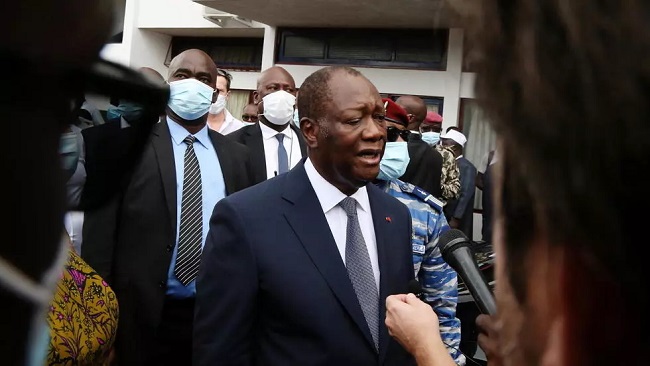
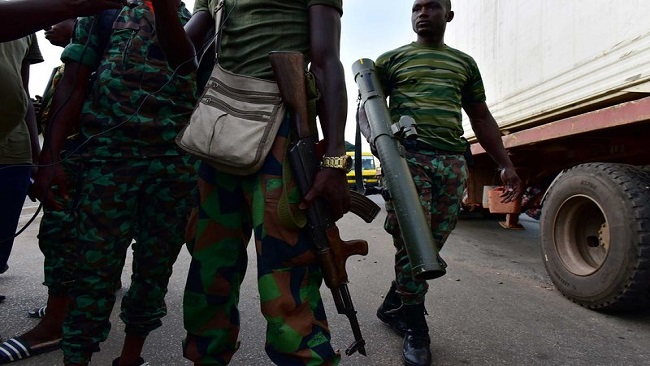
Upon his return from an African summit in the Ivory Coast, Paul Biya, the dictator, pulled out a small piece of paper from his jacket and read out a declaration of war on all Ambazonian activists and freedom fighters calling them “terrorists.” The next day, there was a huge military deployment in southern Cameroon. In the weeks that followed, hundreds of villages were burnt down by Cameroon military forces. Thousands of people have been killed and more than one million people displaced from their homes with some fleeing abroad.
The fighting has lasted more than three years and calls for a ceasefire and negotiations continue.
Culled from Black Star News