20, May 2020
Confirmed COVID-19 cases are rapidly increasing in Cameroon, Biya revealing some of his movements 0
As the COVID-19 pandemic spreads around the world, many national leaders have become more present in their citizens’ lives. They announce new emergency measures, hold regular press briefings and attempt to reassure the population. Not so in Cameroon.
President Paul Biya only addressed the public since the first confirmed coronavirus case in early March yesterday the 19th of May in a speech described by many commentators as “empty”. The outbreak is spreading, lockdown restrictions have been announced and then eased but the 87-year-old leader has only been notable for his absence. Amid rumours of his death, Cameroonians have taken to twitter with hashtags such as #WhereisBiya and #LetsFindBiya.
The president has revealed some of his movements. On 16 April, he posted a picture of his meeting with the French Ambassador to Cameroon at the presidential palace in Yaoundé. A month later, he tweeted similar photos with UN Special Representative François Louncény Fall.
Despite speculation they were photoshopped, these images and yesterday’s televised address seem to confirm that Biya is well and in the capital. Nonetheless, they have done little to allay frustrations at his lack of public presence.
“If Biya can receive the French Ambassador why can’t he address the people?” asked Cameroon’s main opposition leader Maurice Kamto, speaking to African Arguments. “Why can’t he say a few words to Cameroonians?”
Containing the coronavirus
The government has taken various measures to reduce the spread of the virus, with most official messages coming from Prime Minister Joseph Dion Ngute and Health Minister Malachie Manaouda. On 18 March, Cameroon closed its borders, shut down schools, and ordered restaurants and bars to cease operations after 6pm. It increased testing, banned large gatherings and non-essential travel, and required people to wear face masks in public.
While these measures may have helped reduce the disease’s spread, Cameroon has become one of the worst affected countries in Africa. To date, it has recorded 3,529 cases and 140 deaths. Moreover, a Reuters survey found that Cameroon has just 40 ventilators, a tiny fraction of the 2,422 that might be needed if the virus peaks according to estimates by Imperial College of London.
Despite the worsening crisis, however, the government eased some restrictions in early May, including allowing eateries to remain open past 6pm. This may have reduced the economic impact on many Cameroonians, some eight million of whom live in poverty, but has drawn criticism from the opposition.
“It’s extremely confusing,” says Kah Walla, President of the Cameroon People’s Party. “What is the government strategy? What are they trying to achieve with this and why would they expose the population to that degree?”
Neither the Minister of Health nor the Prime Minister’s Office responded to African Argument’s request for comment.
Meanwhile, a coronavirus fundraising initiative led by Kamto has been blocked by authorities, with its bank account shuttered and funds frozen. Last week, six of its activists were arrested for distributing face masks and sanitiser. They face charges of rebellion and could spend four years in prison if convicted.
Conflict in Cameroon
So far, most confirmed cases have been in urban areas, but many fear that the coronavirus could be particularly devastating if it spreads to areas facing insecurity. In the Far North, Boko Haram continues to operate. Meanwhile, in the country’s two Anglophone regions, a conflict between English-speaking separatists and government soldiers has claimed at least 3,000 lives and displaced hundreds of thousands of people since 2017.
Only one of the warring parties – which includes about fifteen separatist groups and government forces – has heeded the UN’s call for a global ceasefire. And while there was a brief lull in early March, fighting has resumed with abuses recorded in recent weeks on both sides. Some 115 hospitals in the two regions have been demolished in the conflict, while all humanitarian flights were grounded in March.
“How can you prepare a pandemic response in an area where violence is rife?” asks Ilaria Allegrozi, a senior central Africa researcher for Human Rights Watch. The organisation has urged Cameroonian officials to allow aid missions to continue unimpeded. According to Allegrozzi, some flights to the Far North have resumed, but not to the two Anglophone regions.
“[The pandemic] adds another layer of complexity to an already intractable civil war,” says Billy Burton from the Anglophone Crisis Monitoring Project. “It has increased the risk to vulnerable, displaced populations – both outside and inside the Anglophone regions – and it makes it even harder for humanitarians trying to get aid in.”
A lack of accountable leadership
As Cameroon faces this set of complex crises, the president remains out of sight. This is keeping with his usual patterns of governance. A 2018 investigation by the Organized Crime and Corruption Reporting Project found that Biya, who came to office in 1982, spends as much as a third of his time abroad some years, much of it at the five-star Intercontinental Hotel in Geneva.
“It’s long been part of Biya’s playbook not to get down in the mud or the daily details of governing,” says Yonatan Morse, author of How Autocrats Compete: Parties, Patrons, and Unfair Elections in Africa.
According to Jeffrey Smith, founding director of the pro-democracy non-profit Vanguard Africa, this ruling style is indicative of a much deeper problem in Cameroon’s governance.
“The coronavirus pandemic is only the most recent example of Biya’s absence and lack of accountability,” he says. “We have the tendency to highlight the symptoms of these crises, be they public health or humanitarian, rather than the cause, which is a lack of accountable and democratic leadership.”
Wherever he is, cases of COVID-19 in Cameroon continue to rise.
Culled from The African Arguments with additional editing from Camcordnews


25, May 2020
Burundi expected to announce Ndayishimiye next president 0
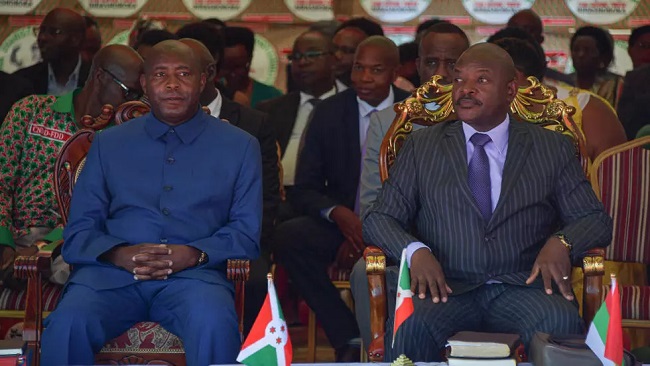
Burundi’s election commission is expected Monday to declare Evariste Ndayishimiye the country’s next president, with all signs showing the ruling party’s candidate on track for victory following last week’s poll.
The National Independent Electoral Commission will unveil the outcome of the presidential and legislative races at 1200 GMT.
Local government results are also expected Monday.
Partial results already announced on state media indicate that Ndayishimiye, an army general from the governing CNDD-FDD who was hand-picked to succeed outgoing President Pierre Nkurunziza, has an insurmountable lead over his opponents.
Agathon Rwasa, the main opposition leader, has alleged foul play, saying early numbers showing his CNL party heading for a bruising defeat are a “fantasy”.
According to a tally by AFP covering 105 of 119 municipalities, Ndayishimiye won an outright majority in 101, and in at least one secured 99.9 percent of the vote.
In the four communes where he was defeated, Ndayishimiye attracted a support rate of no less than 43 percent.
Rwasa and his CNL, meanwhile, managed just 24.6 percent in Kabezi, a historic stronghold in western Bujumbura for the opposition party, which says some of its officials were harassed and detained on voting day.
The veteran politician attracted large crowds throughout his campaign, as did the ruling party, despite concerns about the coronavirus pandemic.
– Results questions –
Analysts predicted the presidential race would come down to a contest between Rwasa and Ndayishimiye, the strongest of seven candidates.
A foreign diplomat in Burundi, speaking anonymously, expressed strong doubts about the official result but said it was not surprising.
“We were expecting it to happen like this. Nobody could imagine for a second that the CNDD-FDD and its generals would cede power in any way,” the diplomat said.
Burundi, which the World Bank ranks among the world’s three poorest countries, has been under sanctions from its major donors since 2015, when Nkurunziza’s decision to run for a third term as president triggered violent unrest and political chaos.
At least 1,200 people have died and 400,000 have fled the country in violence that continues to this day.
So far this year’s election has not seen a repeat of that violence.
Rwasa has already hinted he would not take to the streets in protest and would appeal to the Constitutional Court, though he considers the process imperfect.
Tensions were high during the campaign and on voting day, when both sides accused the other of fraud and several CNL officials were arrested.
Burundi is tightly controlled by the ruling party and its youth wing, the Imbonerakure, have been accused of a forceful crackdown against the government’s critics in the aftermath of 2015.
If the election commission announces Ndayishimiye the winner as expected, he will be sworn in for a seven-year term in late August, when Nkurunziza’s term ends.
It is unclear whether Ndayishimiye would be able to rule free from interference by Nkurunziza, who in February was elevated by parliament to the rank of “supreme guide for patriotism” and will remain chairman of the party’s highly influential council of elders.
The final election results will be declared by the Constitutional Court on June 4.
Source: AFP