29, March 2020
Stabilizing Cameroon requires a sustained solution for democracy, rights, and governance 0
As regional and international partners focus on countering Boko Haram in West Africa’s Lake Chad Region, another crisis is playing out in southern Cameroon, where the armed conflict between the government and separatists has killed more than 3,000 and displaced close to 600,000. After nearly two years of violence, the two sides are at a stalemate, even with sustained Swiss-led efforts to broker peace. Despite stalled progress, there are further steps that regional governments, France, and the United States can take now to facilitate a peaceful transition and post-conflict recovery.
To maximize the probability of success, however, these disparate actions must be guided by a political strategy for stabilizing southern Cameroon. The United States can play a lead role in defining this strategy and supporting the lead actors to implement it.
Three core pillars, in particular, should comprise the strategy in order to resolve the crisis: conflict prevention and mitigation to protect civilians, investigate extra-judicial killings, and help stabilize conflict-affected areas; preparation for potential dialogue between the government and separatists; and, pending those talks, a framework for an inclusive political transition that respects core tenets of democracy and governance.
Central to all of these must be a focus on democracy and governance to address the democratic deficits underlying the broader crisis. The U.S. government should make strategic short-term investments to increase citizen participation in local governance, while supporting long-term stabilization and redress of political and security grievances. Below, we outline these democratic deficits and ways to address them.
HISTORIC ROOTS OF A DEMOCRATIC CRISIS
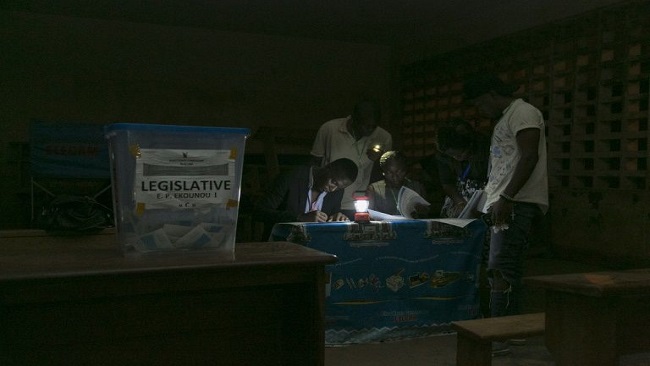
The ongoing crisis began in 2017 when Anglophone teachers and lawyers in the northwest and southwest regions mobilized protests in opposition to perceived discrimination by the Francophone government in Yaoundé. The government crackdown on protesters, and exacerbation of long-standing grievances, led aggrieved communities to create a separatist movement and declare independence for “Ambazonia.” Parliamentary and municipal elections were held February 9 amid an opposition boycott, low voter turnout fueled by apathy and separatist intimidation, and the prospect of violence from Boko Haram. President Paul Biya’s ruling party won in a landslide. The contests did little to quell grievances in conflict-affected areas, which are rooted in long-standing historical divides.
Anglophone Cameroonians often articulate their grievances through the lens of World War I. The 1919 partition of the former German colony Kamerun into British and French Cameroons created two separate polities with distinct political hierarchies and governance systems. Independence in 1961 brought British Southern Cameroonians a narrow choice through a plebiscite: assimilation into either French Cameroon or neighboring Nigeria, but not independence in their own right. Despite widespread discontentment during the vote, Southern Cameroonians chose to join French Cameroon as part of a federation between the two states.
After independence, Cameroon’s first president, Ahmadou Ahidjo, employed an assimilation policy to administratively and linguistically merge the Southern Cameroons with Francophone Cameroon in order to maintain access to its natural resources. President Ahidjo completed the assimilation process in 1972 with a unilateral referendum that replaced the federal state with a unitary state and increased executive power. Southern Cameroons lost its autonomous status and became the Northwest Region and the Southwest Region of the Republic of Cameroon. The democratic closing in the early 1990s further exacerbated Anglophone Cameroon’s political marginalization: The resulting electoral constraints combined with President Paul Biya’s increasingly autocratic leadership created an uneven playing field for Anglophone politicians to compete in national elections.
WHY DEMOCRACY, RIGHTS, AND GOVERNANCE ARE CENTRAL TO A STABLE AND INCLUSIVE TRANSITION
Grievances thus persist because the deep roots of the Anglophone crisis lie in Cameroon’s outstanding democratic deficits. Any political strategy to stabilize the country’s conflict-affected regions must account for these deficits and include tactics to address them.
First, Anglophone Cameroonians remember the disenfranchisement of two separate referenda, with people perceiving the results to have inaccurately represented popular political preferences. This legacy casts immediate suspicion on any deal forged between Anglophone leaders, separatists, and the Cameroonian government in Yaoundé. Ahead of any peace negotiations, domestic and international stakeholders must adopt a citizen-centric approach to drafting a settlement to end the crisis. Community consultations with Anglophone citizens living in and outside the country remain essential for establishing citizen buy-in and restoring the region’s trust in the political process. Any future national dialogue processes or peace negotiations should involve groups of Anglophone citizens displaced internally and internationally by the crisis as advisory bodies to the negotiations.
The second democratic deficit is Cameroon’s persistent centralization of power. While Cameroon decentralized through a 1996 amendment to the constitution and a 2004 Orientation of Decentralization Law, administrative bottlenecks and political interference prevent the country’s 360 municipal councils from carrying out their responsibility to lead development in areas such as healthcare, education, and social welfare. Just five years ago, Cameroon’s ministries devolved operations to the municipal level, but ministers regularly impose conditions on the use of funds. Persistent blockages to creating an autonomous, functional infrastructure for subnational governance continue to exacerbate present grievances and hinder progress toward a government structure that maintains Cameroon’s territorial integrity while vastly increasing its responsiveness to citizen needs.
The international community needs to make targeted investments to improve the collaboration between local elected officials and civil society organizations. Technical support from other constitutionally devolved African nations like Kenya can help Cameroon creatively troubleshoot political and bureaucratic blockages in the decentralization process. This approach needs to be grounded in improving and expanding the existing efforts of committed nonpartisan civil society organizations to hold municipal councils accountable. In the long run, the international community needs to support Cameroonian political leaders, civil society members, and citizens develop and execute a plan for the country’s federalization that is embedded in a negotiated settlement.
The third democratic deficit is the closed space in which civil society operates. Under President Biya, Cameroon has been a closed space for civil society and political activists challenging the government’s authority. Rights-based organizations in Cameroon are routinely persecuted for exercising their oversight role and exposing human rights violations committed by the government. The government, however, allows civil society organizations to work on issues that are not considered a threat to its control, such as women’s and children’s rights and service delivery. Though, due to the closed political space, many organizations in Cameroon, especially those located outside of the main city centers, cannot readily access technical assistance or resources that would strengthen their engagement with the government and contribute to policy reforms on low-risk issues.
In the midst of the crisis, local civil society organizations — particularly those led by women — and community leaders like religious authorities and traditional chiefs are filling service delivery vacuums left by ineffective governance. Not only do these civil society leaders provide socioeconomic relief to Anglophones in the form of locally-sourced humanitarian assistance and psychosocial support to bereaved citizens, but they also act as back-channel negotiators to incentivize separatist family and friends to consider non-violent approaches to address their grievances. The international community should continue to voice support for civil society leaders on the front lines of the crisis and apply public pressure to the Cameroonian government should they continue to repress these actors. Since the Cameroonian government applies less pressure to apolitical social welfare organizations, international partners should also increase assistance activities to civil society leaders working directly with internally-displaced Cameroonians to increase their service coverage and build their legitimacy as neutral humanitarian actors.
THE WAY AHEAD
Cameroon’s long-term stabilization starts now. While a negotiated settlement between the Cameroonian government and the armed Anglophone groups is the only pathway for sustainable peace, the country’s local governance infrastructure — particularly its municipal councils — requires immediate technical and financial support to capably carry out its decentralized functions and serve the needs of a population in crisis. Social welfare-focused civil society organizations and community leaders are crucial neutral actors whose contributions to humanitarian assistance and peace efforts will only increase once negotiations progress. In the aftermath of a deal, these local governments structures and civil society leaders will provide crucial support for the resettlement of displaced populations, the reintegration of former combatants, and the settlement of wartime grievances. The international community should support decentralized local government structures and civil society leaders now to provide immediate stabilization assistance and to increase the chances of societal recovery after the parties reach an agreement.
Culled from Brookings.edu


30, March 2020
Southern Cameroons prisoners of conscience and the threat of COVID-19 0
Today, the world is faced with another global menace similar to the Spanish Flu of 1918 which killed almost 50 million people the world over between 1918 and 1919. This is the CoronaVirus or Covid-19 which originated in the Wuhan District of China in December 2019.
In a media briefing on March 11th, 2020, World Health Organization Director General, Dr Tedros A.G said the agency had characterized the Covid-19 as a pandemic. A pandemic, according to Britannica is an outbreak of infectious disease that occurs over a wide geographical area that affects a significant proportion of the world’s population, usually over the course of several months or years.
The new Corona Virus (Covid-19)is affecting 199 countries and territories around the world. It has so far infected more than 721,412 people across the world, killing 33,965 (March 30th, 2020 statistics from cnn.com). The geometrical patterns in the growth of Covid-19 is alarming as it has left so many health experts and scientists confused as to the way forward. It is a collective fight that needs every hand on deck. The number of infected cases and deaths around the world is expected to rise during the first quarter of April 2020 as speculated by health experts in the United Kingdom.
On March 6th, 2020, the Cameroun’s Minister of Public Health, Dr Manaouda, announced the first case of Covid-19 in Yaoundé. The measures taken by the government of Cameroun to contain the virus from spreading further were not stringent enough as the airports were left open for many people from infected Countries abroad to fly in undetected. The numbers of infected cases are now on a steady rise. In a recent tweet on March 29th, 2020, the Public Health Minister made known the number of Covid-19 infected cases in Cameroun; 139 and counting.
The same conditions and fears described by Human Rights Activist Jennifer Gonnerman in the article “Chesa Boudin on His Incarcerated Father and the Threat of the Coronavirus in Prisons” are very visible in the jails in Cameroun where more than 1000 Southern Cameroons Prisoners of Conscience have been held following the Southern Cameroons Conflict where President Paul Biya declared war on November 30th,2017.These prisons which span from Yaoundé, Douala, Buea, Baffoussam, Yoko etc are a breeding ground for the Covid-19 owing to it’s poor sanitation, lack of portable water, scanty or no medical aid,no testing device, prison warders from the outside world who mingle freely with the detainees and most important of all are the overcrowded nature of the prisons leaving thousands of detainees touching and mingling with each other at very close range.
It’s for these reasons that Human Rights Watch and the United Nations Human Rights Commission have picked on the situation of detainees in Cameroun and the world over respectively. Michelle Bachelet,in a statement at the Geneva UNHRC head office described in a few words the situation that these prisoners of conscience face as the global Covid-19 pandemic surges on.
“In many countries, detention facilities are overcrowded, in some cases dangerously so. People are often held in unhygienic conditions and health services are inadequate or even non-existent. Physical distancing and self-isolation in such conditions are practically impossible”
Prisons and jails are amplifiers of infectious diseases such as COVID-19, because the conditions that can keep diseases from spreading – such as social distancing – are nearly impossible to achieve in correctional facilities. The Yaoundé Central Prison where I’m currently serving a 12 year sentence on trumped up charges and politically motivated reasons fit squarely in this category.
The Prison built in 1968 to host 1000 inmates is home to about 5000 detainees (that’s five times the number) amongst who are more than 200 Southern Cameroons Prisoners of Conscience. This overcrowding influences the appropriation of space and the power structures within the prison, in a context where the prisoners are unevenly divided between the 14 quarters of the Kondengui Maximum Prison. These more than 5000 detainees share less than 20 filthy latrines doted in the various quarters from 1 to 14. In the event of the virus spreading inside the prison, no medical care will be possible and the death rate will be alarming. The prisoners are piled on top of each other; it’s impossible to keep any safe distance. The Yaoundé Central Prison is a volcano ready to explode if just a rumour of one positive case of Covid-19 is left to circulate within the prison walls.
Human rights organizations like the National Commission of Human Rights (NCHR), Centre for Human Rights and Democracy in Africa (CHRDA), The Central African Human Rights Defenders Network (REDHAC) and a host of others who know the situations of these prisons very well should be pressing on for an amnesty to be given to these detainees before one of the detainee is infected with the Covid-19. It is their responsibility to do more before these overcrowded prisons are suddenly transformed into a mortuary.
The government of Cameroun recently took measures to curb the spread of the virus, including shutting down schools, closing borders, banning mass gatherings, and encouraging people to follow hygiene rules but these measures are not stringent enough to combat this global threat.
The Cameroun’s prisons, which are notably overcrowded, keeping social distance, practicing self-isolation, and taking basic measures such as hand washing are just not possible with hundreds of detainees crammed in the same small cell. The Prison administration under the leadership of Hamadou Madi recently took measures such as limiting the number of visitors into the inner court yard of the prison, obliging visitors to put on face masks and disinfecting the entire prison but these measures too are not enough to guarantee the safety of the detainees who still come in contact with the Prison Warders from the outside world on a minute by minute basis. The idea of social distancing or self isolation is farfetched in these prisons especially those in the town of Yaoundé which according to statistics from the Country’s Ministry of Public Health is the most infected town.
This fight against the Covid-19 is the fight of our lives and every hand is needed to stop it before it ravages humanity as we all know. The UN Human Rights Commissioner beckoned on state authorities to examine ways to release those particularly vulnerable to COVID-19, among them older detainees and those who are sick, as well as low-risk offenders because the detention facilities in many countries are severely overcrowded, making detainees and staff particularly vulnerable to catching the deadly new coronavirus. Amid fears that the coronavirus will carve a deadly path through prisons and jails, some countries are heeding to the Michelle Bachelet’s clarion call by releasing thousands of inmates. Ethiopia’s president, last week released over 4,000 prisoners in an effort to prevent overcrowding in prisons and contain the spread of the coronavirus.
By Penn Terence Khan
Yaounde Central Prison