
4, September 2018
Cameroon Catholic bishops urge voters to choose responsibly 0
Catholic bishops in Cameroon have issued a pastoral letter to say voters should be able to exercise their right to freely, peacefully and responsibly choose leaders in the upcoming presidential elections.
“According to the teachings of the church, the people should be at liberty to exercise their sovereignty by freely, peacefully and responsibly choosing their leaders,” the bishops said in their pastoral letter dated Aug. 24.
Current President Paul Biya, hoping to embark on a seventh term, is now 85 years old and has been in power since 1982. In the presidential elections of Oct.7 he will challenge a divided opposition that is putting forward eight candidates.
Points of instability
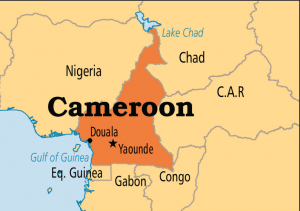
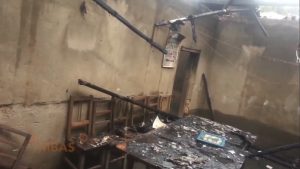
These elections fall at a particularly tense moment and there are many areas of instability across the country. Since the beginning of the Anglophone crisis in 2016, the northwest and southwest regions have witnessed many deaths and there is no immediate end to the hostilities in sight.
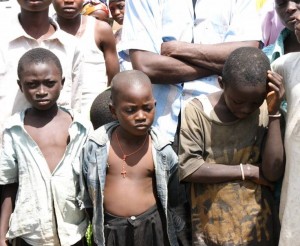
The Nigerian border region in the far northeast is in a state of extreme volatility with deadly attacks carried out by Boko Haram. Since 2014 over 2,000 Cameroonians have lost their lives in terrorist violence and more than 1,000 have been abducted.
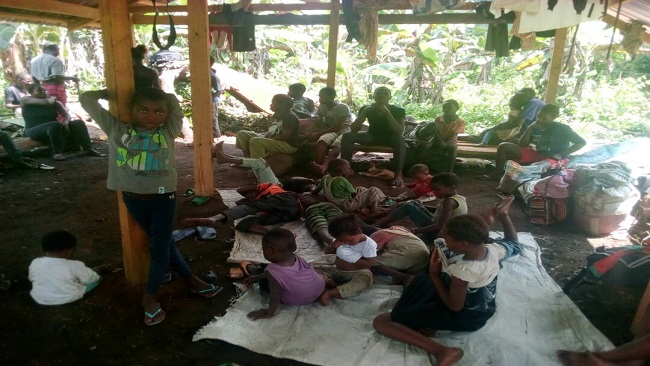
On top of these internal issues, are conflicts in Central Africa which have pushed more than 150,000 people over the border to seek refuge in eastern Cameroon.
Members of the National Episcopal Conference of Cameroon have expressed concern that these crises will have a negative effect on the upcoming presidential elections.
They state that free and transparent elections are the only way to “guarantee peace, stability and justice.”
They call on Cameroonians to choose candidates capable of dealing with the country’s social, economic and political issues and tackling inequality, corruption, unemployment and Boko Haram.
The Anglophone crisis
The Anglophone problem began in 2016 with remonstrations and complaints among lawyers and teachers who protested their marginalization in the country’s legislative and education systems, which are largely francophone.
Their protests led to strikes which turned into deadly confrontations between Cameroonian security forces and those supporting secession of Anglophone regions.
On July 25, Cameroonian religious leaders announced their involvement in resolving the secession crisis.
Among those who added their names are Cardinal Christian Tumi, retired archbishop of Douala, Babila George Fochang, a priest from the Presbyterian Church in Cameroon, Tukur Mohammed Adamu, an imam from Bamenda Central Mosque, and Alhaji Mohammed Abubakar, chief imam from Buea Central Mosque.
To this end, they were planning a general conference for Anglophones from Cameroon and the diaspora on Aug. 29 and 30 in the city of Buea (southeast). However, a few days after the announcement, it was reported that the conference had been postponed indefinitely.
Source: La Croix International

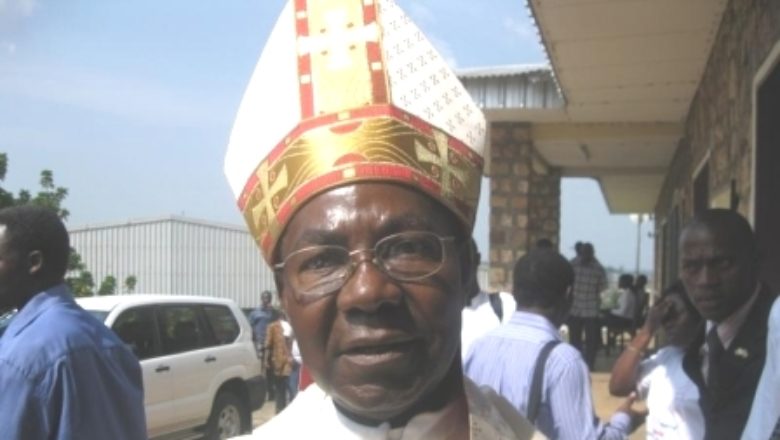
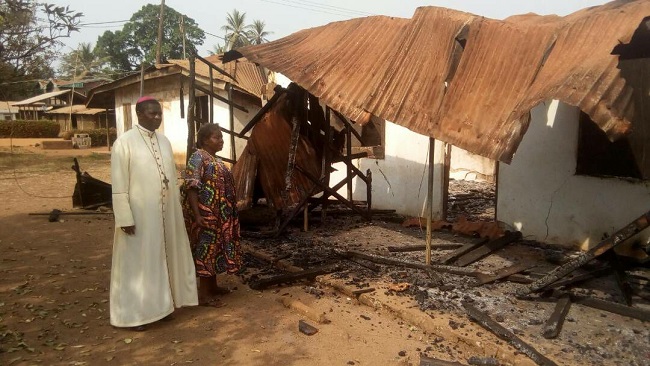
 Father Sob and Father Constant
 Father Sob and Father Constant(Douala airport)









7, September 2018
Anglican diocese of Cameroon celebrates ten years 0
A CELEBRATION of ten years of the Anglican diocese of Cameroon was held in the open air at the largest city in Cameroon, Douala, on 26 August.
The day dawned bright and dry, and 1500 worshippers celebrated a eucharist, accompanied by choral music, and a sermon by the Bishop of Ohaji Egbema, in Nigeria, the Rt Revd Chidi Collins Oparaojiaku.
The eucharist was celebrated by the Bishop of Cameroon, the Rt Revd Dibo Thomas-Babyngton Elango. He also invested 15 Knights — lay members who have contributed spiritually and materially to the development of the Church — during the service.
The Bishop preached in the centre of the quadrangle of open-sided marquees erected to shade the congregation from the sun. He commended the faithfulness of the Anglican Church in Cameroon, and congratulated the diocese on its achievements over the past decade. He reminded listeners that all things were achieved only by the grace of God.
The congregation responded with loud Amens of approval, and joined enthusiastically when he began an unaccompanied rendition of “Great is thy faithfulness”.
Sustained by a packed lunch of chicken and rice, the congregation enjoyed musical contributions from the diocesan choir, which sang an anthem by Handel, and by visiting choirs, which sang traditional African spirituals and modern gospel. The Boys’ Brigade provided percussive interludes. The service was long, and at points chaotic, but always joyful.
The Church of England link diocese of Chichester was represented by Canon Mark Payne, the Rector of St Pancras, Chichester, and Canon of the Cathedral of St Michael and All Angels, Douala.
Anglicanism was brought to Cameroon in the mid-20th century by an expatriate community of West African business owners, who set up churches, including what is now the cathedral. Cameroon was initially a missionary area under the Church of the Province of West Africa (CPWA). It was only in 2008 that it achieved full status as a diocese in the CPWA, and Bishop Elango was ordained and consecrated to the office of Bishop: the first Cameroonian to hold the position.
The diocese has now expanded to 28 churches across nine parishes, served by 16 full-time clergy and eleven catechists. The diocese has an ambitious and largely self-funded building programme of churches, clergy accommodation, schools, and a health clinic. In a country without a welfare state, this contribution to education and health care has a significant impact on the life chances of young people in particular.
The tenth anniversary comes at a time of significant civil unrest in Cameroon, as anger and frustration in Anglophone regions about perceived marginalisation by the Francophone majority spills over into violence. The Anglican Church ministers to both English and French speaking communities.
Culled from Church Times