26, May 2021
Southern Cameroons Crisis: A priest gets kidnapped 0
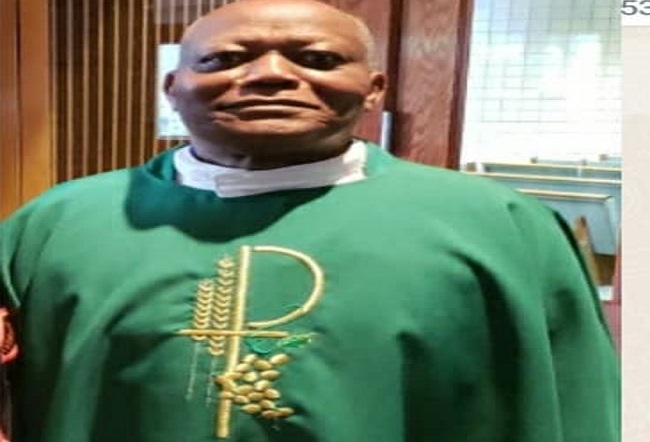
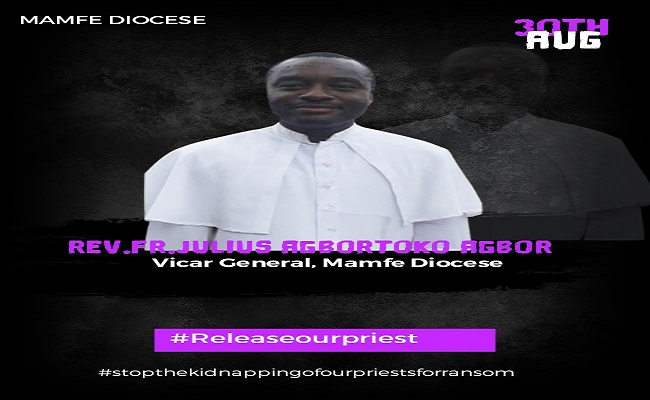
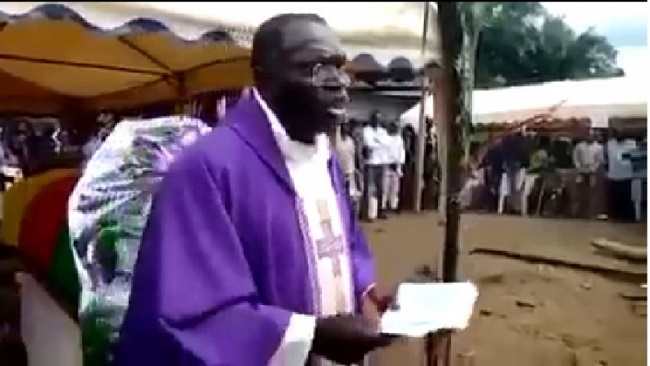
A priest of the diocese of Mamfe in the Southwest region of Cameroon has been kidnapped as the fighting in Southern Cameroons rages on and enters a critical phase.
Father Christopher Eboka was taken away by unknown gunmen on Friday, May 21, 2021 who have requested a huge ransom from the diocese. The kidnapping of members of the clergy is unfortunate and this underscores the need for all the factions involved in the conflict to seek ways of reaching a peaceful resolution.
The Cameroon Concord News Group correspondent in Mbonge has spoken with Father Christopher’s mother who is very devastated and is urging those responsible for the priest’s kidnapping to release him so that he can continue with the great job he has been doing.
Kidnapping a priest is not only despicable, it is the height of irresponsibility and the Cameroon Concord News Group is joining its voice to that of the mother of father Christopher Eboka to urge the kidnappers to release the man of God.
Those who kidnap men of God are crossing a dangerous red line and this must be condemned by all god-fearing Cameroonians.
The clergy in the two English-speaking regions of the country has been playing a significant role since the Southern Cameroons crisis started in 2016 with the objective of engineering a lasting peace in the two English-speaking regions of the country and to help alleviate the suffering of the population.
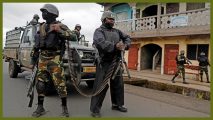
Over the last two weeks, the fighting in Cameroon’s two English-speaking regions of the country had escalated, with army soldiers taking huge casualties.
Southern Cameroonian fighters who started out with dane guns have morphed into manufacturers of effective Improvised Explosive Devices (IEDs) which are sending many army soldiers to an early grave.
While the army soldiers have been brutal and successful in outgunning Southern Cameroonian fighters due to their superior weaponry, the use of IEDs by Southern Cameroonian fighters over the last year has left the government in an unfortunate quandary.
In the country’s northwest region where the fighting is escalating on a daily basis, the IEDs have been going off every day and many uniformed officers have not had the luck to return to their families.
The military has lost many of its fighting equipment and these new strategy developed by the Southern Cameroonian fighters has left many army soldiers with tones of butterflies in their stomachs.
The morale among the soldiers is down and many of them, especially those who have been to the battlefield, understand that this war will never be won on the battlefield, as Southern Cameroonian fighters have become deadlier and more determined to push the military out of Southern Cameroons.
Many of the young soldiers are from poor backgrounds and they need the salary from the military, but their belief in a conclusive military victory is diminishing on a daily basis as news of their wounded and dead colleagues spreads across the country like wildlife.
Many of those army soldiers would jump at any opportunity that would get them out of the military, but Cameroon is a country that is bereft of jobs and opportunities. The young soldiers are now caught between the rock and a hard place.
If they refuse to go to Southern Cameroons where Southern Cameroonian fighters are delivering death to many soldiers for free, they will end up in jail for a long time. If they head to Southern Cameroons, they are sure they will not be coming back to East Cameroon, or if they must return, it will either be in a body bag or with debilitating injuries that will make entirely dependent on their family members.
The situation in Southern Cameroons is dire. The world has to wake up from its sleep. The fighting in that part of the country has escalated and very many young Cameroonians are losing their lives because a government ruled by old and ailing leaders is still seeing negotiations as a weakness.
If the world does not stand up against the brutality playing out in Southern Cameroons now, it will one day regret its decision, as many young lives are being wasted due to the inflated ego of people who have prioritized war over peace.
By Soter Tarh Agbaw-Ebai


The conflict had erupted in Cameroon’s Northwest and Southwest regions earlier in 2017 when protests against new government-appointed judges in the regions turned violent. As government forces responded with lethal force, tensions mounted and many English speakers in the predominantly French-speaking country started asking for independence. The ensuing conflict between separatist fighters and government forces has killed at least 3,000 civilians, according to Human Rights Watch. The Internal Displacement Monitoring Centre estimates that at least 460,000 have been forced to flee the affected areas, with tens of thousands seeking refuge in neighboring Nigeria. The Catholic bishops said the government has been too violent in its response to those seeking to form an English-speaking state. Esua said Biya’s 2017 pledge effectively made clear that “anybody who identified himself with the Anglophone cause was considered a terrorist.” After two years of fighting between the two sides, Biya called for a one-week “Major National Dialogue,” held Sept. 30-Oct. 4, 2019. However, the president said the dialogue would not only consider the insurgency but also “issues of national interest such as national unity, national integration and living together.” Bishop George Nkuo, who has headed the Kumbo Diocese in the Northwest Region since 2006, said that approach was wrong because it didn’t address the urgency of the Anglophone problem. Nkuo said the forum should have been used to discuss the Anglophone problem and not all the problems of the nation. He said it was necessary to use that dialogue to revisit the root causes of the conflict as the only possible way of bringing forth a sustainable solution. And the causes of the problem, he said, are rooted in Cameroon history. Initially colonized by Germany in 1884, Cameroon would be divided between Britain and France after the defeat of the Germans in World War I. Britain got one-fifth of the formerly German territory, which it administered as part of Nigeria until 1961 — when through a plebiscite, the British Southern Cameroons (as the British administered entity of Cameroon was then called) voted to reunite with the part formerly administered by France (which had gained its independence in 1960). The two entities went into a federal structure of government, with each entity allowed to freely run its affairs in line with the systems inherited from the colonial powers. But in recent years, some people in the English-speaking regions had accused the central government of trying to quash their traditions.
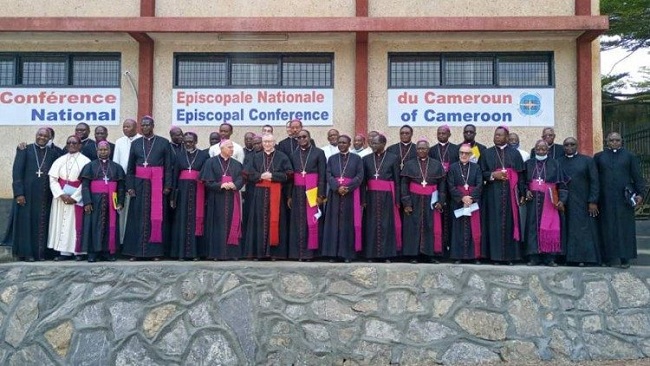
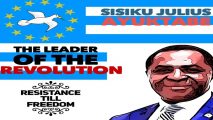
A view of the Catholic cathedral of Kumbo, in Cameroon’s English-speaking Northwest Region In 2016, four Catholic bishops in the English-speaking regions accused Biya’s government of trying to strangle their culture. “Anglophone Cameroonians are slowly being asphyxiated as every element of their culture is systematically targeted and absorbed into the Francophone Cameroon culture and way of doing things,” they wrote at the time. Nkuo said the 2019 dialogue should have revisited these historical perspectives to come up with the right answers to the problem. The current archbishop of Bamenda, Andrew Nkea Fuanya, criticized the format of the dialogue, saying it didn’t involve the appropriate representatives of the English-speaking regions. “That wasn’t a dialogue at all,” Fuanya told NCR. Esua was invited to participate in the dialogue. “To be frank, it was a monologue,” he said. “In a dialogue, you take two people to dialogue. And in a dialogue, you have different opinions. You have to listen to the other person and the other person listens to you, and gradually you come to an agreement.” “Ninety percent of the participants at the National Dialogue were all government people, or people with government allegiance, but the real persons with whom you had to dialogue were not there,” said Esua. Separatist leaders weren’t part of the dialogue. Sesseku Ayuk Tabe, the recognized leader of the movement to form a new country of Ambazonia, was arrested in 2018 and is now serving a life sentence. “You couldn’t talk of a dialogue if these people weren’t there,” Esua said of the separatist leaders’ absence at the negotiating table. Nevertheless, the dialogue came up with a number of recommendations, including the adoption of a special status for the two Anglophone regions, the immediate relaunch of certain airport and seaport projects in the regions, the rapid integration of ex-combatants into society, and a hastening of decentralization of power away from the central government.


29, May 2021
Cameroon bishop condemns corruption in distribution of COVID aid 0
“I really felt bad that within a period like this when most people, most governments are trying to look for ways and means of combating COVID 19 disease – a virus that is killing and taking away the lives of many people – that people will still have the audacity to embezzle funds of this nature, that is meant for the common good, that is meant to save the lives of people,” said Bishop Michael Bibi of Buea, in Cameroon’s South West Region.
According to the Johns Hopkins COVID portal, over 1,200 people have died of COVID-19 in Cameroon, with more than 77,000 people testing positive.
In the face of such a health emergency, Bibi said it was evil for people to steal money.
“To say the least, this is inhuman. It is not correct, and I think that the Cameroonian government should do proper investigation and the people who are responsible should be brought to justice. We cannot allow things like this to go ahead because it is not proper. Humanly speaking, it is bad,” he told Crux.
Cameroon’s Ministry of Health has come under fire for its poor transparency in the distribution of hundreds of millions of dollars of COVID aid, with members of the opposition and some international aid agencies accusing members of the government of embezzlement.
In the face of the mounting scrutiny, Cameroonian President Paul Biya earlier this year instructed the Justice Ministry to investigate.
Meanwhile, 23-page report by the Audit Bench of the Supreme Court that was leaked in the local press on May 20 reveals disturbing facts about the way the $382 million of COVID funds were managed.
Personal Protective Equipment (PPE) was overbilled at ten times the expected rate, and there was no public bidding for contracts. Some contracts were allegedly given to “ghost companies” that didn’t actually exist.
Over $11 million was budgeted for the local manufacture of chloroquine and azithromycin. Instead, the heal ministry imported the drugs from India and repackaged them in Cameroon.
Renovation work on facilities meant to welcome COVID-19 patients was not completed – only seven of eleven facilities were completed.
“The conditions under which the special contracts were awarded remain unknown to the Audit Bench of the Supreme Court, which reflects a certain opacity in the awarding of contracts, and which affected most of the contracts,” the report states.
The Audit Bench accused the Ministry of Public Health and the Ministry of Scientific Research and Innovation of 30 management errors, and recommends ten legal proceedings that could end up as criminal investigations.
The ministries have denied wrongdoing.
Bibi said the government must pursue these cases.
“Corruption thrives when there is little follow up to bring the culprits to justice,” the bishop said.
He said conversion of hearts is the only way the problem can be rooted out of the country.
“Corruption is something that is common and I think that we all have to fight against corruption; we all have to educate ourselves that whatever position we have in the Church, in the government, and if we have funds that are given to us for the common good, we should use it for the common good,” he told Crux.
“We should not think about our individual benefits or what is going to benefit our family members and friends, we should think about the common good. For me I think that is key, and my prayer and wish is that we should be converted from this attitude of corruption, because if we are not converted, the country will never develop, things will never move properly,” Bibi said.
Source: Crux