1, December 2021
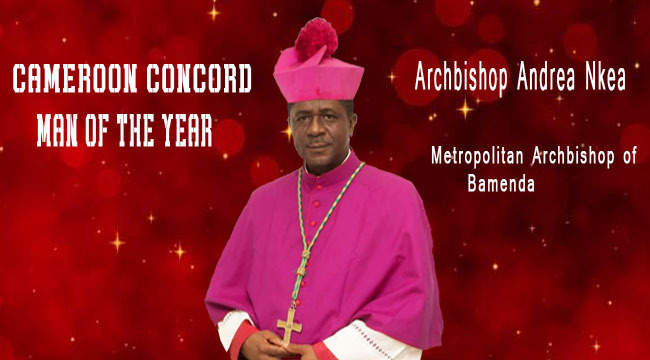
Archbishop Andrew Nkea is Cameroon Concord Person Of The Year 0
In December every year Cameroon Concord News and Cameroon Intelligence Report decide on persons who generate the most news in the past 12 months and our readers vote to get the winner.
We of the Cameroon Concord News Group are happy to make public the winner of the Cameroon Concord Person of the Year 2021. He is the Metropolitan Archbishop of the Bamenda Ecclesiastical Province, His Grace Archbishop ANDREW NKEA
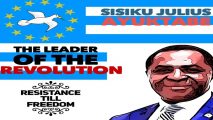
The senior Roman Catholic cleric received the highest number of votes ever since we started the award in 1999 from a list of renowned personalities comprising Barrister Amungwa Tanyi Nicodemus, one of the lawyers representing President Sisiku Julius Ayuk Tabe, the jailed leader of the Ambazonia Interim Government, and several other people arrested in connection with the Southern Cameroons crisis, Prime Minister Joseph Dion Ngute, Enow Ngashu, Director General of the National Football Academy and Professor Maurice Kamto of the MRC party.
Cameroon Concord People voted vigorously for His Grace Archbishop Andrew Nkea as the Cameroon Concord Person of the Year 2021 and a cream of them particularly from the diaspora gave explanations for their decision in some soul-searching correspondences sent to Cameroon Concord News and Cameroon Intelligence Report.
Archbishop Andrew Nkea is a key player in efforts at seeking a peaceful resolution to the crisis in Southern Cameroons. As Bishop of the Diocese of Mamfe, Andrew Nkea did all he could to save so many lives. He worked tirelessly to bring supplies to Southern Cameroonians who were internally displaced, going sometimes to areas that even Cameroon government army soldiers could not go.
In Manyu Division, Archbishop Andrew Nkea knew exactly how to negotiate with Ambazonia Revolutionary Guards and in the process; he would appeal to their consciences for them to spare the lives of even their worst enemies.
Even after leaving Mamfe where the Ambazonia war started, the Roman Catholic cleric has remained at the forefront of humanitarian efforts during this crisis that hit the global stage some five years ago and has claimed the lives of some 10,000 Cameroonians, with army soldiers accounting for close to 35% of the deaths.
Archbishop Andrew Nkea’s desire to save lives has taken him to distant lands such as Europe and the United States where he engaged with various Southern Cameroonian communities to raise funds for internally displaced persons and those who are living in Nigeria as refugees.
As recorded for us by the Cameroon Concord News Washington Bureau, Archbishop Andrew Nkea travelled to Baltimore in the USA, in July 2019 for a fundraiser for Southern Cameroons refugees organized by the Manyu Community in the DC, Maryland and Virginia (DMV) area where thousands of dollars were raised to help those who had left their homes to seek refuge somewhere else.
The Bamenda Metropolitan Archbishop called out the government in Yaoundé and sounded a note of caution when the military killed a Kenyan Mill Hill Missionary priest working in Kembong in Eyumojock Sub Division. Like a good shepherd, he flew to Kenya and buried the priest and did all he could to console the family members of the deceased priest.
Ever since the Holy Father Pope Francis appointed him as Archbishop of the Bamenda Archdiocese, Archbishop Andrew Nkea has been playing a key role in efforts at finding a lasting solution to the conflict that is still consuming many innocent lives and he is working day and night to ensure that peace returns to the two English-speaking regions of Cameroon.
The complexity of the Southern Cameroons war required engaged clerics who are full of faith and the Holy Spirit to lead and help prevent the Cameroonian nation from a complete collapse. Archbishop Andrew Nkea fully understood and embraced this mission marketing the sufferings of the English speaking people to the international community and today, the crisis in Southern Cameroons has earned international recognition with many developed democracies including the United States calling for a frank and genuine dialogue to resolve the situation.
Archbishop Andrew Nkea remains the only Roman Catholic cleric who braved the threats coming from Cameroon government officials and visited the Ambazonian leader President Sisiku Ayuk Tabe and his top aides at the Kondengui Maximum Security Prison in Yaoundé. And the Metropolitan Archbishop continues to demonstrate the highest level of neutrality in the 5-year-old conflict that has rocked Southern Cameroons.
For over five years, Archbishop Andrew Nkea who reportedly has no interest in supporting the Yaoundé regime has continued his humanitarian operations so that those who have been caught in the crossfire can have access to humanitarian assistance. He recently seek and gotten support from the Cameroon Catholic Community in Mulheim, Germany to equip the Saint John of God Hospital in Mamfe with an X-ray film printer to help many affected by the fighting.
During a trip to the United States, the Archbishop told an American journalist that his cardinal objective is to ensure that both parties in the Southern Cameroons conflict meet in a neutral place to discuss their differences so that peace can return to a country that was once touted for its peace.
Painted by many around the world as a man of peace, Archbishop FUANYA Andre Nkea (to use his three names) has no interest in taking sides in a conflict that should not have started and understands the risks and the need to bring both parties to the negotiating table.
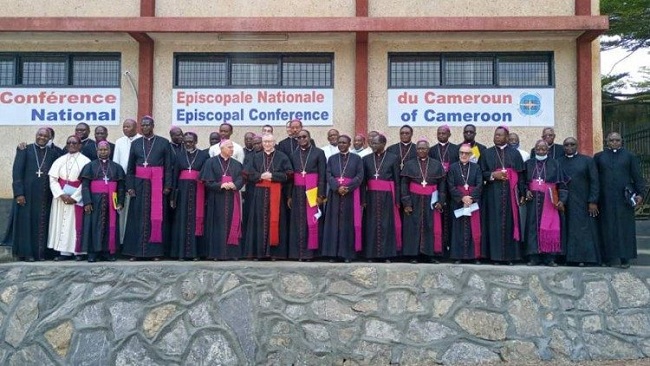
In a strongly worded pastoral letter addressed to President Biya at the very beginning of the crisis, the Bishops of the Bamenda Province demonstrated that they understood there must always be room for a possible negotiation and only spiritual leaders can bring about that window of opportunity and communication. Archbishop Andrew Nkea carried along with him the Archbishop of Yaoundé, Jean Mbarga to begin a peace process with the jailed Southern Cameroons leaders that was torpedoed by hardliners of the Biya Francophone regime including some top Francophone military officials who are making huge profits from the war in Southern Cameroons.
Upon his appointment as Metropolitan Archbishop of Bamenda and Apostolic Administrator of the Diocese of Mamfe on 30, December 2019, Fuanya Andrew Nkea opined in his homily that no war has ever been wrapped up in the battlefield even when the belligents are too powerful; they always understand that real and sustainable peace can only be gotten at the negotiating table. He has maintained that position till this day and he remains a total man of God at the service of the Lord.
The Preaching Bishop as the nation always refers to him is not a politician nor a cleric-politician but a servant of God full of faith and the Holy Spirit.
Archbishop Andrew Nkea has met several times with a stone wall in carrying out his Southern Cameroons peace mission but has never relented and as he (himself) rightly puts it: “My faith in Jesus and the power of the Holy Spirit guides all my actions during these difficult times in our nation’s history.”
Archbishop Andrew Nkea’s Southern Cameroons peace mission in the fullness of faith and the Holy Spirit is greatly appreciated. We of the Concord Group are proud of his work as a man of God, preaching peace and bringing relief to the suffering people of his archdiocese. We therefore congratulate Archbishop Andrew Nkea for the richly deserved recognition accorded him by a tremendous majority of Cameroon Concord News and Cameroon Intelligence Report readers. 2022 will bring more success stories to both French and English speaking Cameroonians.
On behalf of the over daily thirty thousand readers of Cameroon Concord News and the Cameroon Intelligence Report, we call on the Francophone dominated Biya regime in Yaoundé and the Southern Cameroons Interim Government under the stewardship of Vice President Dabney Yerima to listen to Archbishop Nkea’s peace message in order to end this senseless war currently going on in Southern Cameroons.
By Soter Tarh Agbaw-Ebai
Chairman/Editor-In-Chief
Cameroon Concord News Group









4, December 2021
Stranded Cameroonians, prisoners among migrants returning with Pope 0
Among the 50 migrants that Pope Francis is taking back to Italy with him, are two Cameroonian students stuck in the buffer zone for the past six months as neither the Turkish Cypriots, nor the Republic would take them in.
Ten of 50 are migrants held in prison for residing in the Republic without permits.
The interior ministry thanked the Pope for his initiative to relocate 50 migrants to Italy.
“Among them are the two individuals who remained in the buffer zone until today, whom the Republic had been asking the European Commission to relocate to another member state to avoid additional undesirable political problems for our country,” the ministry said.
According to the ministry, the Vatican’s symbolic gesture was recognition of the difficulties faced by Cyprus by the rising flow of migrants that “come through the occupied areas from Turkey.”
“This is the substantive solidarity we seek from our European partners,” the ministry said.
Pope Francis also met prison governor Anna Aristotelous on Friday morning who expressed her admiration for his work and sensitivity and support he showed poor people.
Aristotelous thanked the Pope for relocating 10 irregular migrants and handed him a handmade violin the prisoners had made for him.
Source: Cyprus Mail