9, August 2021
Catholic priest murdered in western France 0
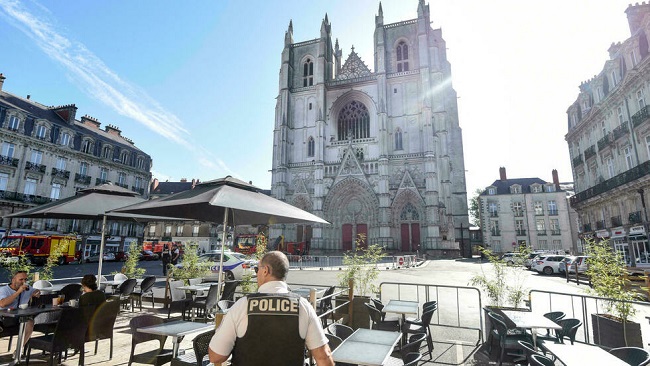
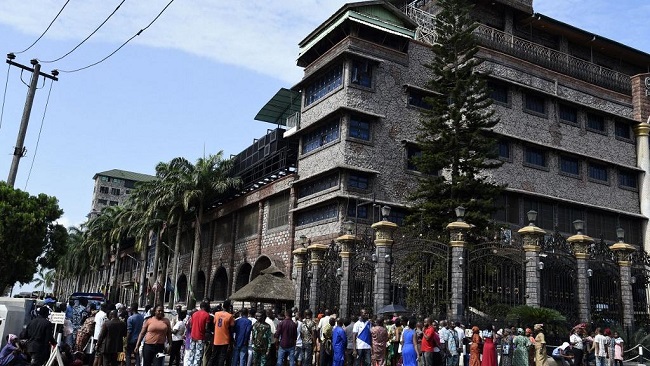
A Rwandan national suspected of causing a major fire that ravaged the cathedral in the French city of Nantes last year murdered a Catholic priest in western France on Monday, the interior minister and a source close to the investigation said.
“All my support for the Catholics of our country after the dramatic murder of a priest in the Vendée region,” French Interior Minister Gérald Darmanin wrote on Twitter, saying he was heading to the scene.
A source close to the investigation, who asked not to be named, told the AFP that the suspect had earlier gone to police in the town of Mortagne-sur-Sevre and declared he had killed a priest.
The slain priest, 60, had been welcoming the man into his church for several months, according to the source.
The man, a Rwandan national named as Emmanuel A., has confessed to being behind the fire at the Gothic Nantes cathedral that horrified France on July 18, 2020.
He had initially been placed under arrest before being freed under judicial control.
Earlier Monday, French far-right leader Marine Le Pen, who accuses the government of being weak on immigration, sought to capitalise on the incident, saying that in France “you can be an illegal migrant, set fire to a cathedral, not be expelled and then reoffend by murdering a priest”.
Darmanin immediately accused her of “making a polemic without knowing the facts” saying the man could not be expelled from France while he was under judicial control.
Immigration is set to be a major issue when Le Pen challenges centrist President Emmanuel Macron for the presidency next year.
Senator Bruno Retailleau, a conservative who represents the Vendée region, identified the victim as Olivier Maire. He said the local Catholic church had been housing the man.
“Deeply shocked by the terrible murder of a priest who had taken in his murderer into his care,” Retailleau said on Twitter.
“What was this man still doing in France?” asked the lawmaker, who is among several Les Républicains members likely to seek that party’s nomination for the 2022 presidential election.
Priceless artefacts lost in 2020 blaze
The Nantes blaze came 15 months after the devastating 2019 fire at the Notre-Dame cathedral in Paris, which raised questions about the security risks for other historic churches across France.
While firefighters were able to contain the Nantes blaze after just two hours and save the main structure, its famed organ, which dated from 1621 and had survived the French revolution and World War II bombardment, was destroyed.
Also lost were priceless artefacts and paintings, including a work by the 19th-century artist Jean-Hippolyte Flandrin and stained glass windows that contained remnants of 16th-century glass. Repairs are due to take several years.
(FRANCE 24 with AFP, REUTERS)













11, August 2021
Southern Cameroons Crisis causing hardship for women 0
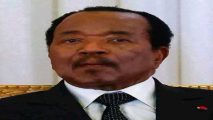
Cameroon President Paul Biya must let “peace reign” in the country’s troubled Anglophone regions, according to a former mayor and Catholic activist.
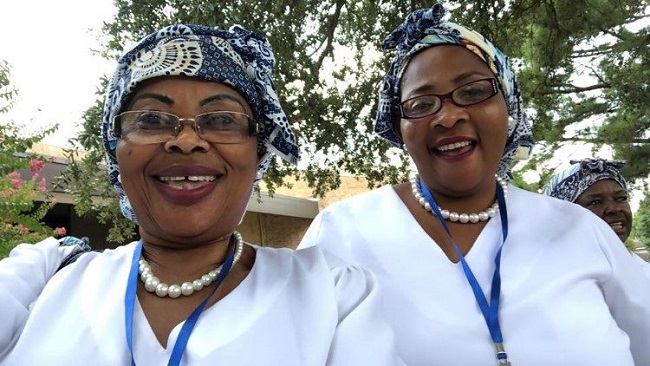
Elizabeth Kang, a leading member of the Catholic Women Association (CWA) spoke to Crux on the sidelines of the women’s convention for peace in Yaoundé.
“I am pleading on God Almighty to do to the Head of State as he did to Saul. Saul was a murderer and when he was going down to Damascus again to carry out his killing, God changed him and renamed him Paul, and he became a great preacher and wrote many books in the Bible. If our Paul today is Saul, God will change him back to the real Paul,” she said.
Biya has been largely blamed for the five-year conflict in Cameroon’s English-speaking regions where a separatist war has left over 4000 dead and forced more than a million people to flee their homes.
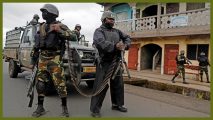
When Anglophone teachers and lawyers took to the streets in 2016 to protest the use of French in English-speaking schools and Common Law courts, Biya deployed the military, taking a hardline stance that escalated tensions, and morphed into demands for self-rule by the country’s English speakers.
Separatists have been fighting the military ever since, and violently enforced a school boycott that has left the regions’ children without an education for five years.
Kang says she believes that Biya has the power to bring the conflict to an end.
“The head of state of this country is the father of this nation. He has the authority to say ‘stop the killing, come my children, let us discuss this issue.’ For me, I hold him very responsible,” she told Crux.
“The head of state of this country has to make a statement to the effect that we are all his wives, we are all his children. … As one woman we want to cry out: Withdraw the army. The army too is dying. The mother of the soldier is wailing like me, the mother of the civilian. We are the same women wailing for our children.”
Kang is a witness to the daily horrors of war in her native Wum. Sometimes, the horrors are too close to home. Among others, her husband has had to spend time in the dreaded Kondengui Central Prison in Yaoundé.
“The first person I lost was my brother’s son whom I raised. Some armed people came and called him out of the house in my absence. In the morning, they had chopped off his ears. The second one was my son. They came and took him out at 5 a.m. [in front of] his wife beat him up and tore his left ear. The third one is my husband who was carried up to Kondengui. He stayed in Kondengui for nine months, and when the family head is not there, you know what that means. An entire family can go astray because the pilot of the house is not there. The other one was my neighbor’s son whose head was blown off by cartridges from unknown persons, and he died. I will not name my cousins that were slain in a whole village. Sometimes, people were carried in other villages and shot in Wum town.”
Holding back tears, Kang notes that women are paying a disproportionate price in the conflict, many of them “menstruating on leaves. The pride of a woman has been taken away. Women are delivering children in the bush, and under very bad conditions.”
The Catholic Women Association came up with various proposals to bring an end to the hostilities.
They called for continued and inclusive dialogue that addresses core issues around peace, solidarity and shared humanity in Cameroon; as well as the equal and permanent involvement of women peace mediators and negotiators in peace processes at all levels, while enforcing their protection at all times.
They also underscored the need to create additional centers for psychological support and trauma treatment, while at the same time making sure that the country’s disarmament and demobilization centers are made functional and responsive to the existing conflict.
“Peace has to reign,” Kang said simply, but added this will be contingent on Biya “calling the army to the barracks, the separatists dropping their guns, and genuine and sincere dialogue to address the root causes of the conflict.”
Source: Crux