
4, April 2020
Holy Week and the Trajectory of World History 0
He had always loved those who were his in the world, but now he showed how perfectly his love was” (John 13:1)
Dear Holy People of God,
God is good, all the time, and all the time, God is good!
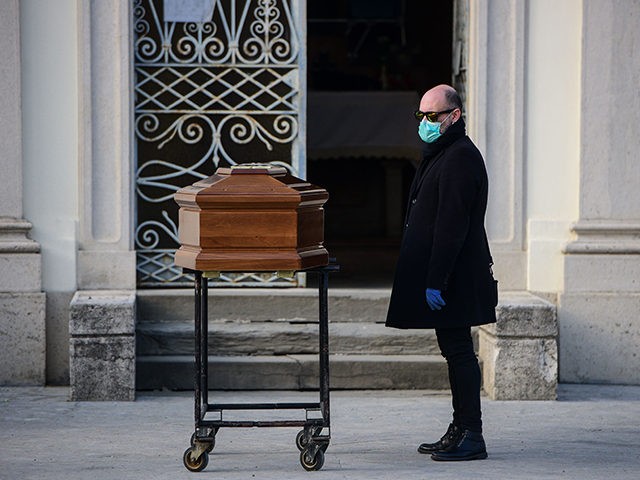
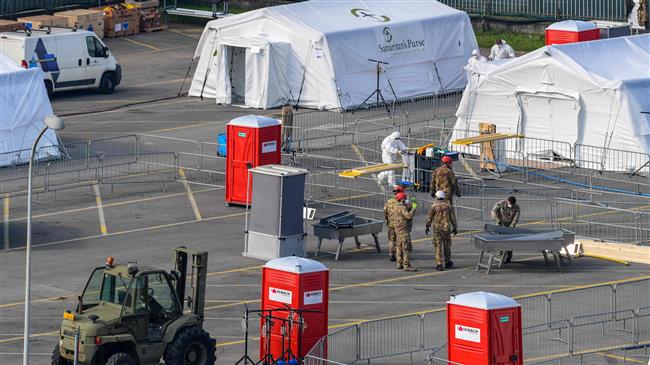
This Sunday, we celebrate what our Christian tradition calls Palm Sunday, which is the start of Holy Week. St Paul writes to us in his Letter to the Romans: “But what proves that God loves us is that Christ died for us while we were still sinners. Having died to make us righteous, is it likely that he would now fail to save us from God’s anger?” (Romans 5:8-9). Given the times that we are living in, it might be difficult for many to believe in the love of God. Even for the believer, it can be very tempting, a great trail of faith. But Holy Week has something to say, even to the perilous and precarious situation of a world plagued by COVID 19. Holy Week tells us that though we can humanly be paralyzed by fear, the fear of the unknown, the fear of the present and the future, the fear of death, as disciples in mission to the world, we have a message to the world of the Coronavirus. There is no denying that uncertainties leave us profoundly disturbed, especially the uncertainty of contracting a deadly virus. The Second Vatican Council (1962-1965) wrote these words that I find meaningful to us today, perhaps more so than when they were first written. Permit me make an extensive citation from the Pastoral Constitution of the Church in the Modern World, Gaudium et Spes:
“Nevertheless, in the face of the modern development of the world, the number constantly swells of the people who raise the most basic questions or recognize them with a new sharpness: what is the human being? What is this sense of sorrow, of evil, of death, which continues to exist despite so much progress? What purpose have these victories purchased at so high a cost? What can men and women offer to society, what can they expect from it? What follows this earthly life?
The Church firmly believes that Christ, who died and was raised up for all, can through His Spirit offer man and woman the light and the strength to measure up to their supreme destiny. Nor has any other name under the heaven been given to man and woman by which it is fitting for them to be saved. She likewise holds that in her most benign Lord and Master can be found the key, the focal point and the goal of man, as well as of all human history. The Church also maintains that beneath all changes there are many realities which do not change and which have their ultimate foundation in Christ, who is the same yesterday and today, yes and forever.
It is in the face of death that the riddle a human existence grows most acute. Not only is man tormented by pain and by the advancing deterioration of his body, but even more so by a dread of perpetual extinction. He rightly follows the intuition of his heart when he abhors and repudiates the utter ruin and total disappearance of his own person. He rebels against death because he bears in himself an eternal seed which cannot be reduced to sheer matter. All the endeavors of technology, though useful in the extreme, cannot calm his anxiety; for prolongation of biological life is unable to satisfy that desire for higher life which is inescapably lodged in his breast. Although the mystery of death utterly beggars the imagination, the Church has been taught by divine revelation and firmly teaches that man has been created by God for a blissful purpose beyond the reach of earthly misery.
In addition, that bodily death from which man and woman would have been immune had they not sinned, will be vanquished, according to the Christian faith, when man and woman who was ruined by his own doing is restored to wholeness by an almighty and merciful Saviour. For God has called man and woman and still calls them so that with their entire being they might be joined to Him in an endless sharing of a divine life beyond all corruption. Christ won this victory when He rose to life, for by His death He freed man and woman from death. Hence to every thoughtful man and woman a solidly established faith provides the answer to his anxiety about what the future holds for him. At the same time faith gives the human being the power to be united in Christ with his loved ones who have already been snatched away by death; faith arouses the hope that they have found true life with God. The root reason for human dignity lies in man and woman’s call to communion with God. (Gaudium et Spes, #10, 18, 19).
Dear Holy People of God, as we continue to live with hope during these uncertain times, let us remember that the Christian’s ultimate hope and meaning in life resides in Jesus Christ, who died and rose again from death, opening the possibility of eternal bliss with God for all humanity. Yes, it is human to fear death. But it is Christian to know that in Christ, the dead do not enter into nothingness, into extinction, but enter into what Gaudium et Spes calls the “blissful purpose beyond the reach of earthly misery.” And Holy Week teaches us that it takes a certain kind of people, a certain kind of life, to be able to enter into this blissful mystery at the end of our biological life here on earth.
St John gives us what that kind of life is: “It was before the festival of the Passover, and Jesus knew that the hour had come for him to pass from this world to the Father. He had always loved those who were his in the world, but now he showed how perfectly his love was” (John 13:1)! That is the message we Christians have for a frightened world, a world, perhaps, in need of a new soul, a new direction: That in spite of the global pandemic of Coronavirus, in spite of all the uncertainties marking life in the present, God loves the world (John 3:16), God has not abandoned the world, God will never abandon the world. In Jesus Christ, one of the human race, of us, a truly human being (Council of Chalcedon), has definitely responded to God’s love for the love, a love that binds God forever to the human condition. In Jesus, a human being has definitely committed humanity in a resounding YES to the God’s offer of love for the world. And because of this irrevocable commitment of a human being to the irremovable offer of love to the world by God, the believer, in Christ, with Christ and to Christ (Augustine of Hippo), brings this Divine love to the world. The believer offers the world the GPS of Love that reflects itself in love for other and prepares us for eternal bliss with God. Only a heart that loves can enter into the mysteries of Holy Week, the Week of God’s Total Love that changed the trajectory of world history from the human tendency to absolutize economics, politics, science, power, et cetera, to a civilization of mutual love.
Fr Maurice Agbaw-Ebai


















5, April 2020
The Present Continuous Tense of Palm Sunday 0
Ste Anne’s Parish, Salem MA, Roman Catholic Archdiocese of Boston
Palm Sunday Catechesis: (April 5, 2020)
The Present Continuous Tense of Palm Sunday:
“Blessed is He who comes in the Name of the Lord” (Mark 11:9)
Dear Holy People of God,
Today, we celebrate the liturgy of Palm Sunday, in which we enter in a sacramental sense, Jesus’s entry into Jerusalem.
1. In the Gospels of Mathew, Mark and Luke, more pointedly in Luke, Jesus’ entire ministry is one, long preparation for this journey to Jerusalem, so much so that Jerusalem, the City of David, appears as the interpretive principle of the ministry of Jesus: Jesus lives for the vision of Jerusalem, a vision that embodies the universalization of the Yahweh’s promise through Israel to the nations of the world: “And many peoples and great nations will come to seek the LORD Sabaoth in Jerusalem and to entreat the favour of the Lord” (Zechariah 8:22). Hence, the journey to Jerusalem, in the light of the inner development of Israel’s faith, marks an eschaton moment in which the particularity of Israel’s calling as a nation by God (Genesis 12), is accorded a definitive and an irrevocable openness to the nations.
2. With this journey, Israel’s Passover becomes the Passover of the nations, and only in this sense can the Christian enter into the spiritual heritage of Israel’s faith: the Passover, celebrated in Jerusalem, in the particularity of Israel, becomes the Eucharist, in the universality of the nations, so much so that the words of the Psalmist find their concrete fulfillment: “From the rising of the sun to its setting praised be the name of the Lord!” (Psalm 113:3).
3. On the other hand, the Gospel of John presents not one (like the Gospels of Mathew, Mark and Luke), but three Passover Feasts, namely, the cleansing of the temple (John 2:13-25), the multiplication of the loaves (John 6:4), and finally, the Passover of the death and resurrection of Jesus (John 12:1, 13:1). For the write of the gospel of John, Jesus is the Passover Lamb who, as the Lamb of God, takes away the sins of the world (John 1:29).
4. There are therefore, two versions of the journey to Jerusalem in the four gospels: the gospels of Mathew, Mark and Luke embody one layer of meaning in which the public ministry of Jesus is a single ascent to the mountain city of Jerusalem, and, on the other hand, the version of the Gospel of John, in which there is a back and forth from Jerusalem, and in the final analysis, Jesus becomes the Sacrificial Lamb for the world.
Given this biblical context, let us examine more closely, the text that, in my opinion, stands out from today’s liturgy of the word:
5. The text is from the cry of the crowds that followed Jesus: “Hosanna! Blessed is He who comes in the Name of the Lord” (Mark 11:9). As Joseph Ratzinger/Benedict XVI points out in a very significant text, “People had heard of the prophet from Nazareth, but he did not appear to have any importance for Jerusalem, and the people there did not know him. The crowd that paid homage to Jesus at the gateway to the city was not the same crown that later demanded his crucifixion” (Joseph Ratzinger/Benedict XVI, Jesus of Nazareth, Vol. II, p. 8).
6. Dear Holy People of God, very early on, Christian liturgy saw in the proclamation of the Palm Sunday crowds, the entry into the abiding presence of the Lord who comes. Palm Sunday led the early Church to quite organically, place this proclamation just before the Rite of Consecration, in the text of the Holy, Holy, Holy Lord: the triple Sanctus, Sanctus, Sanctus, holy, holy, holy, is a reminder of the Trinitarian God: the first “Holy” is to the Father, the second “Holy” is to the Son, and the third “Holy” is to the Spirit (Augustine of Hippo, De Trinitate).
7. I do not think that the decision of the early Church to chant the “Holy, Holy, Holy Lord, (…) Blessed is He who comes in the Name of the Lord, Hosanna to the Son of David (…),” just before the Rite of Consecration, – as we still do today at every Holy Mass, was an exercise in serendipity. I think the Hosanna chant showed a conscious profession that in what they were about to encounter in the form of Bread and Wine, in the Eucharist species, the Son of David, just as he rode into Jerusalem, truly comes into the Jerusalem of the Church of the here and now.
8. In this sense, therefore, Palm Sunday takes on a new meaning, thanks to the sacramental sense of the Christian liturgy. Palm Sunday is not something of the past. In the liturgy, Palm Sunday comes alive. The Lord comes into the assembly gathered around his Name. The Eucharistic liturgy is therefore, the locus, the place wherein Palm Sunday happens. “Blessed is he who comes in the name of the Lord,” the Church’s faith proclaims before the Rite of Consecration.
9. The Liturgy of the Church is therefore, the sure guarantee of the timelessness and present-continuousness of Palm Sunday. Only in that chant of the Church’s faith, do we find the enduring meaning and efficacy of Palm Sunday. And if such is the state of things, it therefore is the case that Palm Sunday can only come alive and be sensible when the individual is united or allows the self to enter into the believing community. In other words, it is possible to have a nirvana-experience of Palm Sunday.
10. And isn’t this a source of hope and encouragement for us today, when, frightened so much by the pandemic of COVID 19, we might feel alone, perhaps abandoned, frightened and anxious about the present and the future? Palm Sunday, as a gateway into the communio of the reality of the Church, offers us the comfort that the Lord is coming, a coming that is not just something of the future, talk less of the past, but a coming that is, in its most profound level, a thing of the present, a present that brings the past with it and opens up to the future, thereby ensuring a present-continuous sense of purpose and meaning, for with the Lord, present in our midst, the believer knows that he or she has a future, for where the Lord is, life overcomes death, light overcomes darkness, love overcomes loneliness and the fear of the unknown. And because the Lord is coming to us, the believer can face tomorrow and today! Amen!
11. May the Lord bless you and keep you! May the Lord let his light shine upon you! May the Lord be close to you and fill you with his peace!
Fr Maurice Agbaw-Ebai